177 posts

Day 7: Prototyping, CAD, Testing, & Lab Improvements

2014 FRC Build SeasonFIRST Robotics

Catcher & Intake Prototype

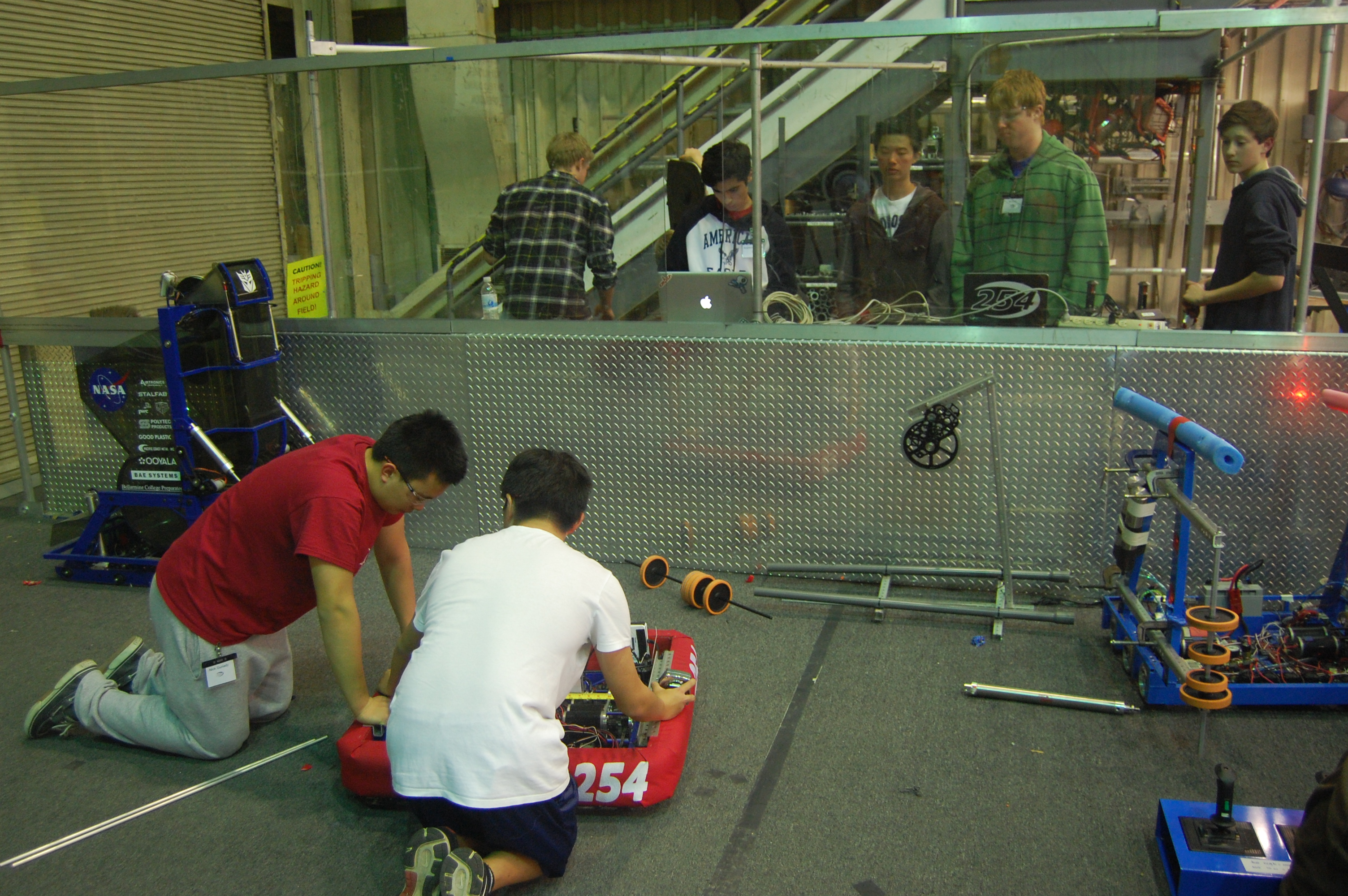
Today, several team members integrated the intake and catcher prototypes with the 2013 practice robot drive base to create a prototype robot that can catch and intake the balls. They removed the catcher arms from the back and front of the drive base and placed the intake in the back of the drive base. Additional planks of wood were attached to the walls of the intake to increase the compression on the ball while from the intake.
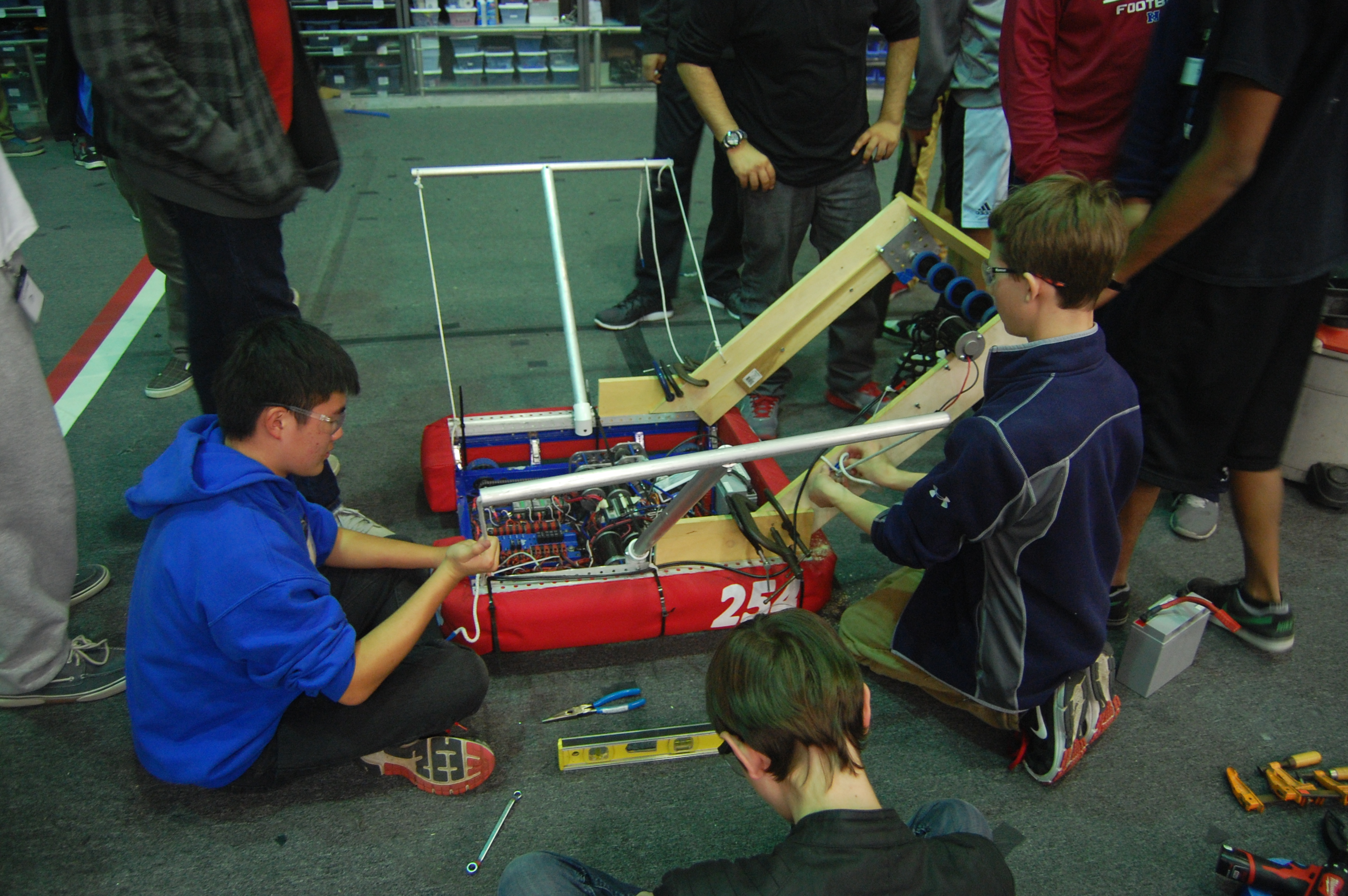
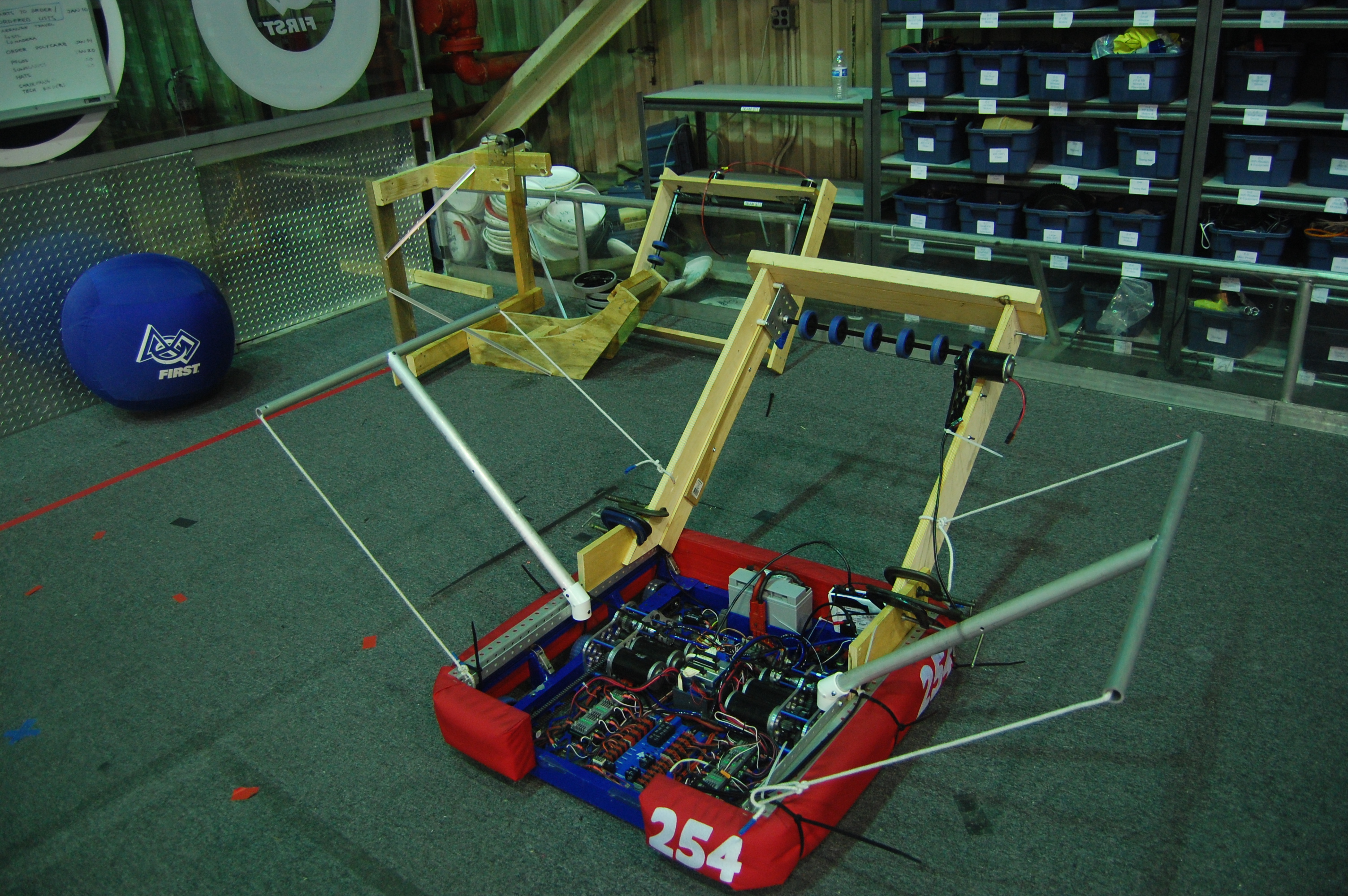
Brandon and Josh work on installing the intakeCurrent Prototype

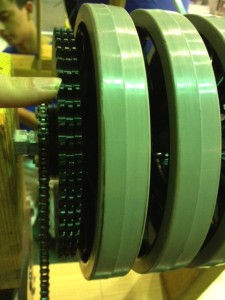
Several students began working on a new intake roller prototype. This new mechanism uses 1.5" neoprene rubber rollers instead of the current 3.5" blue bane's bots wheels that are currently being used.
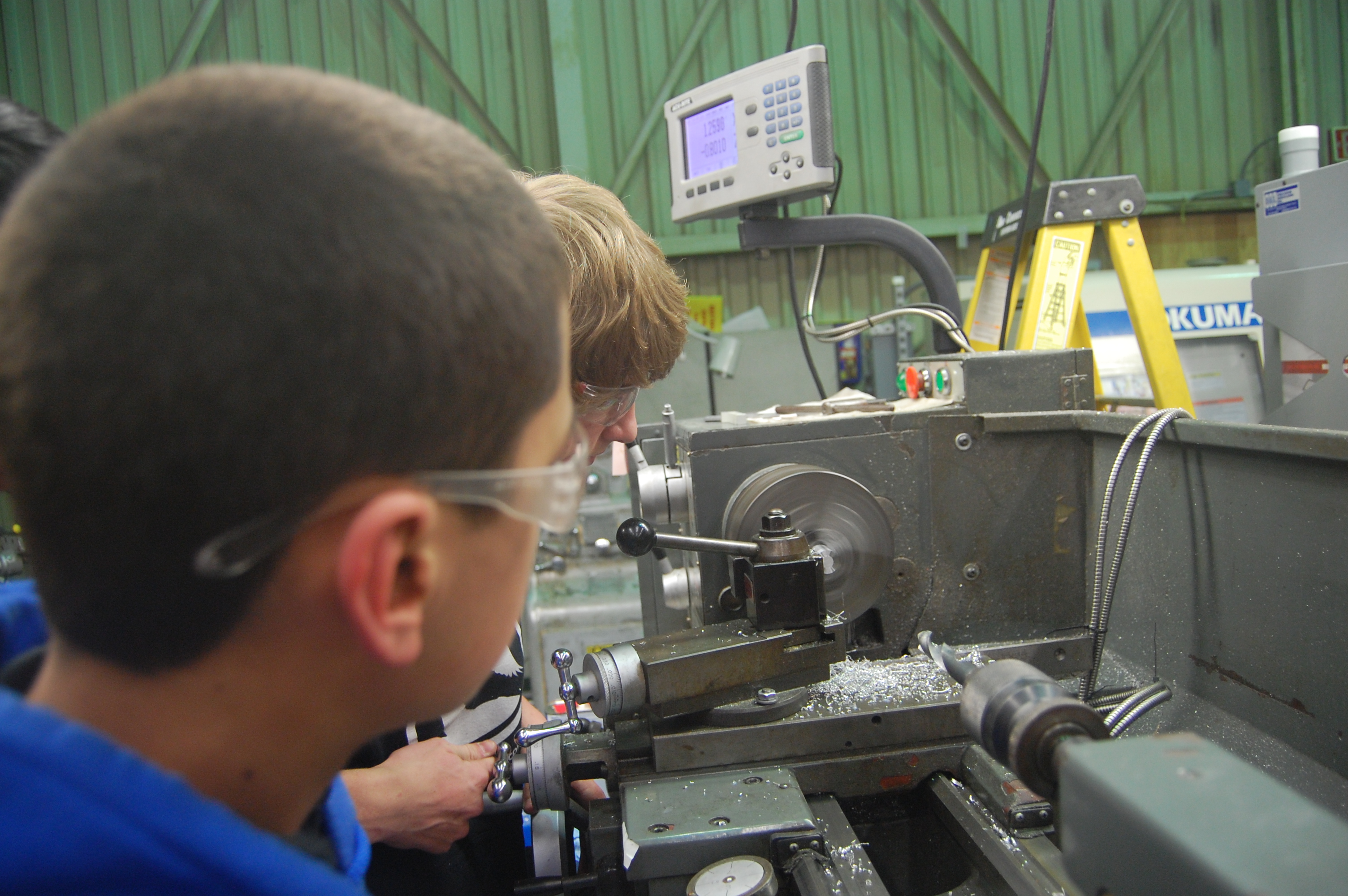
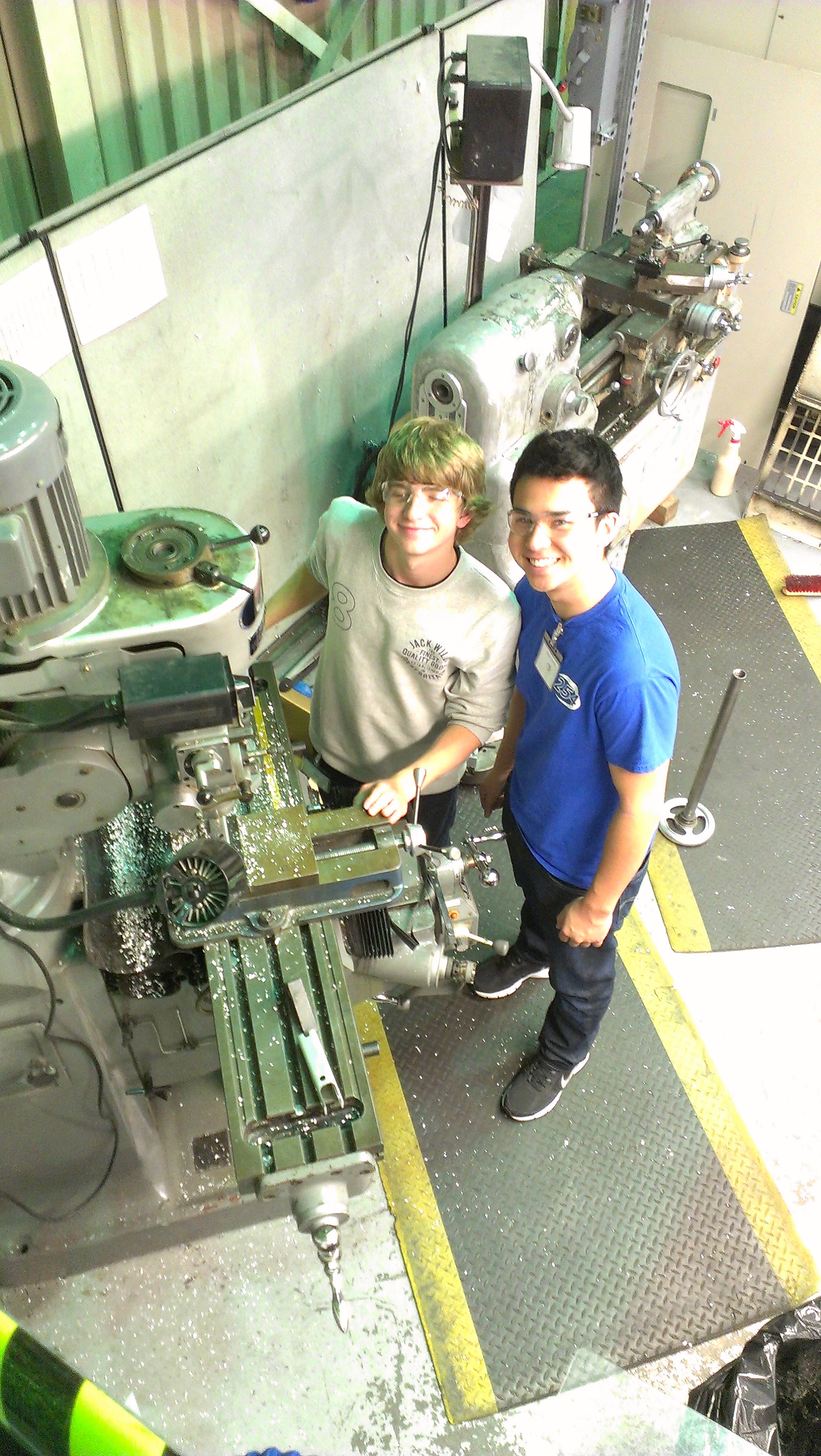
Jon Carlo and Joey turn the roller hubs on the lathe

Shooter Prototype

A group of team members worked on further tuning the shooter prototype. They also performed several tests using different shooting angles and different distances from the goal in order to determine the optimum shooting distance.
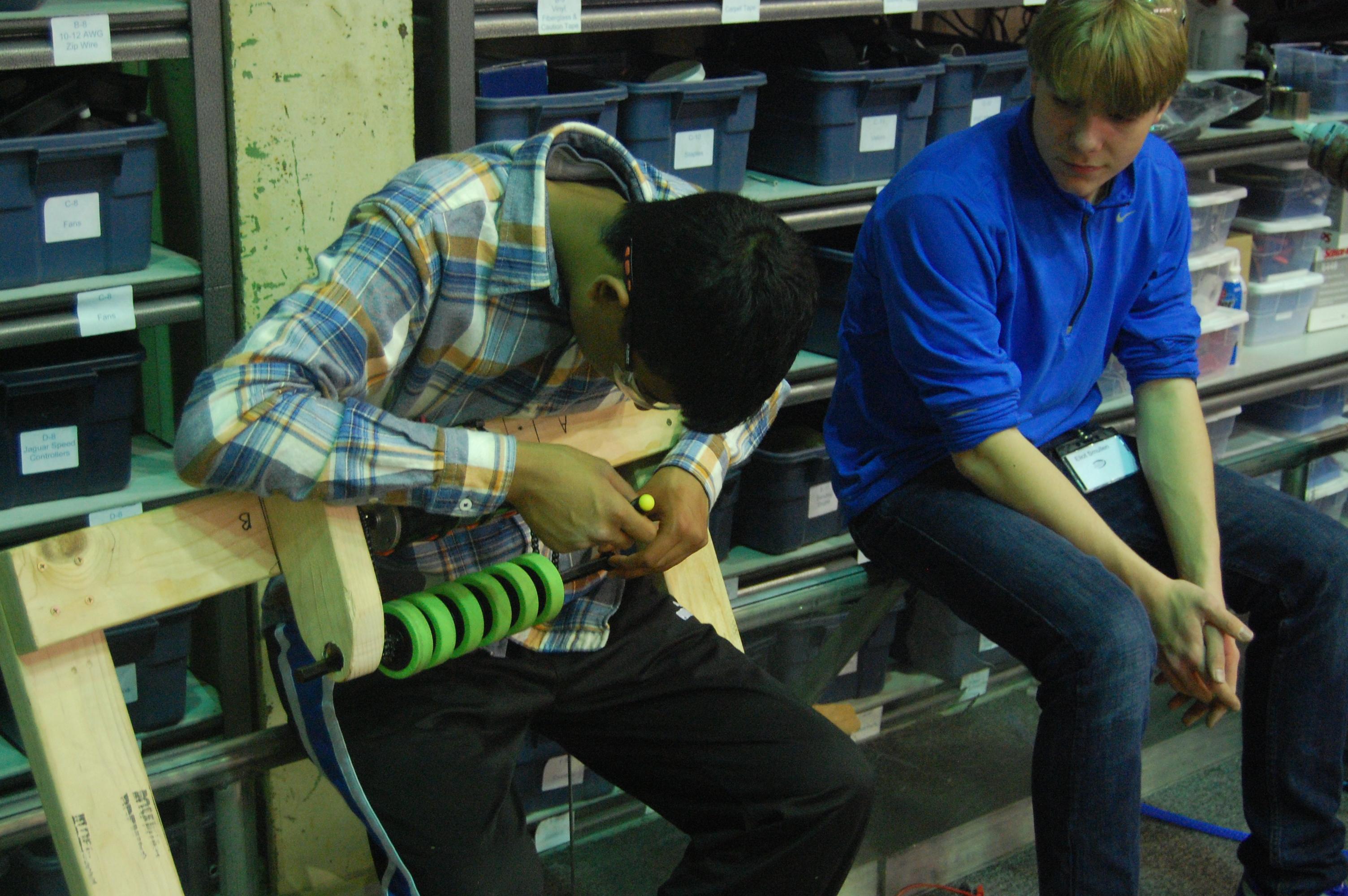
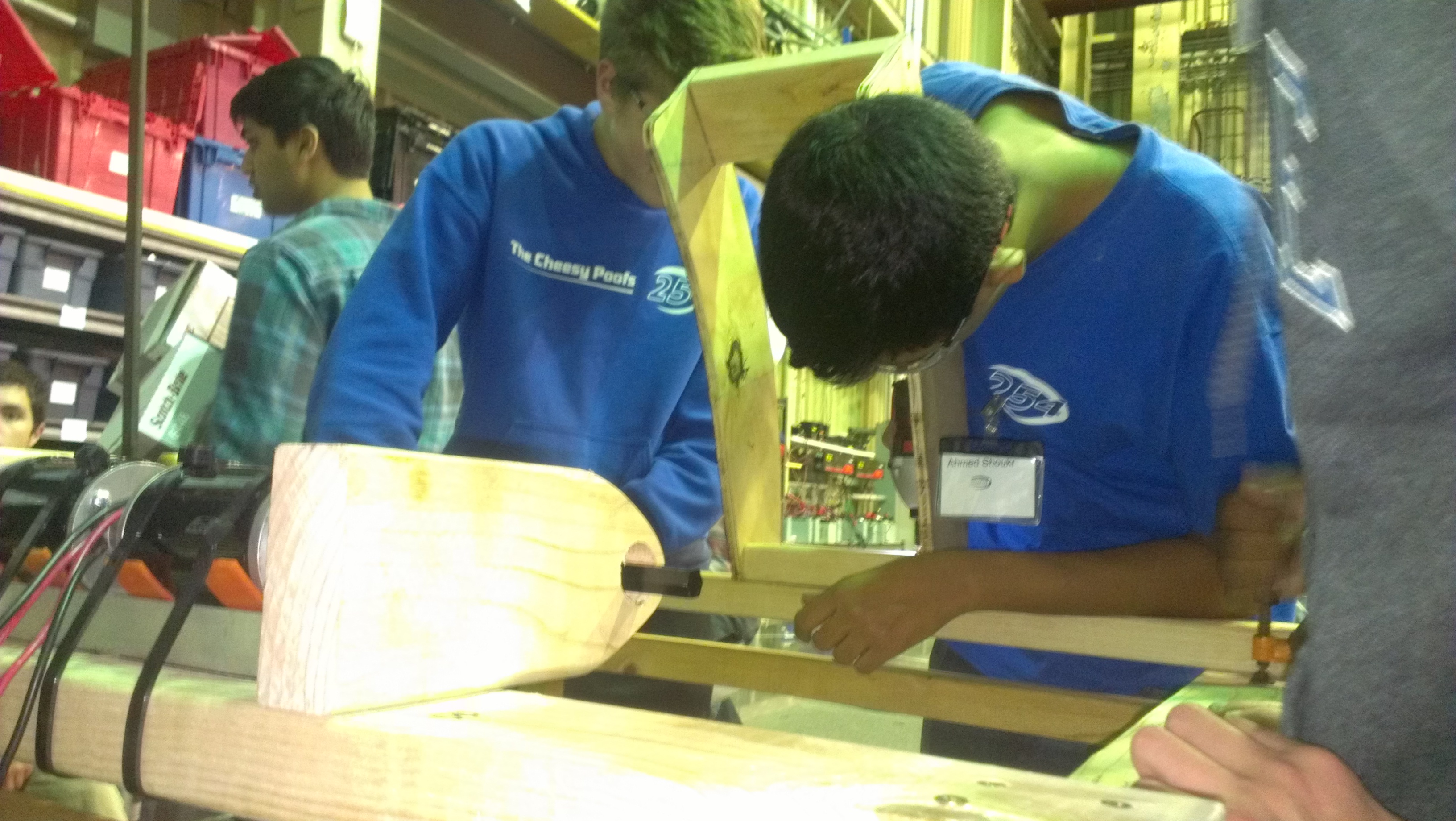
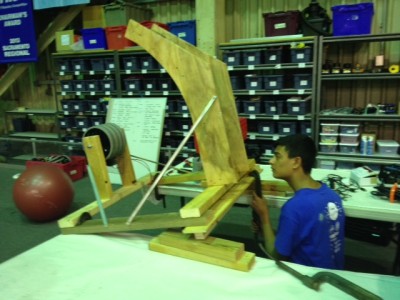
Ahmed works on securing the axle onto the shooter

Additionally, we began to improve the shooter prototype by adding reinforcements to the base and machining a new hood.

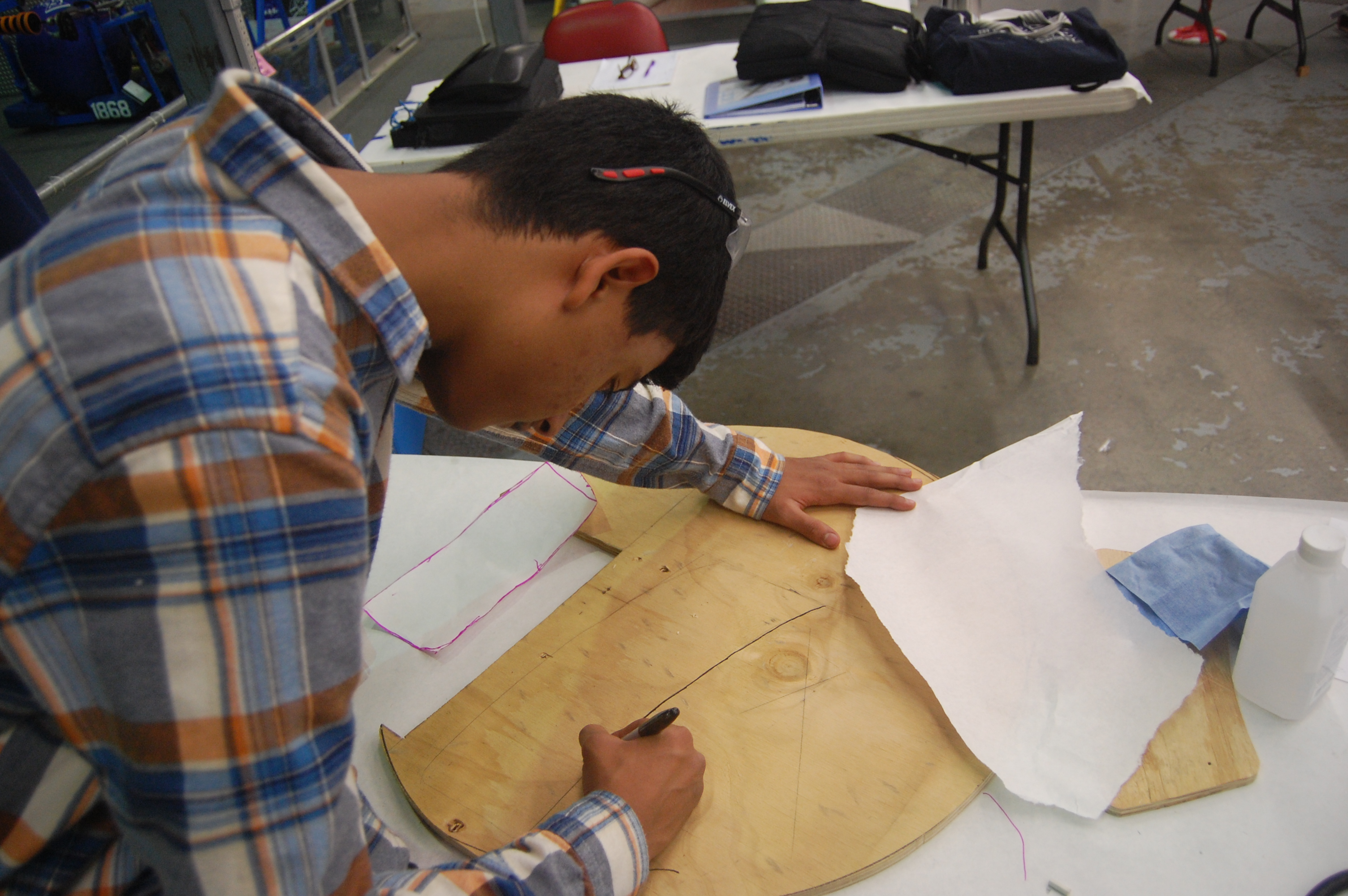
Art adds wooden reinforcements to the baseAhmed draws out the hood design

Prototype Testing

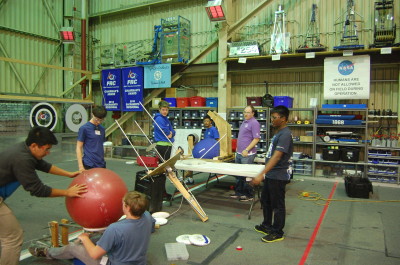
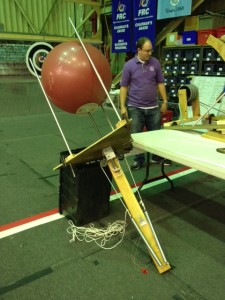
The groups working on the shooter and the integrated catcher and intake prototype came together to test whether or not it is possible for us to shoot over the truss using the current design. The conclusion is that the design will work, but it needs further tuning to be consistent. This test was done by using a "dummy truss," also known as EJ.

Please enable Javascript to watch this video

The same group also tested whether or not it is possible for another robot to catch the ball as it is being thrown over the truss. The special constraint that we tested was whether or not the catching robot could start at the same position as the throwing robot and be able to drive fast enough to catch the ball. Although this robot has the same ratios as we are planning on using for the 2014 robot, it lacks a superstructure and is lighter, resulting in superior acceleration.

Please enable Javascript to watch this video

CAD

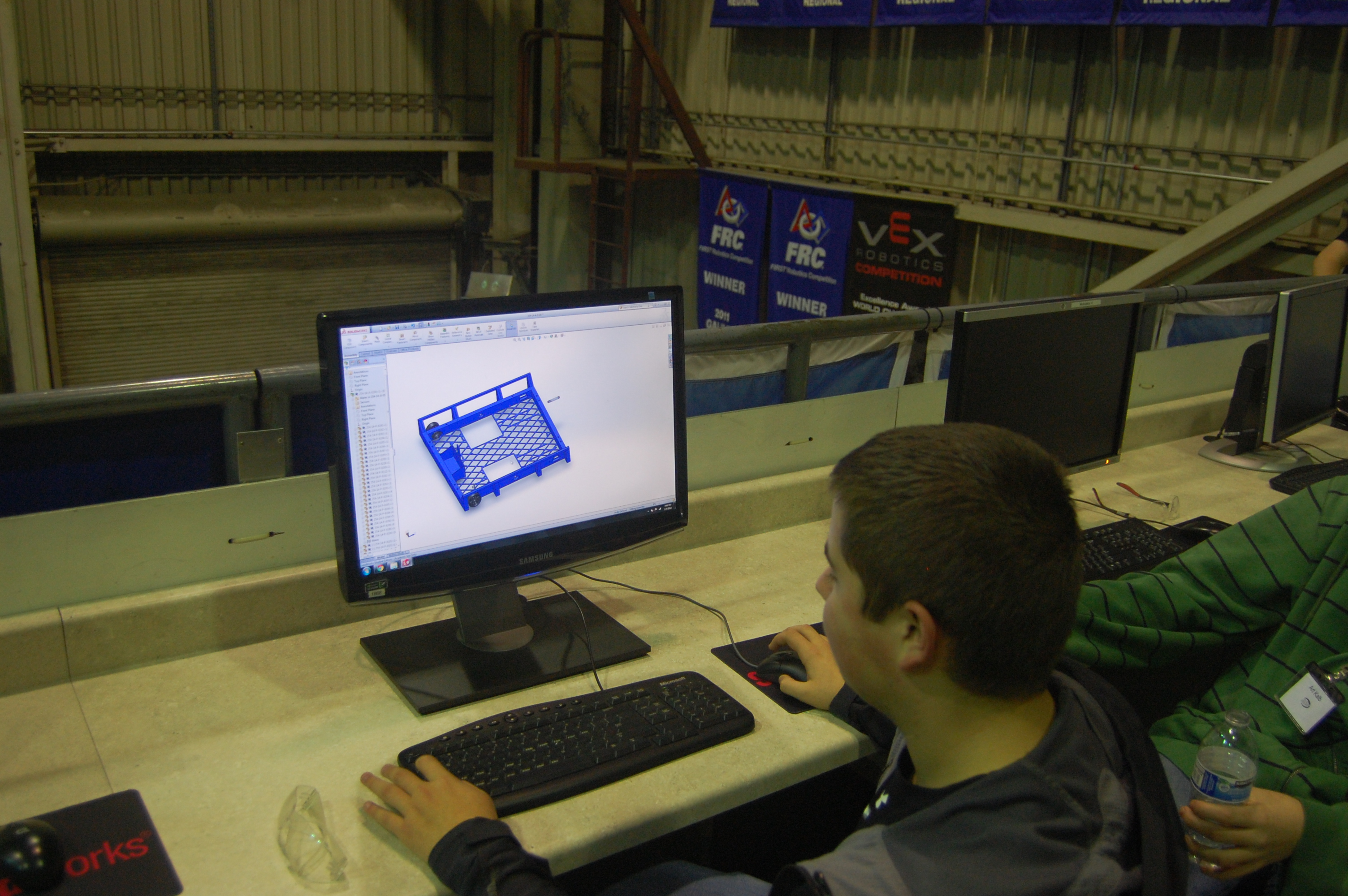
Work continued on the design of the drivebase for the robot. Right now the drive base is functionally identical to the previous year's drive base. The only major changes have been the mounting points for the superstructure, which have been moved closer to the bumper mount to allow for a superstructure wide enough to hold the large balls in this game.
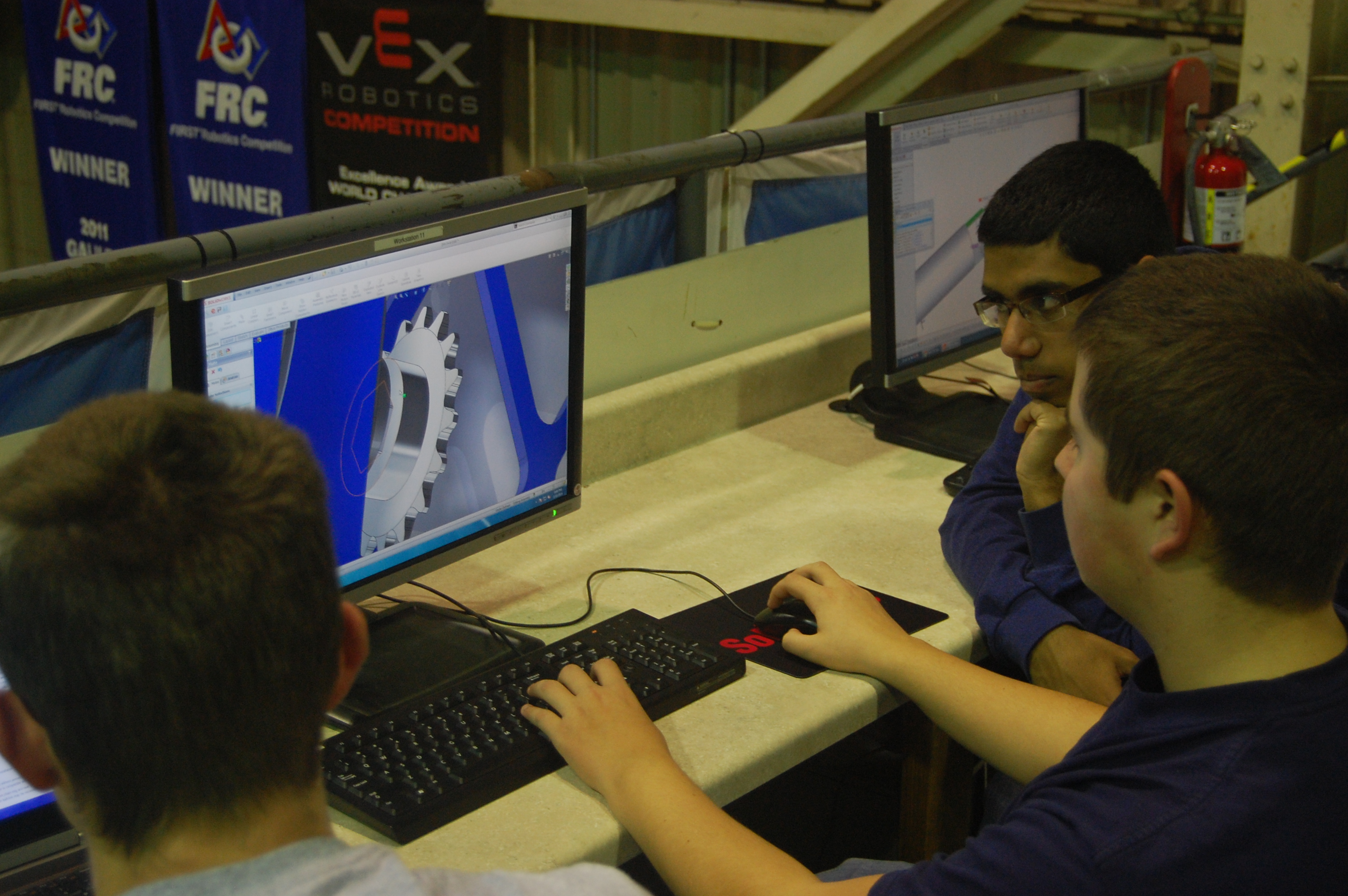
Chris and Andrew places a sprocket in the CAD model

The team also got together to design the look of the rest of the robot. They discussed how to integrate the two intakes, the shooter, and the catcher into the robot and the overall design of superstructure. Right now there is a rough idea of how the robot should look. Further detailing will be based on the results of prototyping.
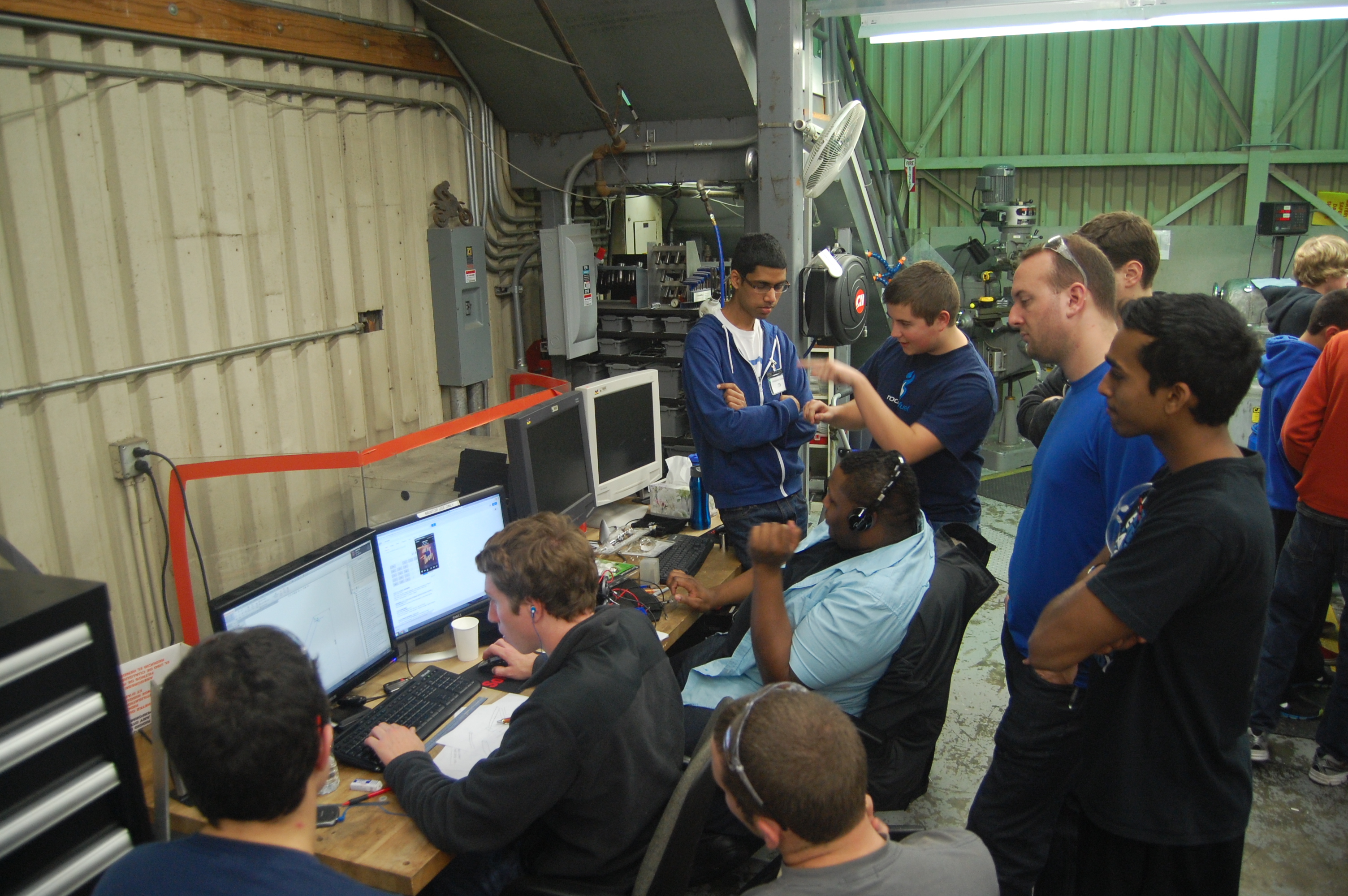
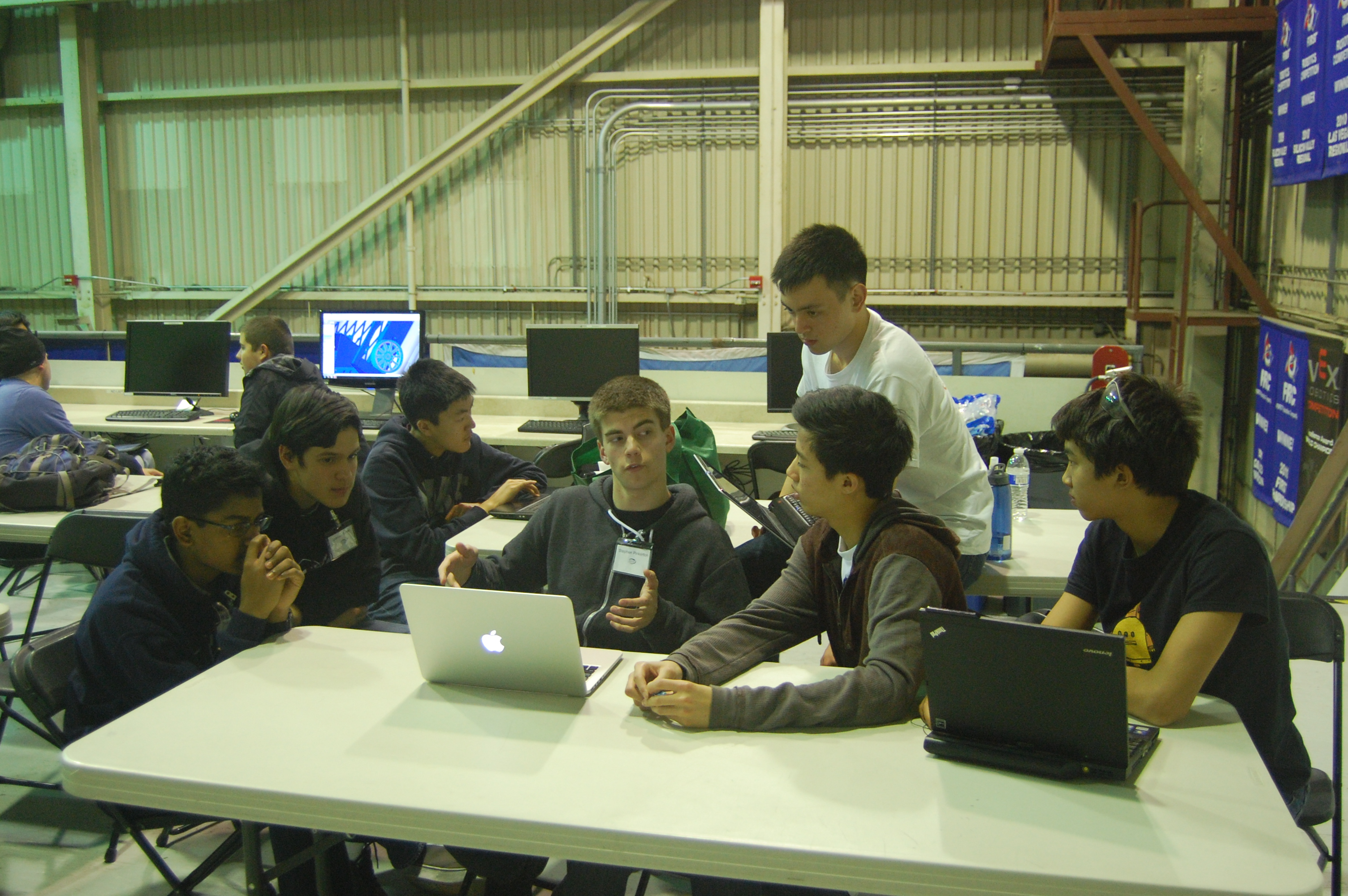
Intense Design Discussion

Lab Improvements

Today, we also worked on installing better light fixtures over the metals fabrication area in the lab. This will improve the lighting of the area, which will also improve machine quality and safety.
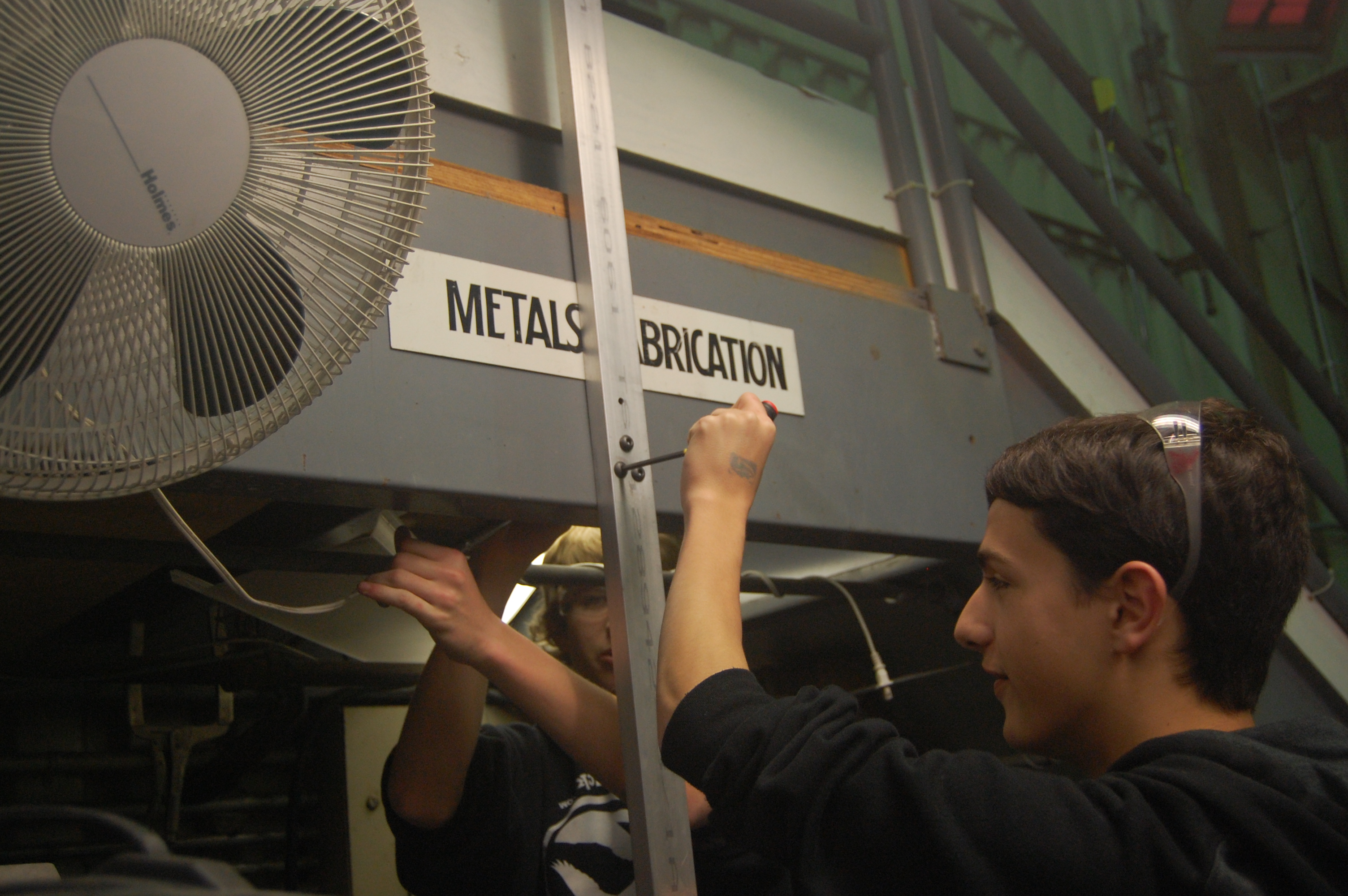
Nick and Joey install the light fixture into the side of the staircase

Manufacturing

The center bearing housings for the drive base were finished and polished today. As a result the manufacture of additional parts will begin.
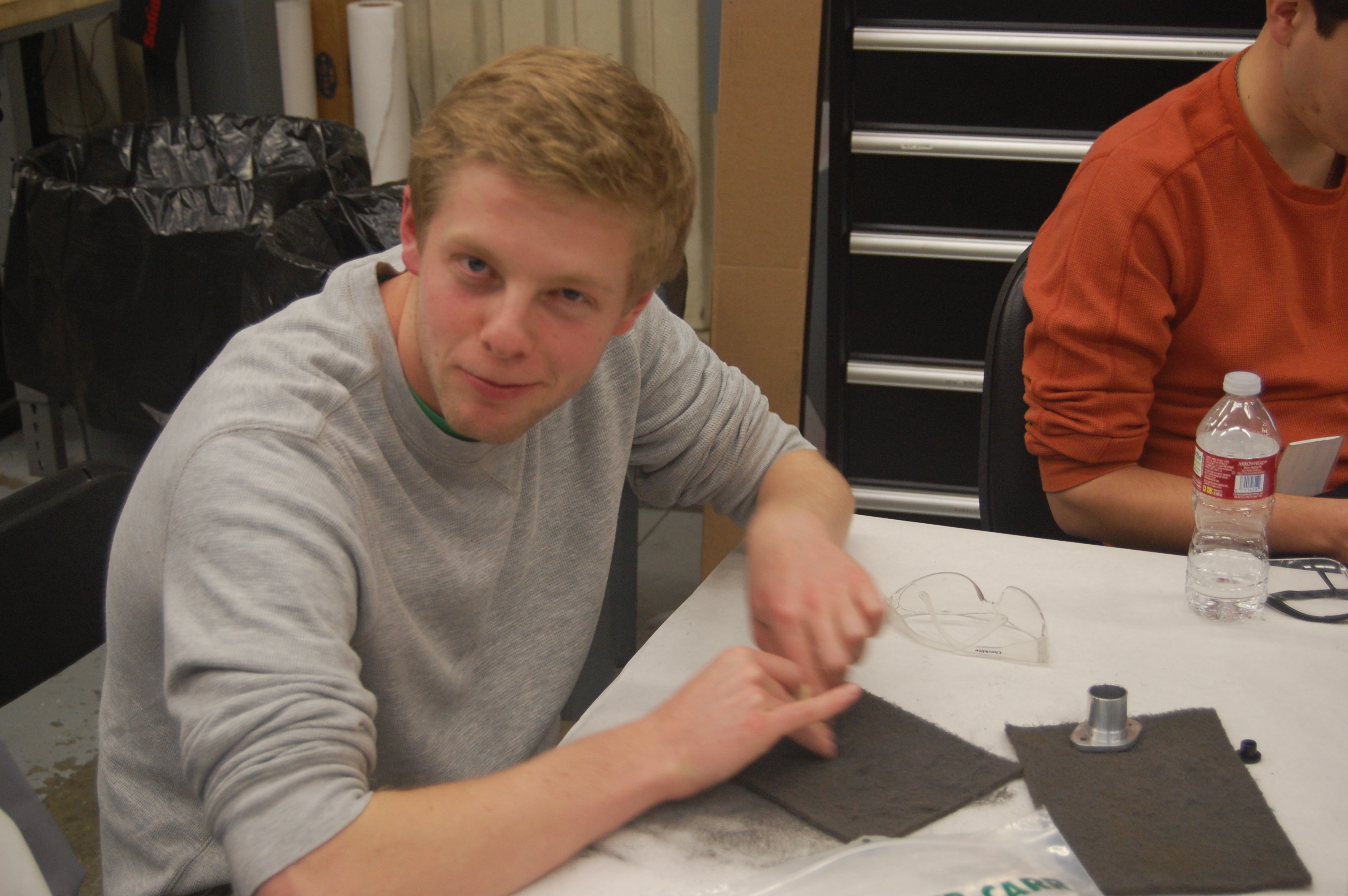
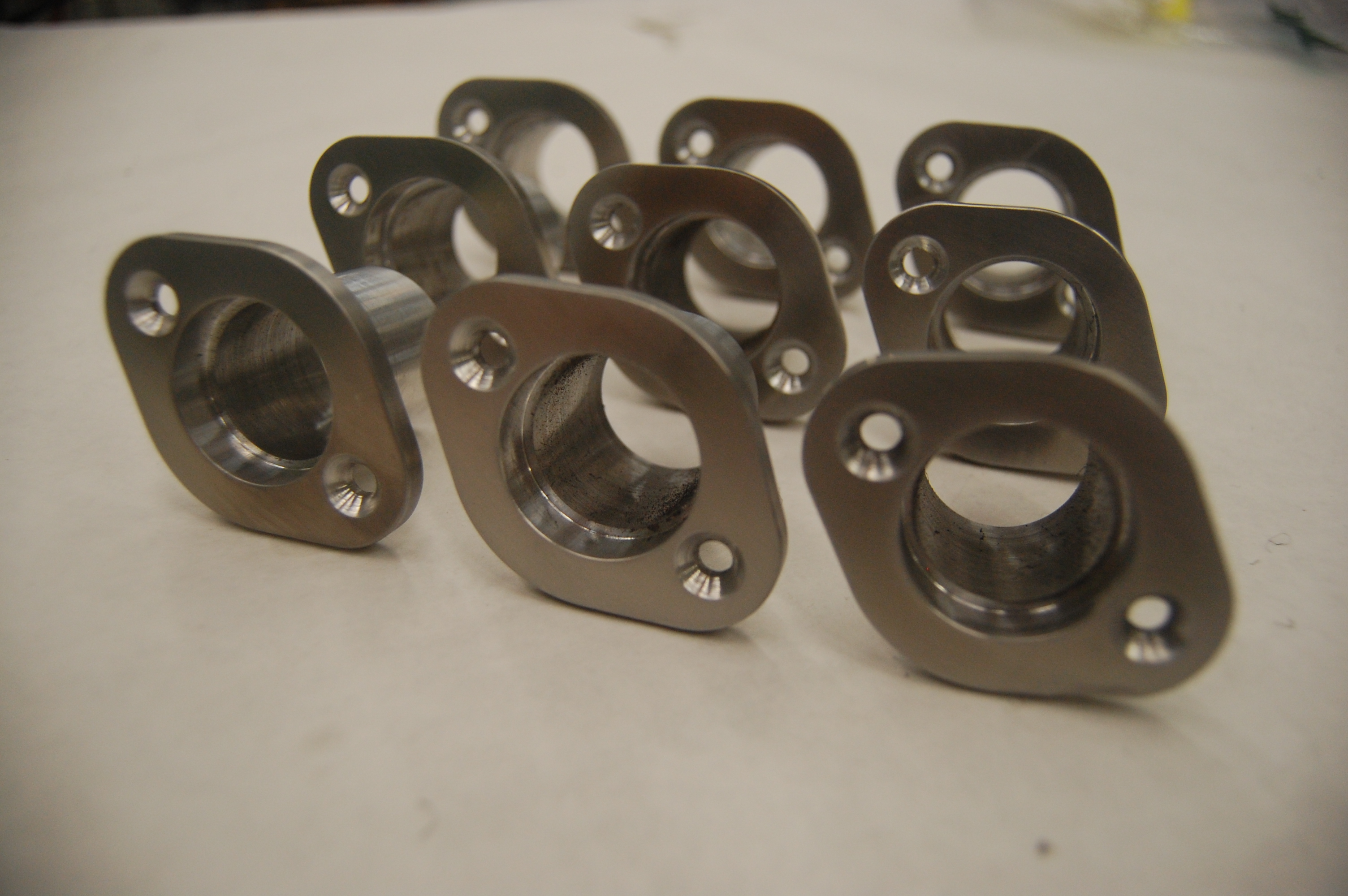
Adam polishes the bearing housingsPolished Bearing Housings

Action Items

  • Continue testing shooter prototype
  • Finish manufacturing new intake prototype
  • Finish drive base CAD
  • Send baseplate for manufacturing
  • Continue designing rest of the robot
  • Begin manufacturing parts for the drive base
Day 6: Prototyping the Catcher, Building a New and Improved Flywheel, and Organizing Parts

2014 FRC Build SeasonFIRST Robotics

by Jeffrey Kaufmann

New Flywheel Prototype

A team of students worked on the updated prototype of the flywheel shooter. The new prototype can shoot at an almost vertical angle, enabling the robot to toss the ball over the truss. It also allows for easier packing because its flywheel is smaller than that of the first prototype yet still retains the positives aspects of the original. Some problems occurred during the construction of the new wheel such as broken or splitting wood pieces delaying completion.

Broken wood pieces for flywheel shooter

This piece had to be replaced. The team attached the curved piece of the flywheel that allows for an approximately 45 degree trajectory.

Ahmed working with a group of students on the flywheel shooter hood

New Catcher Prototype

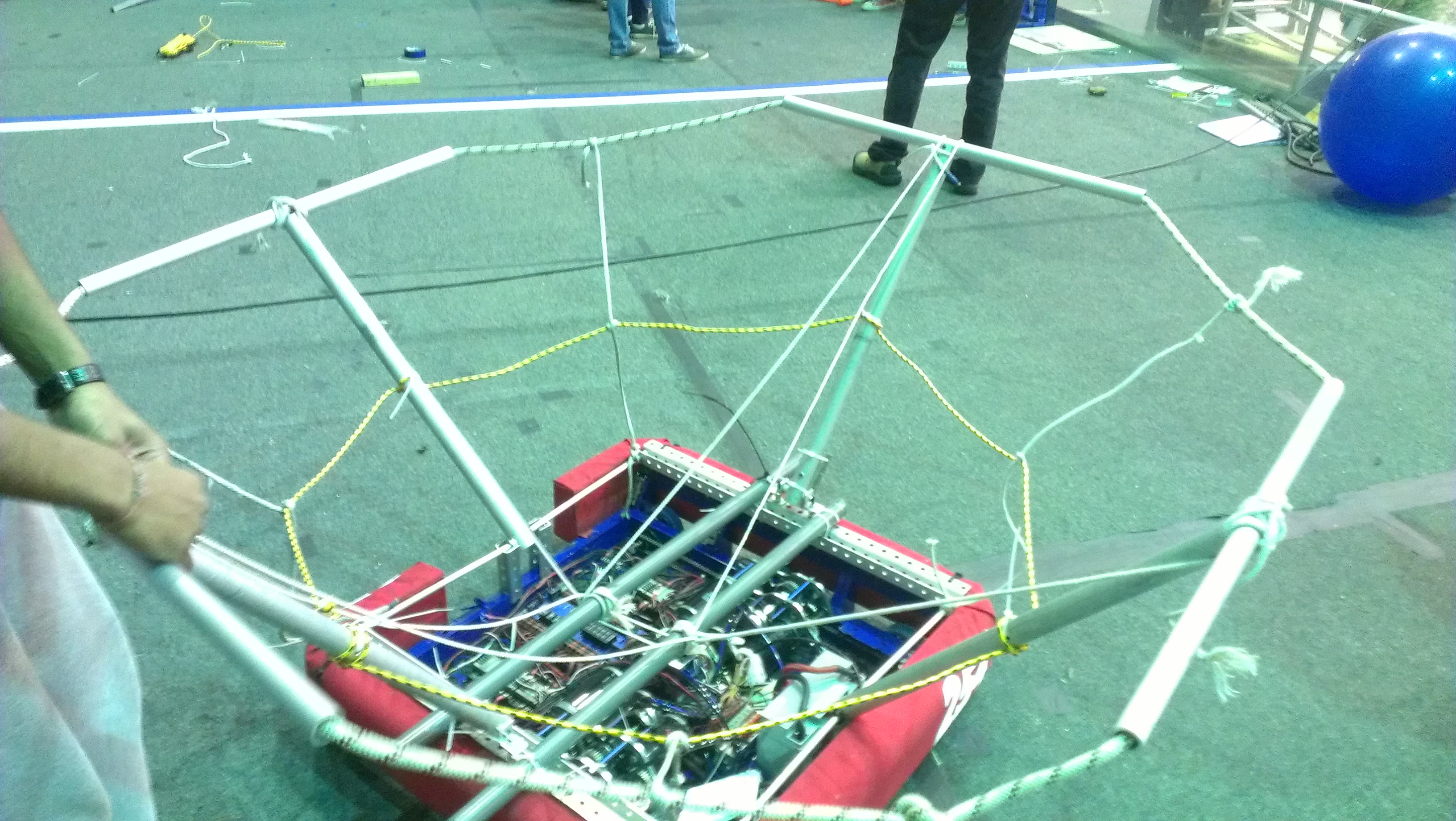
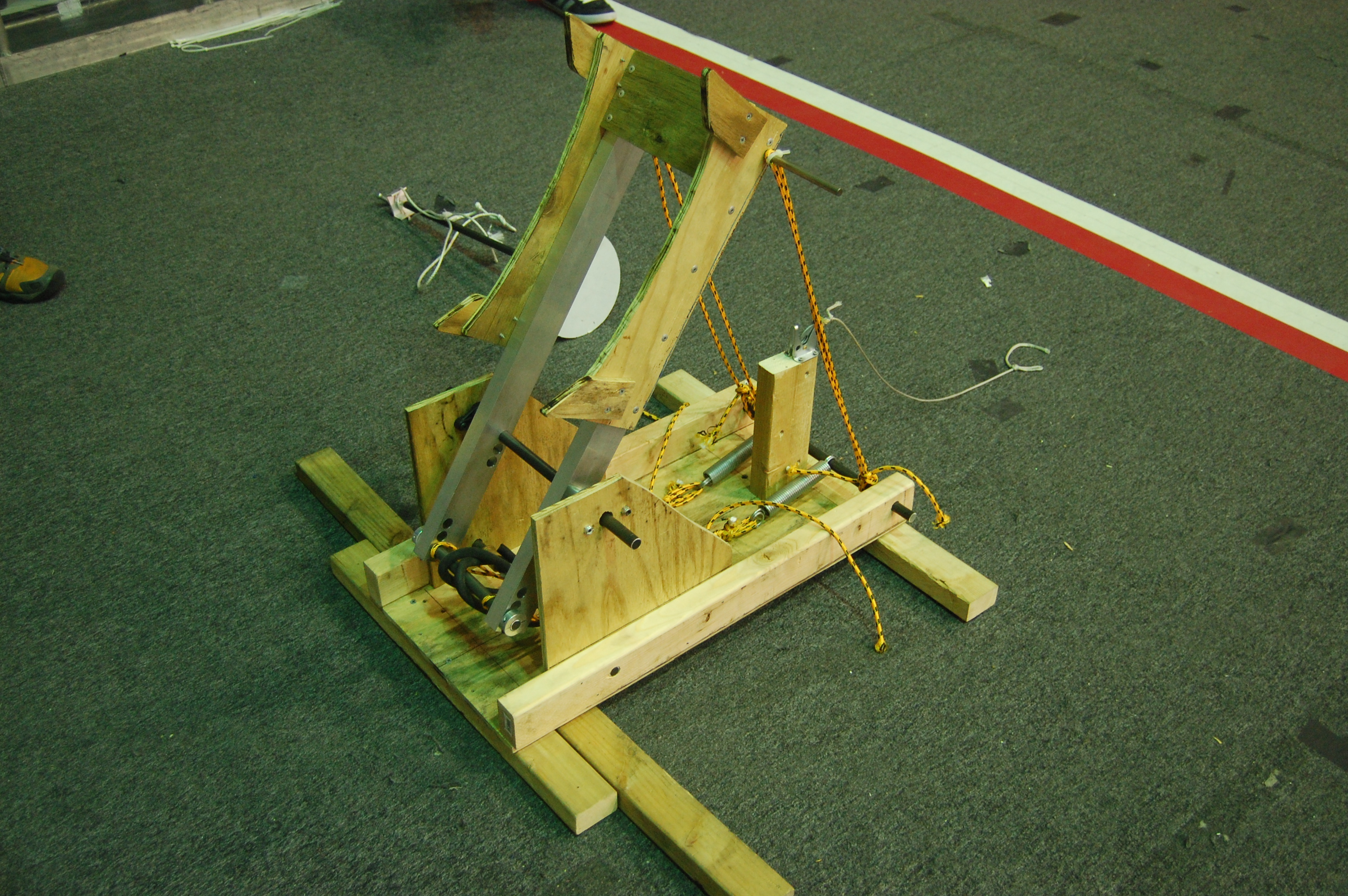
The catcher prototype

A group of students worked on fixing the second catcher prototype. This update will allow for a more mechanically robust device. The rope on the catcher and add a few metal pieces were overhauled today, resulting in a tighter, more stable and cleaner design.

Joey and Alex mill parts for the updated catcher. The parts they are milling are to be used on the new catcher to allow for more stability.

After testing the new mechanism while driving the results were quite satisfactory. The great mobility of the drive granted the ability to quickly get underneath the ball and receive an almost perfect catch.

Programming

The programming team worked hard on the coding on day #6. Today they made it so that the robot can now serve HTML pages. Furthermore, they had to refactor some of the code. In conclusion, while they had to restructure the code, this change did not affect how the code behaved.

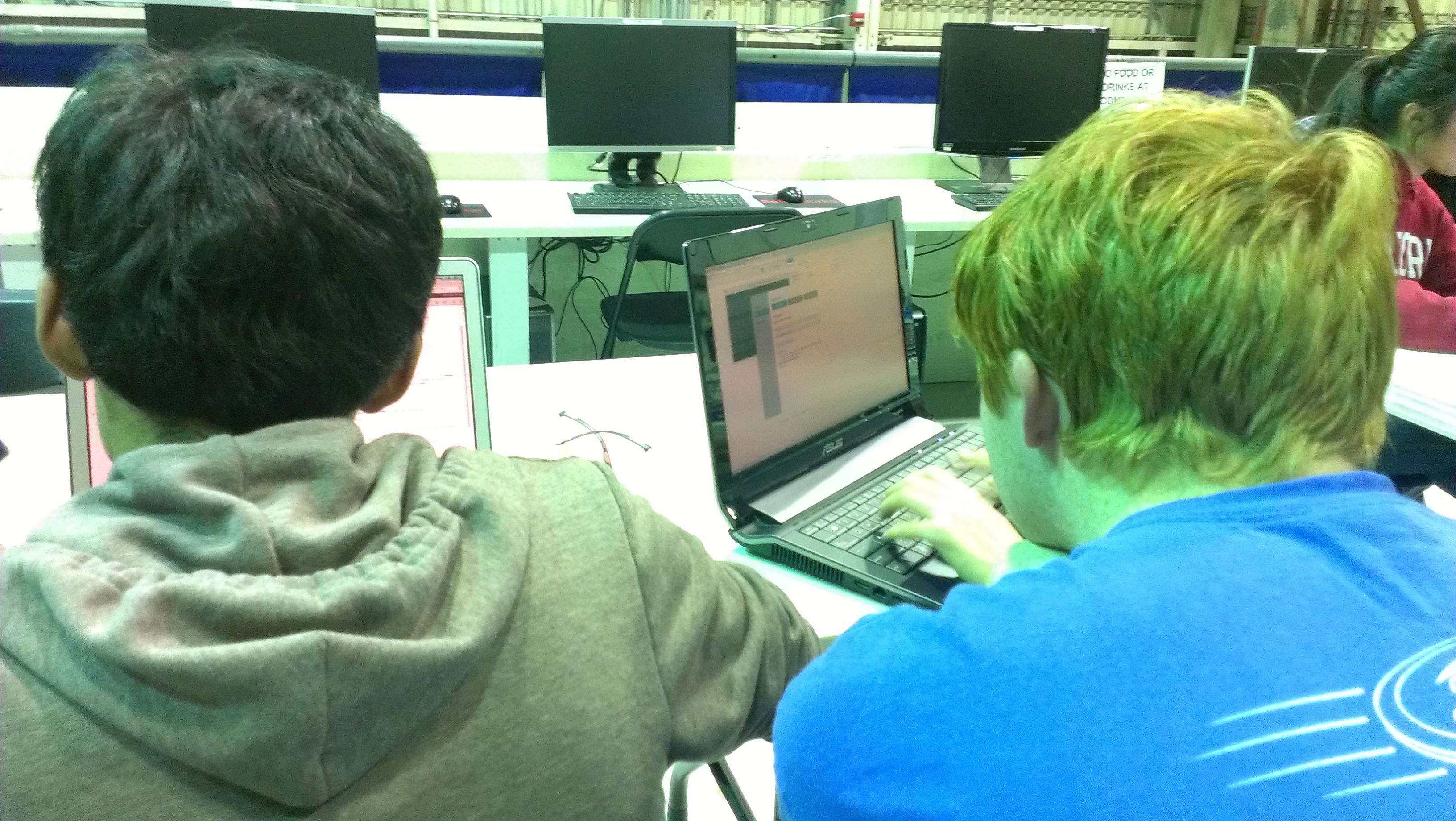
Art and Brandon coding

Organization of New Equipment

Recently, we received new equipment for the lab, such as soldering devices and other tools. Several students helped organize these new parts and categorized everything received into an Excel document, creating in effect an organized system of all the new equipment within a neat document.

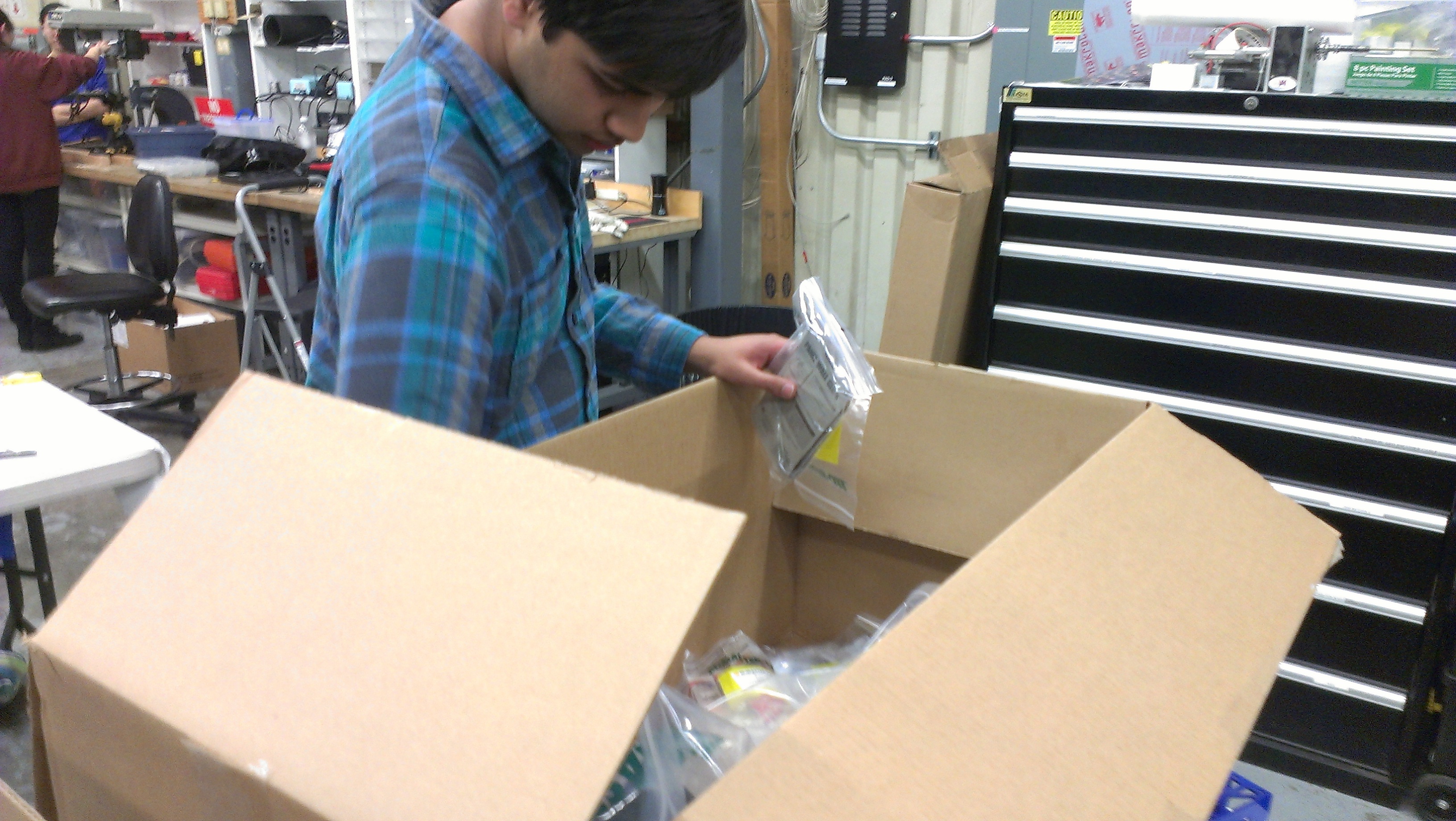
Mani examining the new shipment of equipment

Action Items

  • Continue helping Abhi and Dan with catcher prototype and an add intake system.
  • Continue helping Ahmed and Paul with shooter prototype improvements
  • Continue testing
  • Continue working on the drive base CAD with Andrew
Day 5: More Prototyping and Gearbox CAD

2014 FRC Build SeasonFIRST Robotics

Flywheel Shooter Prototype

Today, we continued work on a new flywheel shooter prototype. The team determined that smaller shooter wheels would make the shooter more packagable in the robot. We made some great progress and we should be able to complete it tomorrow.

Design

Work continued on the drive gearboxes today. Based on the results of the simulation discussed yesterday, we decided that we would move forward with 2 3 CIM motor gearboxes but would also design 2 CIM motor gearboxes that could be swapped in if necessary. Although this would reduce acceleration, it could lighten the robot by up to 8 lbs.Today, we added the Bimba pancake pistons to the two speed gearbox assembly. We are moving forward with the previously discussed ratios of 4.2:1, 19.6ft/s in high gear and 10.6:1, 7.6ft/s in low gear. The CAD is almost done and is only missing a few components.

Programming

Today the programmers continued work on the graphing system for the robot. They worked on getting a TCP/IP server running on the robot and working out the technicalities of using a browser to monitor the stream of data from the robot.

Action Items

Finish Gearbox CAD, begin finalizing Drive base CAD

Day 4: Prototypes, Coding, Drive base design

2014 FRC Build SeasonFIRST Robotics

Catcher Prototype

Today, we continued work on the catcher prototype, making it higher and wider so that it can better catch balls from all angles. Although the catcher is promising, its large size may be a problem when packaging mechanisms for the robot.

Catapult Prototype

The catapult prototype was finished today. The shooter is very smooth and can be easily reloaded in less than 5 seconds. It is consistent and accurate from up close (~2 ft from high goal) but mediocre from midway to the white zone. This shooter suffers from inconsistency in ball positioning within the catapult which could be improved with a better ball cradle.

The improved catapult features both springs and surgical tubing for tension, a sturdier frame, and ropes to act as a hard stop.

Flywheel Shooter Prototype

The flywheel shooter has been the most successful thus far with accuracy, precision, range, and simplicity. Because of its success (especially in scoring all 3 balls in under 5 seconds), we took it apart to replace the large wheels with smaller wheels while narrowing it to maintain ball compression with the smaller wheels. We hope to test this tomorrow.

Programming

Today, the programming team worked to get the 2013 practice robot up and running to test the drivebase. Several problems were encountered along the way. First, they had an SDK error on the robot which took them a long time to fix - eventually a cRio reflash solved the problem. Second, there was a problem with the wiring on the robot so they weren't receiving any data from the TCP server. They eventually fixed the problem and now they are working on a way to graph the data from the robot in a quick and easily readable way.

Over the next few days they will also work on are prototyping some autonomous for the robot as we determined the autonomous is very important strategically.

Programmers working on drive code upstairs.

Autonomous Strategy

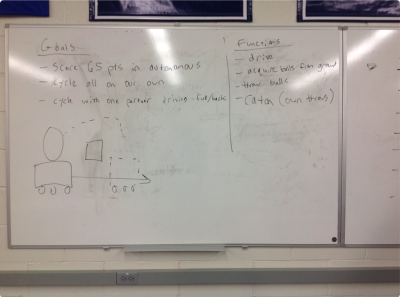
We have determined that the autonomous period is critical to our success in Aerial Assist, allowing the robot to score up to 65 points. Because of this, we want our robot to be able to score 3 balls in under 5 seconds. The flywheel prototype is the most promising for meeting this objective.

Over the next few days, the programming team plans to start working on drivebase control loops for autonomous, using Overkill as a practice base.

The programmers will use the Overkill practice drive base for initial autonomous testing.

Drivebase Design

Today, work began on the robot drivebase, taking heavy inspiration from last year's robot. The robot's 6WD drivebase is the same overall size (28" W x 27.75" L) with wheel wells that can accommodate up to 1.5" tread width. Today, we created a rough chassis in CAD and started work on the 2 speed drive gearbox.

The planned drive speeds are similar to last year (3 CIM motors per gearbox, 12:40 inital reduction, 15:48 low gear reduction, 28:38 high gear reduction, 3.5" wheel diameter, 19.6 ft/s & 7.7 ft/s theoretical speeds). Due to the tight clearance between the 40T gear and the dog, the outer diameter of the dog will need to be reduced somewhat. Overall, this is a very similar gearbox to last year.

To determine the acceleration performance of our planned ratios, we performed a simulation of the drivebase accelerating. We decided to optimize the robot for 10-15 foot sprints and found that the ratios worked well with these goals. Furthermore, we found that while the 6 CIM drivetrain could reach 10 or 15 feet 10-20% faster than the 4 motor drivetrain, it drew much more power and could lead to premature battery drain.

Andrew Torrance modeling the drive base chassis.
Action Items

  • Test flywheel shooter prototype.
  • Test intake prototype with Mani.
  • Continue working on drive base and gearbox design with Nagy.
  • Compare all 3 shooter prototypes and decide on which we want to use.
  • Continue work on drive code and autonomous planning with Stephen and Brandon.

Day 3: Prototyping continued, Autonomous strategies, and more

2014 FRC Build SeasonFIRST Robotics

Autonomous Strategy

Today, we discussed scoring all three balls in autonomous. In autonomous, only the area directly in front of the low goal is guaranteed to be undefended. The strategy would involve starting with one ball in the robot, one in front and one behind. The robot would immediately drop an intake on each side of the robot and drive to the hot goal to score, dragging the balls with it. We also discovered that a banner sensor was able to pick up the reflective tape, meaning that the robot wouldn’t need to a camera to detect the hot zones.

We discussed whether it was more beneficial to shoot from afar or really close to the goal. Several team members proposed that shooting 2-4 feet away would be best since it would more than likely increase the robot’s accuracy. The fly wheel shooter was set up about 3-4 feet away from the goal and was able to successfully score

Catapult Prototype

Catapult Prototype

A group today worked on a catapult prototype. A good amount of progress was made and it seems to be coming along well. The only things left to add are the rope, springs and hard stops.

Ball Catcher

Some of the students worked on a basic catcher prototype, making it from PVC pipe. They added a funnel to the top to increase the likelihood of the ball going in. It worked out well with some minor strengthening.

Programming

The programming team worked on a basic autonomous runner that uses threading. In essence, it allows for commands to be run while still allowing evaluation to occur. Also, in the event that a command should fail or timeout, the robot will skip the rest of the commands. One of the ideas that was brought up was separate compilation for the main code and autonomous routine to allow for quick changes to the autonomous without having to recompile the whole codebase.

Day 2: Prototyping, Drive base Design, Initial Coding

2014 FRC Build SeasonFIRST Robotics

Prototyping Shooters

Three different teams worked to design, build, and test three different ways to launch the ball. They built a catapult, a linear launcher, and a flywheel shooter.

All three launchers lined up on the field.

Catapult Launcher

A catapult was designed and built today using a system similar to other catapults we've seen for this year and 2008. This quick prototype was not strong enough to launch balls far enough and the team needs to improve the design tomorrow perhaps by making it more stable and utilizing another tension device such as surgical tubing.

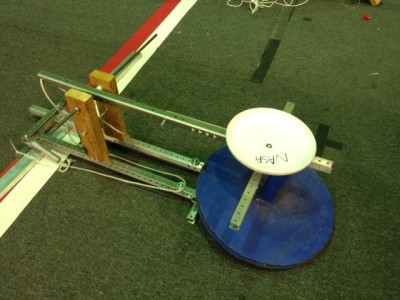
The catapult launcher uses springs assisted by rope and pulleys. The frisbee on the end of the rod helps to hold the ball.

Linear "Trident" Launcher

After it was built last night, little progress was made today on the trident launcher.The only change that was made was to the springs that were used; this change showed little improvement in shot distance or consistency.

Flywheel Shooter

The flywheel shooter was completed today, and students and mentors began testing with it. Of the three shooter prototypes, the flywheel had the best shots and most consistency. Additionally, the team could test the effects of ball pressure on the consistency and accuracy of shots for the first time in the season. By the end of the night the flywheel shooter made about 1/3 to 1/2 of its shots.

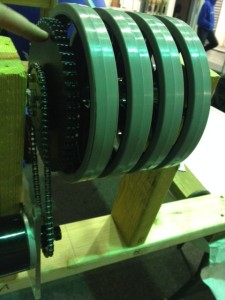
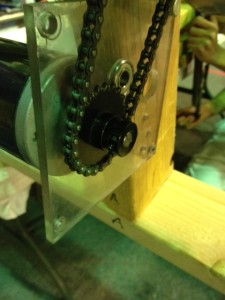
Zoomed out view of flywheel shooter. The ball is loaded from the bottom.The 8After initial testing, a larger sprocket was used on the CIM to increase the speed of the flywheels.Extra sprockets were added on the side to add weight to the flywheels, helping them to launch the large ball.

Please enable Javascript to watch this video

Programming

The programmers met today and decided on what they wanted to work on for the next few weeks.

It was decided that we would like to spend time building debugging tools for the robot. The main thing that needs to be built is a way to live graph motor and sensor states, much like the PID tuner we had in 2012.

The programmers also decided to rework how autonomous mode will be executed so that control flow can be used in autonomous rather than just a straight sequence of events.

Tom and Stephen started a new Java project for the 2014 robot and got basic CheesyDrive working on the 2013 practice drivebase. This code will use a new subsystem architecture and will use very little code provided by WPI.

The Overkill practice drive base is working and looking great! A gearbox had to be replaced, pneumatics fixed, and some wiring repaired.
Field Assembly

The team completed the construction and mounting of one full set of high goals. The goals have a ramp designed to return the balls back onto the field so that they do not fall onto drivers. We will use these wooden goals while we wait for the official set to come in from FIRST.

Drive Base Design

Today, the team began modeling parts for the gearboxes and chassis. We plan to design a drive base similar to last year but without a PTO on the gearbox. Tonight, we designed the gearbox output shafts, intermediate shafts and wheel shafts which will be sent out to sponsor Modern Machine Company tomorrow.
Action Items

  • Continue gearbox design
  • Continue testing and improving flywheel prototype.
  • Continue testing puncher prototype, try to increase power.
  • Rebuild catapult prototype, must be stronger and more stable.
  • Programmers continue improving drive code and autonomous tuning with Tom.
  • Improve catcher prototype with Dan.
  • Possibly begin machining parts for the drive base.

Day 1: Kickoff and Game Analysis

2014 FRC Build SeasonFIRST Robotics#FRC Build Blog#prototyping

Kickoff Overview

Today kicks off the 2014 FRC Season for Team 254. The mentors and students are equally ecstatic for this year's challenge, Aerial Assist.

Google Drive PDF of the Game Manual:
https://drive.google.com/file/d/0B_TTQ23_FVkAWjM0cjBsbUw1TkU/edit?usp=sharing

Game Animation:

Team Kickoff

Today a group of students attended the 6:30 to 9:30 local San Jose kickoff at Morris Dailey Auditorium. A few others watched the NASA Live Stream from home. Subsequently, at 10, the team met for the team's kickoff event and discussed the plan for the coming six-week build season. The team then broke up into groups and discussed strategies in terms of necessary robot qualities, priority tasks, and possible scores. The parents and mentors simultaneously discussed logistics and the build plan in more detail until the student leaders returned to present their ideas to the entire group.

Game Analysis

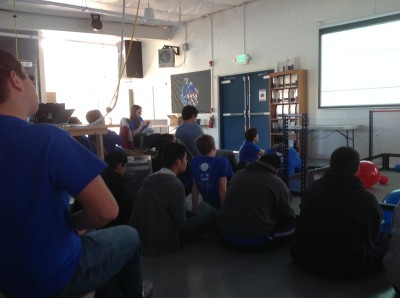
Students and mentors discuss rules

After lunch, about 70 students congregated in the Bellarmine Robotics Lab to examine and better understand the team rules. In particular, they discussed the definitions of assist and possession and clarified the rules for such actions and others on the playing field. For the first two and a half hours, the group went through the relevant sections of the game manual and encouraged group discussion to find possible holes and list them to check with FIRST later. The group noticed some deviations in rules from previous years: the field is two feet narrower at 25 feet, and the match is 30 seconds longer. The autonomous period is five seconds shorter at 10 seconds, and the tele-operated period is 35 seconds longer at 2:20. Andrew Torrance noted the possible issues with battery life with the 25% longer match time. In addition to discussing rules, the team also formulated questions concerning the regulations to ask FIRST:

  • Can teams do assists in autonomous?
  • Can teams hold balls in autonomous to do an assist later?
  • Can a team throw over the truss again to try and get a catch, say, if an alliance earns a successful truss score, but does not successfully catch. Can the alliance try for a second chance? In other words, while the group recognizes that only one truss score counts per cycle, do the truss score and the associated catch score have to be earned on the first attempt?
  • Do teams get points (ex. throwing and catching in the end game) immediately, or do the teams only get them once the cycle completes? This is related to the question of assisting in autonomous. Possible answer: Maybe not because autonomous shots are not cycles.
  • Teams need clarification on which goalie zone to which the initial position regulations refer. In which goalie zone do teams start if they do not want to start in the white zone? Can human players help in the middle of assists?
  • Can human players catch truss scores to make them legal?
  • Teams need a better definition of possession for robots in general. For example, for a trough-like robot, is holding the ball as it rolls considered possession? What time period differentiates harmless "deflection" from "possession" of the opponent game object (which earns a severe technical foul penalty)

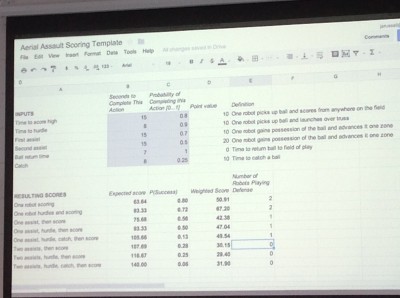
Jared's strategic model with numbersJared's strategic model with explanations

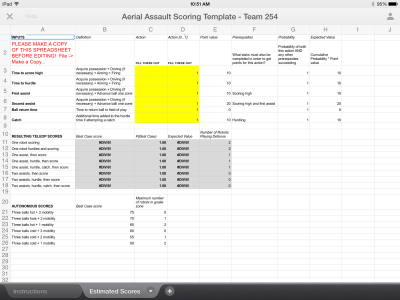
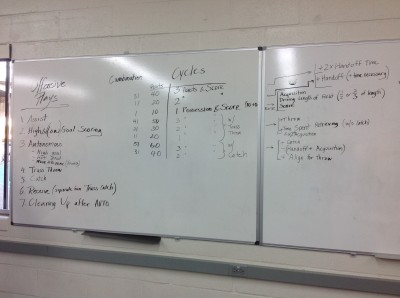
After a short break, the team's new mentor Jared set up a Google Spreadsheet that evaluated the effectiveness of certain "assist" strategies, with combinations of 1-3 assists, a truss "hurdle," and the truss "catch." He took student input for the point values corresponding to each action, the expected time taken for each action, and the probability of the action being carried out successfuly. He then calculated out a rough model of the weighted point values expected from strategies in the tele-operated mode of the match. The group was then able to analyze the efficiency of certain strategies. In the process of discussing strategies, the team also created two other strategy charts and lists (pictured).

Initial Strategic ModelPat's Strategic Model with Conclusions

Further Analysis and Prototyping

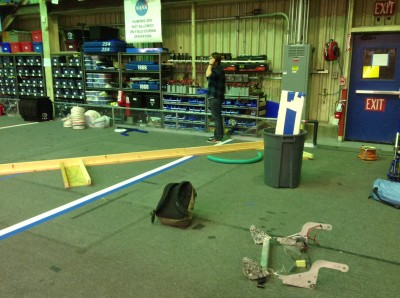
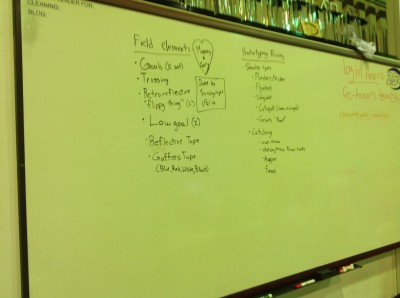
Discussion at NASA concerning field elements and prototyping

After dinner, approximately 20 students worked with the mentors to list some possible designs and to plan out the next week's prototyping schedule. The group prioritized the prototyping of possible modules, specifically shooter designs and catching mechanisms, with design input from students and advice from our experienced mentors. They also discussed what field elements were most necessary for prototyping for the next few weeks and listed them as well. Finally, they discussed the mathematics and physics of shooting a 25-inch, compressible, bulky, and irregular projectile into a 3-foot goal. For example, mentors noted that we might as well design a robot to shoot from farther away from the goal, since the shallower angle of entry would give greater allowance for error. Mentor Paul Ventimiglia also determined that giving the large exercise ball some backspin helped in precision, though it also required more energy to apply both linear force and rotational torque.

Goal in progress, to be mounted

Tonight, we mainly focused on the building a preliminary goal with which to prototype before the field arrives and on prototyping and testing the effectiveness of a flywheel shooter and a slingshot shooter. Paul worked primarily with Godwin Vincent, James Holden, Jeremy Tanlimco, Vidur Maheshwari, Miggy Francisco, and Joncarlo Avila to design, sketch, and begin building a prototype for testing the effectiveness of a flywheel on such a large game object. They determined the best wheels with which to work based on their ability to grip the surface of the unusual game object. The prototype design was finalized and they plan to use four large wheels on the same axle hooked up to curved plywood "rims" to optimize the compression on the ball and somewhat minimize the size of the already bulky prototype. EJ Sabathia and Noah Marcel worked on the slingshot design, taping a 2013 Ultimate Ascent Frisbee to surgical tubing and hooking up the system to an alliance wall. The ball consistently bounced about 1/3 of the way down the court, given about 4 or 5 feet of backward stretch.

Paul sketches a design for and directs students in building the flywheel shooter prototype

Lab closing time: 11:00

Action Items

Translation: Future Work Opportunities for Members

  • Help Paul with the Flywheel Shooter design
  • Help EJ with Slingshot Shooter design
  • Help Nick Mercadante machine metal for prototypes
  • Ask mentors to begin and lead prototyping projects for other designs

Diversity Day, 2013

FIRST RoboticsPublic Relations#diversity day

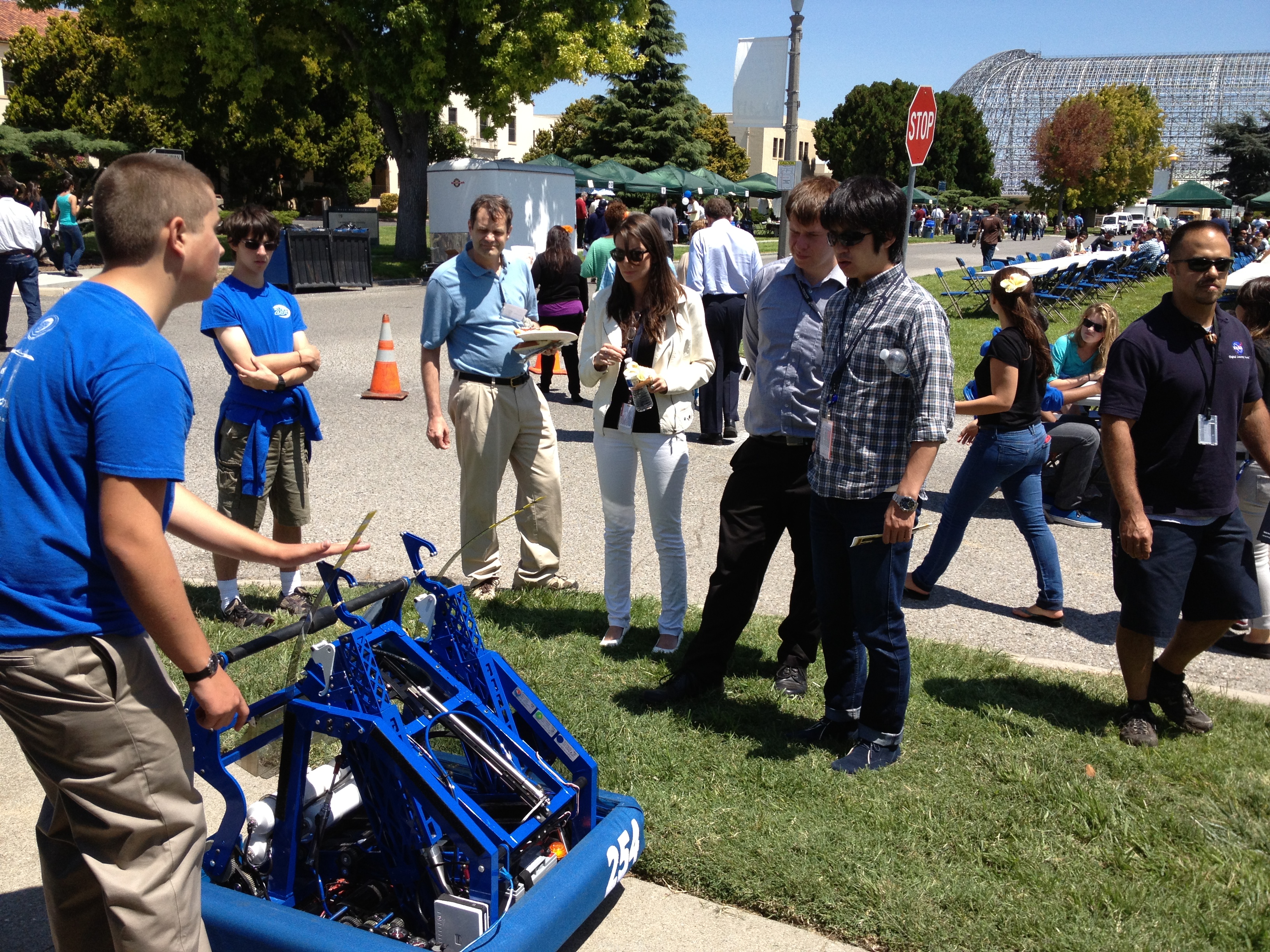
On August 7, several members from our team had the opportunity to participate in NASA’s Diversity Day. As a NASA house team, Team 254 was able to present three robots; Overkill, Skyfire, and Slipstream to NASA engineers and staff who stopped by our booth.

Andrew Torrance explains Overkill's hanging mechanism to NASA employees.

Mani Gnanasivam, James Holden, Andrew Torrance, Namit Mishra, Nick Gunady, Jack Lee, and Chris Sides attended.

After setting up the booth, the team members fielded questions from curious onlookers. Many NASA engineers were asked what program Team 254 used to design the robot, which programming languages were used, and other technical questions. All the team members answered questions asked by the dozens of people who stopped by the exhibit. After lunch, the members demonstrated Overkill’s frisbee and hanging abilities. Andrew Torrance explained multiple times to the crowd the the rules of last year’s game and Overkill’s scoring abilities. After presenting, we packed up and relaxed at the lab.

After work

Afterwards


Sponsor Visits

FIRST RoboticsPublic Relations

Over the past three days, Team 254 has had the opportunity to visit two of its Gold level sponsors, BAE Systems and Ooyala, and demonstrate the fruits of its labor.

Richard Lin speaking to an Ooyala Employee
DSC_1084

Overkill fully extended showing off its hanging capabilities
DSC_1094

Students demoing Overkill

BAE Visit

On June 5, a multicultural group of five students and one mentor celebrated diversity with BAE at the BAE Systems Diversity Fair. The students participating were Nagy Hakim, Scott Cardona, Richard Lin, Abhi Kumar, and Louis Lin. Mentor Dennis Jenks provided Team 254 with the amazing opportunity to come to the fair. People in the event included many BAE engineers and programmers, who added excitement because students had a chance to talk to others who work in the same fields of interest.

Students transported two robots, Overkill and Shockwave, to the event to exhibit the team's work and extend appreciation for BAE's consistent support throughout the years. Many of their employees came out to visit the team's pit and talk about the robots' designs and controls. After opening ceremonies, Shockwave fired a barrage of T-shirts into a crowd. Later, drivers and operators demonstrated Overkill's driving and frisbee shooting capabilities.

At the conclusion of the fair, Dennis led the students on a private tour around BAE's impressive facility. Four tour guides exhibited the workings of BAE, including military vehicles, machines, simulations, and controls.


Ooyala Visit

Today, the team visited one of our Gold level sponsors, Ooyala. Our programming mentor Patrick Fairbank, who works at Ooyala, set the day up so the team could demo Overkill. The team visited their office, located in Mountain view and set up. There were about 40 or so members of the company that gathered around asking questions about the various subsystems and function of the robot.

Many members of the company also played Ultimate Frisbee after work on  a team. These members lined up on one end of the space set up while Abhi Kumar and Richard Lin drove the robot around, picking up and shooting frisbees towards the employees(At a much lower, catchable speed). Meanwhile, Nagy Hakim answered questions about the robot. At the end of the demo the team members stuck around for pizza and presented the award to Patrick for Ooyala's sponsorship.

Team 254 thanks BAE Systems and Ooyala for their continued support in the robotics program.

Demo for 2013 Zero Robotics Winners

FIRST RoboticsPublic Relations

2013-04-16 18.20.24

Yesterday, Mark Leon and Drew Price arranged for the current Zero Robotics Winners to tour the NASA Ames Facilities. Team 254 represented the NASA Robotics Alliance as part of the tour. The 20 or so members of their winning team filed in to the lab and were given a presentation by Abhi Kumar and Richard Lin as to the history, function, and current robot of the team. Afterwards, Abhi and Scotty Cardona demonstrated the robot's shooting capabilities and hanging prowess. To finish off the tour, Mark took the group upstairs and talked more about the NASA Robotics Alliance and the summer Robotics Academy. As the members left, we brought Shockwave out onto the field and answered final questions for the group.