522 posts

Day 2: Prototyping, Drive base Design, Initial Coding

2014 FRC Build SeasonFIRST Robotics

Prototyping Shooters

Three different teams worked to design, build, and test three different ways to launch the ball. They built a catapult, a linear launcher, and a flywheel shooter.
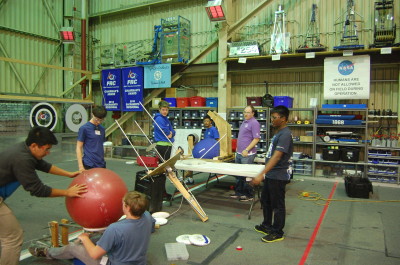
All three launchers lined up on the field.

Catapult Launcher

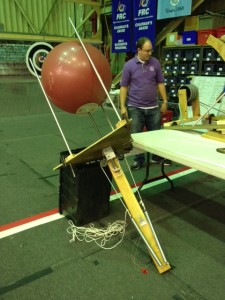
A catapult was designed and built today using a system similar to other catapults we've seen for this year and 2008. This quick prototype was not strong enough to launch balls far enough and the team needs to improve the design tomorrow perhaps by making it more stable and utilizing another tension device such as surgical tubing.
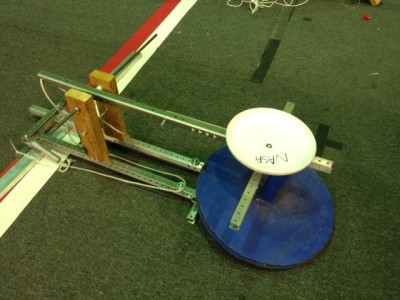
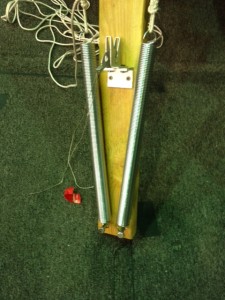
The catapult launcher uses springs assisted by rope and pulleys. The frisbee on the end of the rod helps to hold the ball.

Linear "Trident" Launcher

After it was built last night, little progress was made today on the trident launcher.The only change that was made was to the springs that were used; this change showed little improvement in shot distance or consistency.

Flywheel Shooter

The flywheel shooter was completed today, and students and mentors began testing with it. Of the three shooter prototypes, the flywheel had the best shots and most consistency. Additionally, the team could test the effects of ball pressure on the consistency and accuracy of shots for the first time in the season. By the end of the night the flywheel shooter made about 1/3 to 1/2 of its shots.
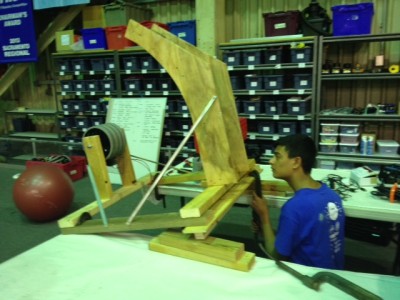
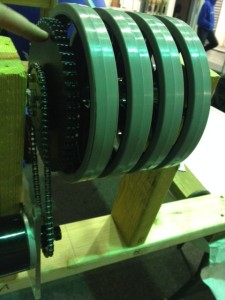
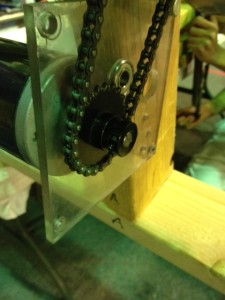
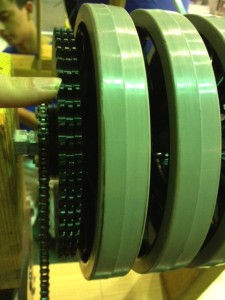
Zoomed out view of flywheel shooter. The ball is loaded from the bottom.The 8After initial testing, a larger sprocket was used on the CIM to increase the speed of the flywheels.Extra sprockets were added on the side to add weight to the flywheels, helping them to launch the large ball.

Please enable Javascript to watch this video

Programming

The programmers met today and decided on what they wanted to work on for the next few weeks.

It was decided that we would like to spend time building debugging tools for the robot. The main thing that needs to be built is a way to live graph motor and sensor states, much like the PID tuner we had in 2012.

The programmers also decided to rework how autonomous mode will be executed so that control flow can be used in autonomous rather than just a straight sequence of events.

Tom and Stephen started a new Java project for the 2014 robot and got basic CheesyDrive working on the 2013 practice drivebase. This code will use a new subsystem architecture and will use very little code provided by WPI.
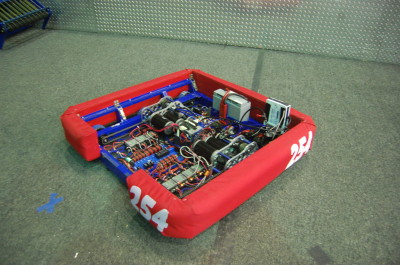
The Overkill practice drive base is working and looking great! A gearbox had to be replaced, pneumatics fixed, and some wiring repaired.

Field Assembly

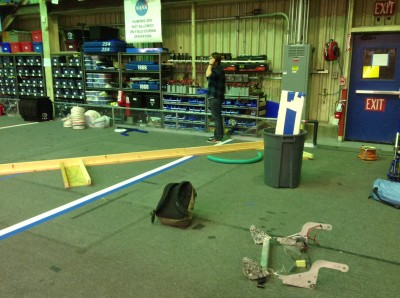
The team completed the construction and mounting of one full set of high goals. The goals have a ramp designed to return the balls back onto the field so that they do not fall onto drivers. We will use these wooden goals while we wait for the official set to come in from FIRST.

Drive Base Design

Today, the team began modeling parts for the gearboxes and chassis. We plan to design a drive base similar to last year but without a PTO on the gearbox. Tonight, we designed the gearbox output shafts, intermediate shafts and wheel shafts which will be sent out to sponsor Modern Machine Company tomorrow.

Action Items

  • Continue gearbox design
  • Continue testing and improving flywheel prototype.
  • Continue testing puncher prototype, try to increase power.
  • Rebuild catapult prototype, must be stronger and more stable.
  • Programmers continue improving drive code and autonomous tuning with Tom.
  • Improve catcher prototype with Dan.
  • Possibly begin machining parts for the drive base.
Day 1: Kickoff and Game Analysis

2014 FRC Build SeasonFIRST Robotics#FRC Build Blog#prototyping

Kickoff Overview

Today kicks off the 2014 FRC Season for Team 254. The mentors and students are equally ecstatic for this year's challenge, Aerial Assist.

Google Drive PDF of the Game Manual:
https://drive.google.com/file/d/0B_TTQ23_FVkAWjM0cjBsbUw1TkU/edit?usp=sharing

Game Animation:

Team Kickoff

Today a group of students attended the 6:30 to 9:30 local San Jose kickoff at Morris Dailey Auditorium. A few others watched the NASA Live Stream from home. Subsequently, at 10, the team met for the team's kickoff event and discussed the plan for the coming six-week build season. The team then broke up into groups and discussed strategies in terms of necessary robot qualities, priority tasks, and possible scores. The parents and mentors simultaneously discussed logistics and the build plan in more detail until the student leaders returned to present their ideas to the entire group.

Game Analysis

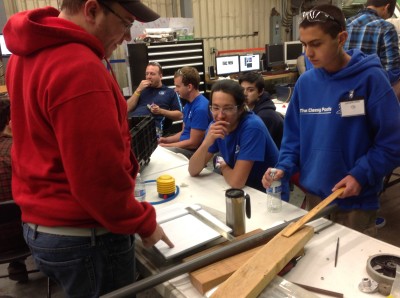
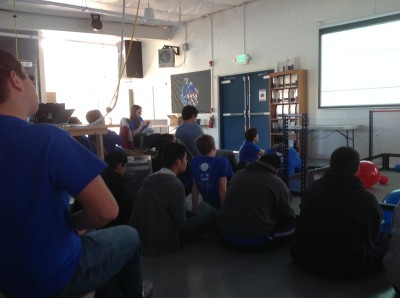
Students and mentors discuss rules

After lunch, about 70 students congregated in the Bellarmine Robotics Lab to examine and better understand the team rules. In particular, they discussed the definitions of assist and possession and clarified the rules for such actions and others on the playing field. For the first two and a half hours, the group went through the relevant sections of the game manual and encouraged group discussion to find possible holes and list them to check with FIRST later. The group noticed some deviations in rules from previous years: the field is two feet narrower at 25 feet, and the match is 30 seconds longer. The autonomous period is five seconds shorter at 10 seconds, and the tele-operated period is 35 seconds longer at 2:20. Andrew Torrance noted the possible issues with battery life with the 25% longer match time. In addition to discussing rules, the team also formulated questions concerning the regulations to ask FIRST:

  • Can teams do assists in autonomous?
  • Can teams hold balls in autonomous to do an assist later?
  • Can a team throw over the truss again to try and get a catch, say, if an alliance earns a successful truss score, but does not successfully catch. Can the alliance try for a second chance? In other words, while the group recognizes that only one truss score counts per cycle, do the truss score and the associated catch score have to be earned on the first attempt?
  • Do teams get points (ex. throwing and catching in the end game) immediately, or do the teams only get them once the cycle completes? This is related to the question of assisting in autonomous. Possible answer: Maybe not because autonomous shots are not cycles.
  • Teams need clarification on which goalie zone to which the initial position regulations refer. In which goalie zone do teams start if they do not want to start in the white zone? Can human players help in the middle of assists?
  • Can human players catch truss scores to make them legal?
  • Teams need a better definition of possession for robots in general. For example, for a trough-like robot, is holding the ball as it rolls considered possession? What time period differentiates harmless "deflection" from "possession" of the opponent game object (which earns a severe technical foul penalty)

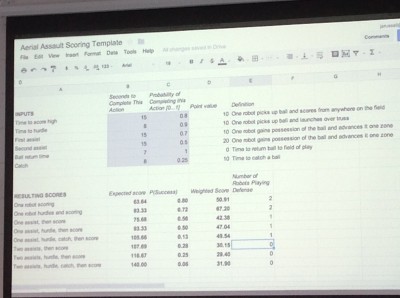
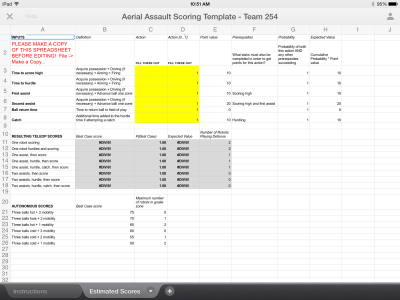
Jared's strategic model with numbersJared's strategic model with explanations

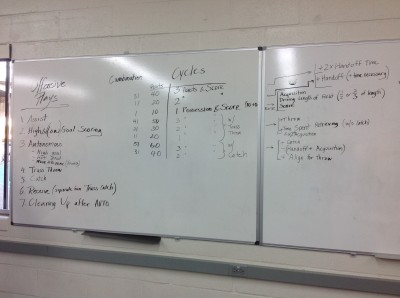
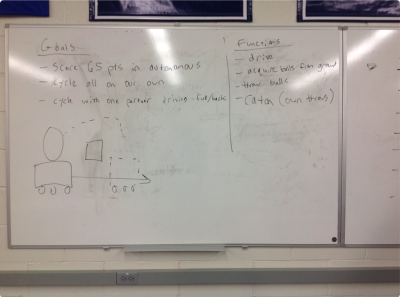
After a short break, the team's new mentor Jared set up a Google Spreadsheet that evaluated the effectiveness of certain "assist" strategies, with combinations of 1-3 assists, a truss "hurdle," and the truss "catch." He took student input for the point values corresponding to each action, the expected time taken for each action, and the probability of the action being carried out successfuly. He then calculated out a rough model of the weighted point values expected from strategies in the tele-operated mode of the match. The group was then able to analyze the efficiency of certain strategies. In the process of discussing strategies, the team also created two other strategy charts and lists (pictured).

Initial Strategic ModelPat's Strategic Model with Conclusions

Further Analysis and Prototyping

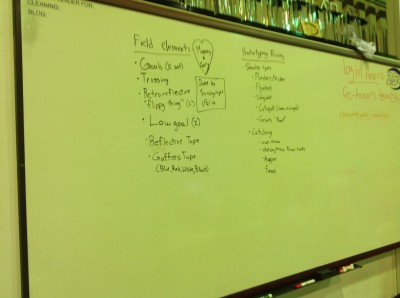
Discussion at NASA concerning field elements and prototyping

After dinner, approximately 20 students worked with the mentors to list some possible designs and to plan out the next week's prototyping schedule. The group prioritized the prototyping of possible modules, specifically shooter designs and catching mechanisms, with design input from students and advice from our experienced mentors. They also discussed what field elements were most necessary for prototyping for the next few weeks and listed them as well. Finally, they discussed the mathematics and physics of shooting a 25-inch, compressible, bulky, and irregular projectile into a 3-foot goal. For example, mentors noted that we might as well design a robot to shoot from farther away from the goal, since the shallower angle of entry would give greater allowance for error. Mentor Paul Ventimiglia also determined that giving the large exercise ball some backspin helped in precision, though it also required more energy to apply both linear force and rotational torque.

Goal in progress, to be mounted

Tonight, we mainly focused on the building a preliminary goal with which to prototype before the field arrives and on prototyping and testing the effectiveness of a flywheel shooter and a slingshot shooter. Paul worked primarily with Godwin Vincent, James Holden, Jeremy Tanlimco, Vidur Maheshwari, Miggy Francisco, and Joncarlo Avila to design, sketch, and begin building a prototype for testing the effectiveness of a flywheel on such a large game object. They determined the best wheels with which to work based on their ability to grip the surface of the unusual game object. The prototype design was finalized and they plan to use four large wheels on the same axle hooked up to curved plywood "rims" to optimize the compression on the ball and somewhat minimize the size of the already bulky prototype. EJ Sabathia and Noah Marcel worked on the slingshot design, taping a 2013 Ultimate Ascent Frisbee to surgical tubing and hooking up the system to an alliance wall. The ball consistently bounced about 1/3 of the way down the court, given about 4 or 5 feet of backward stretch.

Paul sketches a design for and directs students in building the flywheel shooter prototype

Lab closing time: 11:00

Action Items

Translation: Future Work Opportunities for Members

  • Help Paul with the Flywheel Shooter design
  • Help EJ with Slingshot Shooter design
  • Help Nick Mercadante machine metal for prototypes
  • Ask mentors to begin and lead prototyping projects for other designs

254A receives Excellence at Bakersfield VEX Tournament

TournamentsVEX Robotics

On Saturday, December 14th, VEX Teams 254A and 254F competed at the Frontier Titan Robotics Tournament in Bakersfield, California.

Our teams had some tough matches in the qualifying rounds, and even had to go against each other. Despite that, 254A went undefeated and seeded 3rd, while 254F seeded 13th.

254F was picked by the 2nd seeded team, 563, Titan Robotics. This alliance later picked Team 1437X, Patriot Robotics.

254A picked 1437Z and then 1437Y, Patriot Robotics.

After easily getting through the quarterfinals, 254A had to face 254F in the semifinals. 254A ended up narrowly advancing to face the number 1 seeded alliance featuring teams 21D, 21, and 1837A. In the finals, robot problems plagued 254A's alliance in the first round. Then, in the second round a field disconnect occurred that resulted in 254A, 1437Y, and 21 being disconnected and only 21D left to play the match by themselves.

During the awards ceremony, Team 254A was given the Excellence Award for their outstanding performance in Qualification Rounds, Robot Skills, Programming Skills, and presenting their Design Process. This means that either 254A or 254B (who received Excellence at the Bellarmine VEX Tournament) are eligible to receive the Excellence award at the State Championships in March.

Modesto VEX Tournament

TournamentsVEX Robotics

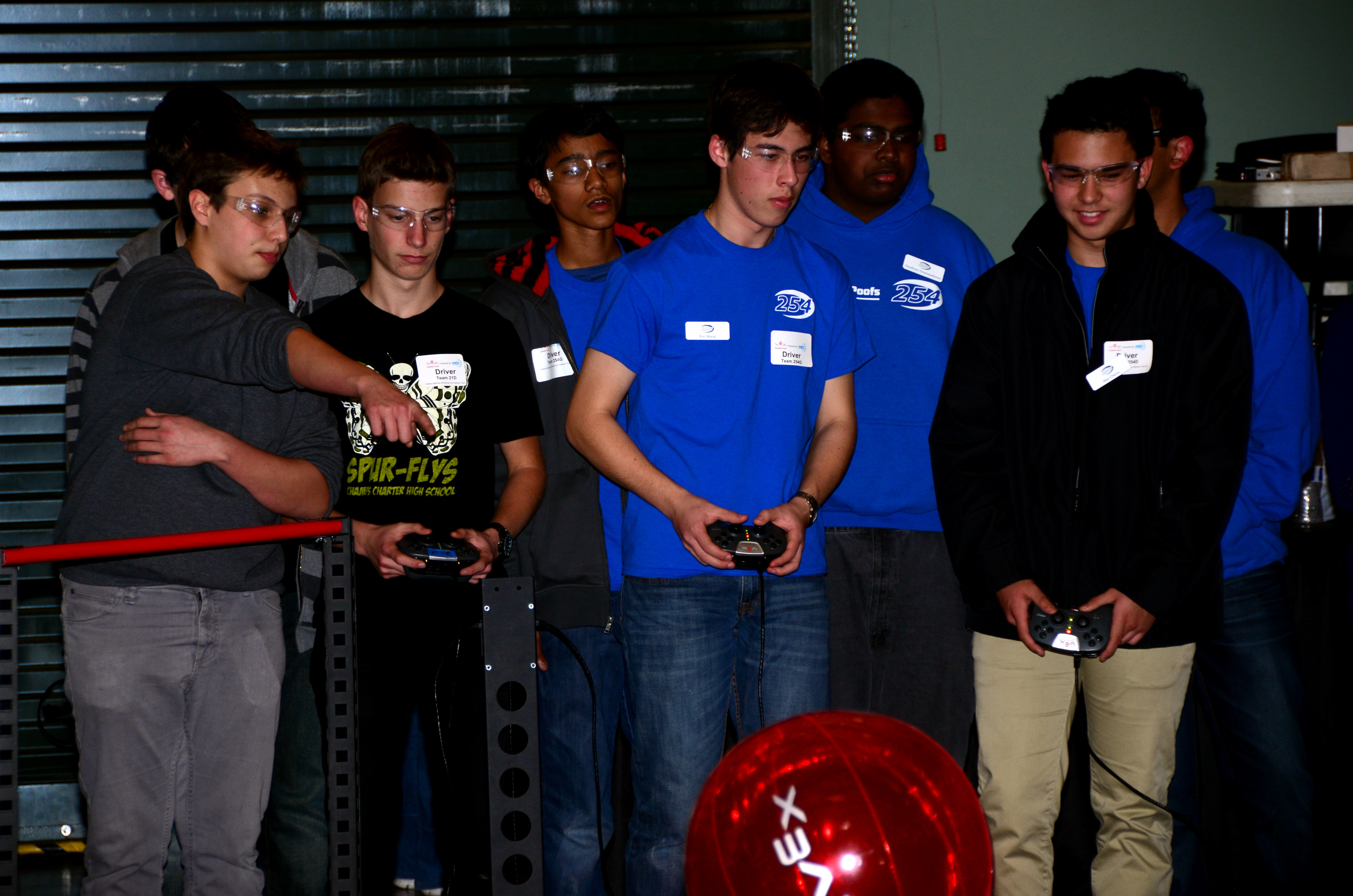
On Dec 7th, five of Bellarmine’s VEX robotics teams competed at the Central Valley VEX Robotics Tournament.  Although our teams had a few tough matches, often competing against each other, four of the five teams made it to eliminations.  254G placed third in the ranking, and 254D placed 15th.  254G joined 21D and 254E to form the 2nd alliance and 254D joined 2367 and 2367B to form the 7th alliance.  Both faced each other in the quarterfinals, and 254G and 254E advanced to the semifinals.

In the Semifinals, 254G and 254E faced 8000A, 8000B, and 8000C.  They managed to win the first game 37-36.  Because of some connection issues they were defeated in the second match, and were unfortunately eliminated in the third match.

In the skills challenges, 254E scored 15 points in Programming skills and 57 points in Robot Skills.  254C got 10 points in Programming Skills 254D scored 56 points in Robot Skills.  Modesto3-1

Bellarmine VEX Tournament

TournamentsVEX Robotics

whole team

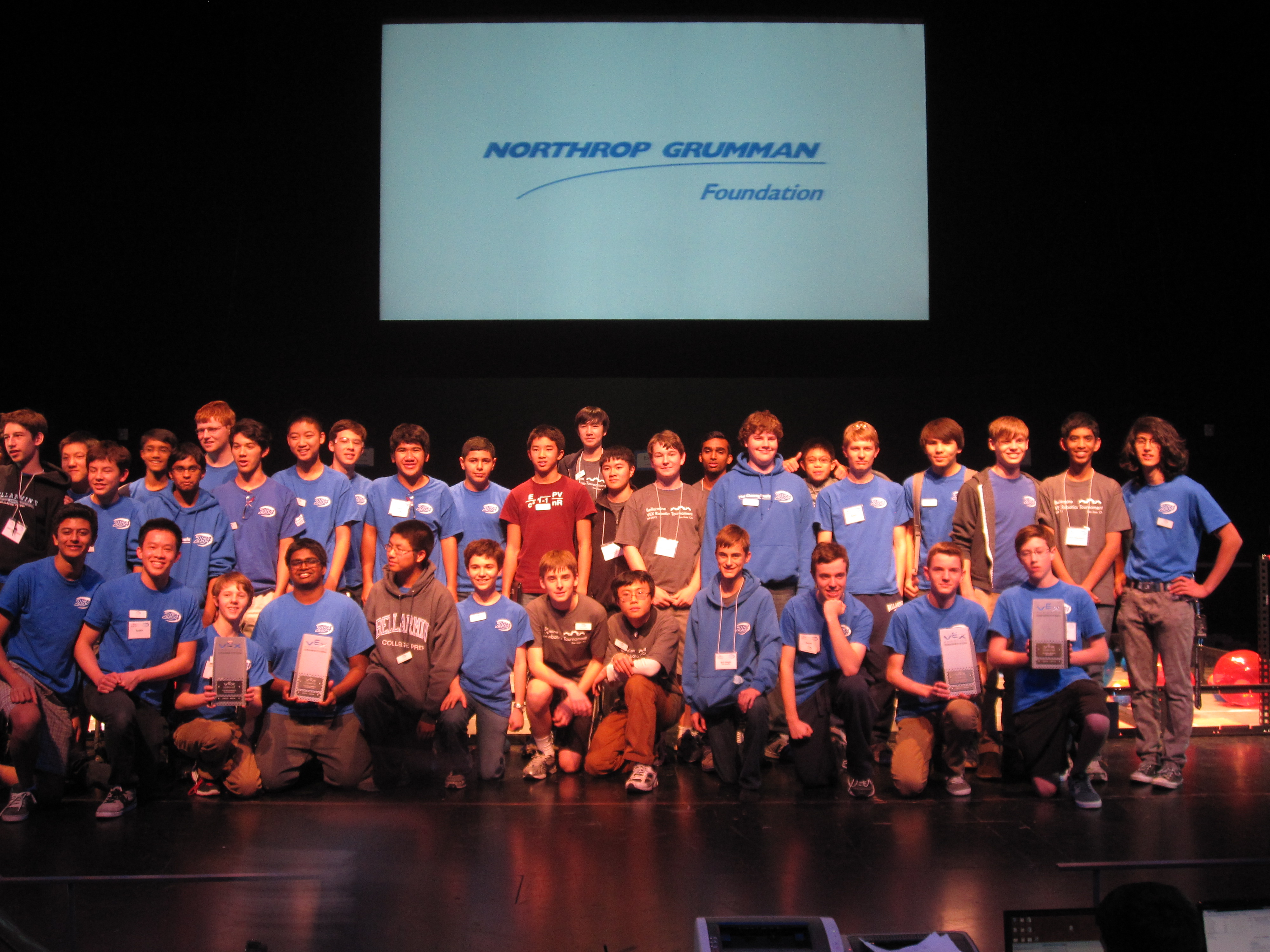
On November 22nd and 23rd, all seven of Bellarmine’s teams competed at the Bellarmine Bay Area VEX Robotics tournament. Our teams played well during qualification and four of our teams made it to eliminations. 254A, as part of the 8th ranked alliance, faced the 1st ranked alliance in the quarterfinals and unfortunately lost. However, 254F, 254G, and 254E, as the 4th ranked alliance, decisively beat the 5th alliance in the quarterfinals and simultaneously scored 76 points, the most points in any of the matches of the event. The all-254 alliance then faced the top-seeded alliance in the semifinals, and lost the first match by only 3 points.

In the second and third matches of the semifinals, however, the all-Bellarmine alliance staged a comeback to win the next two matches against the 1st-ranked alliance, securing the semifinals and a place in the final round of eliminations. The all-254 alliance subsequently plowed through the finals, winning both matches against the 2nd-ranked alliance by margins of about 40 points each. This decisive tournament win added 254E and 254G to the list of Bellarmine teams headed to the California State Championships.

Additionally, our Bellarmine teams accounted for the top three Programming Skills scores and three of the top four Robot Skills scores. Notably, Team 254A placed first in both Skills Challenges. More importantly, 254B won the Excellence Award, the highest award given in VEX competition. The award recognizes teams for their overall excellence in their engineering process and robot design, for their performance in Skills Challenges and matches, and for outreach, teamwork, and sportsmanship. With this significant achievement 254B will also head to the California State Championship. In short, after just two tournaments, five Team 254 teams have qualified for the State Championship, of which two (A and F) have qualified through multiple tournament successes.

254B is led by Eric Van Lare and Jeffrey Kaufmann

254E is led by Louis Lin and Dorian Chan

254F is led by Nick Verducci and Nathan Rooke

254G is led by Eric Wang and Goutham Gnanasekeran

Congratulations to our teams, and we wish them luck at the State Championship in March!

VEX Tournament Information for Competitors

Administrative

The event is free for spectators. Below is information about the tournament, including details on the qualifications for the state and US national tournaments.

Outline

  • Changes from last year
  • Schedule
  • Tournament Location
  • Concessions & Pizza Order Form
  • Awards Given
  • Information for Competitors
  • Information for Novices

Changes from Last Year

  • There are more teams competing, so if you can, please get inspected on Friday evening.
  • We have extended the hours for the skills challenge field. It will open at 7:30 on Saturday morning and stay open through 4:30pm. High skills challenge scores can lead to a berth at the California State Championship.
  • Qualifications have changed and are described in the "Awards Given" section below.

Schedule

Friday, November 22, 2013

6 pm - 8 pm

Check-In and Inspection (in Liccardo)

6 pm - 9 pm

Practice time for teams

Saturday, November 23, 2013

7:15 am

Pit Area and Registration Opens (in Liccardo)

7:15 am - 8:30 am

Inspection (in Liccardo)

7:30 am - 8:30 am 7:30 am - 4:30 pm 8:15 am

Practice Rounds (in Sobrato Theater) Skills Challenge Field open (2nd floor Sobrato Theater) Check-in closes (Teams scratched that haven't checked in)

8:30 am - 8:45 am

Driver's Meeting (in Sobrato Theater)

8:30 am - 9:30 am

Sign up for judging interview (at Pit Admin table)

8:45 am

Welcome (in Sobrato Theater)

9:00 am - 12:30pm

Qualifying Rounds (in Sobrato Theater)

12:30 pm - 1:00 pm

Lunch Break (We will have Pizza Order Forms)

1:00 pm - 2:35 pm

Qualifying Rounds Continue (in Sobrato Theater)

2:45 pm

Alliance Selection Process (in Sobrato Theater)

3:00 pm - 5:30 pm 4:30 pm

Playoffs (in Sobrato Theater) Skills Challenge field closes

~5:30 pm - 6:30 pm

Finals, Awards, Closing Ceremony (in Sobrato Theater)

Tournament Location

Bellarmine College Preparatory 960 W. Hedding St. San Jose, CA 95126//mapq.st/17Jl2d5


Street parking is very limited due to permit parking restrictions. On campus parking is marked with red on the campus map (linked below). The green boxes on the map represent the pit area.

View detailed campus map (PDF)

Concessions

Pizza will be available for $15 a large pie from Tony & Albas. Please order your pizzas by midnight on Nov 20 using this form. Please pay for your pizza when you check-in.

The following items will be available for purchase in the Liccardo Center (8am – 3pm):

  • Vegetarian Egg Rolls
  • Variety of Donuts, Muffins,
  • Fresh Fruit & Oatmeal
  • Cheetos and Cheez-Its & Coffee and Tea
  • Oreo Cookies & Variety of Juices
  • Candy Bars & Bottled Water
  • Cliff Bars & Snapple Iced Tea
  • Caesar Salad & Hot Chocolate
  • Cinnamon Rolls
  • Samosas

Awards Given

We have 5 qualifications for the VEX US Open (Excellence, Design and the tournament champions). Those teams, along with the finalists, also qualify for the California state championships.

iDesign will be offering a $100 gift certificate, which will go to the team that receives the Judges award.


Note that the skills rankings will be used to identify all additional teams that will be used to fill the state championship event to its capacity of 48 teams. Every team should realize the importance of this opportunity.

Info for Competitors

If you want to be considered for the Excellence or Design awards, you will need to sign up for an interview by 9:30am. Go to the Pit Manager to schedule (or change your appointment time if needed). The interview rooms are on the second floor of the Sobrato Theater building.

The skills challenge field is also on the 2nd floor of the Sobrato theater building. Teams are not limited to the number of attempts, however, any team with fewer than 3 attempts can move ahead of other teams waiting in line.


Teams will be scratched from the tournament if they have not checked in by 8:15am. If you are running late, please text 408-341-9066 or email [email protected] before 8:15am, or your team will not be able to compete.


Bring safety glasses, power strips, tools, programming cables, engineering notebook, RECF releases (available at: //content.vexrobotics.com/epdocs/VRC_ReleaseForm_012011.pdf). Be sure your robot can pass inspection!

Info for Novices

It is highly recommended for you to arrive Friday to go through the inspection and try a couple practice matches. Friday will be much more relaxed and our inspectors will be able to help you through the inspection process. Also, our field managers will be able to guide you through the competition process. Be sure to bring fully charged batteries, chargers, spare parts and tools in case anything breaks. Be sure your vexnet keys are working well. Lastly, double check your robot against the inspection check list.

At the tournament, check in by 8:15am. Check the match schedule when it is published (around 8:35am) and make sure you are ready for each match. Try to have fully charged batteries for each match. Be sure the drivers and coach have safety glasses when they arrive at the field to compete.

More information on the game is at the RobotEvents website. The current rankings for Robot Skills and Programming skills are listed there also.

VEX Tournament Map

VEX Robotics

The maps below show the tournament facilities located on the campus of Bellarmine College Preparatory. The red boxes denote campus parking, and the red lines show the best way to the parking spots. Green boxes identify the pits and blue lines show the best walkways to the pits. This PDF is a much larger version of the image below.
Map of tournament buildings

Bay Area Science Festival 2013

Public Relations

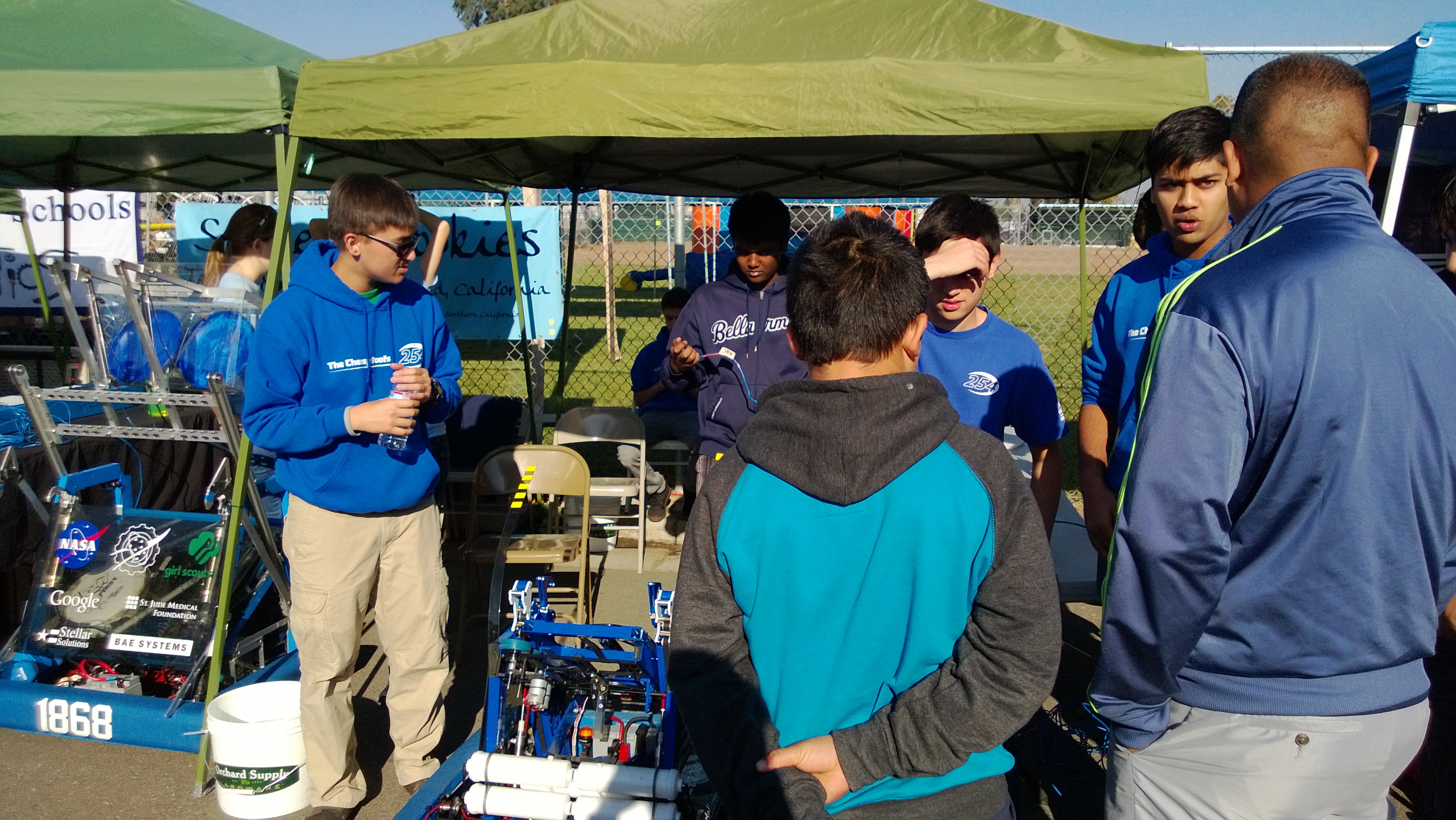
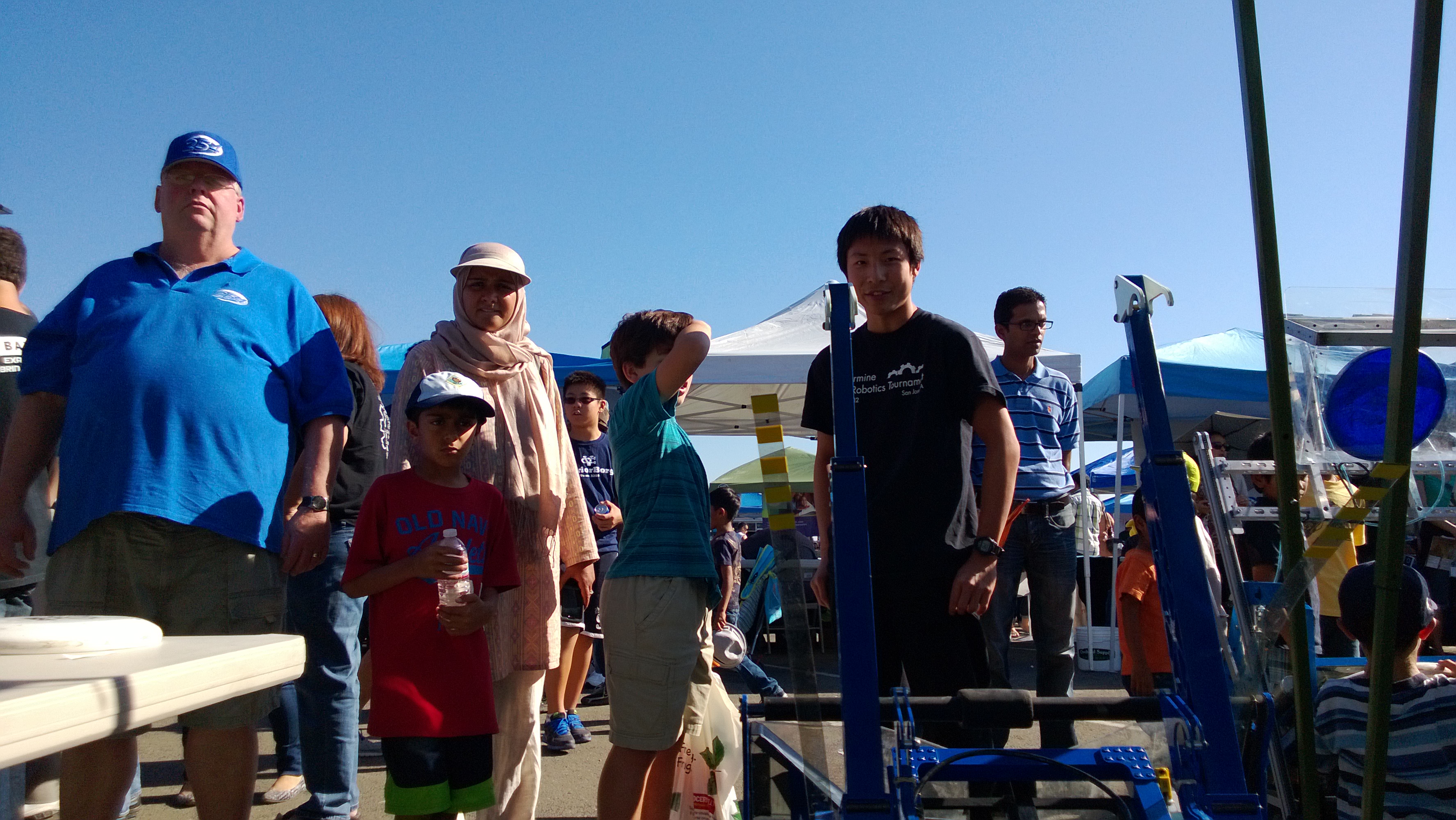
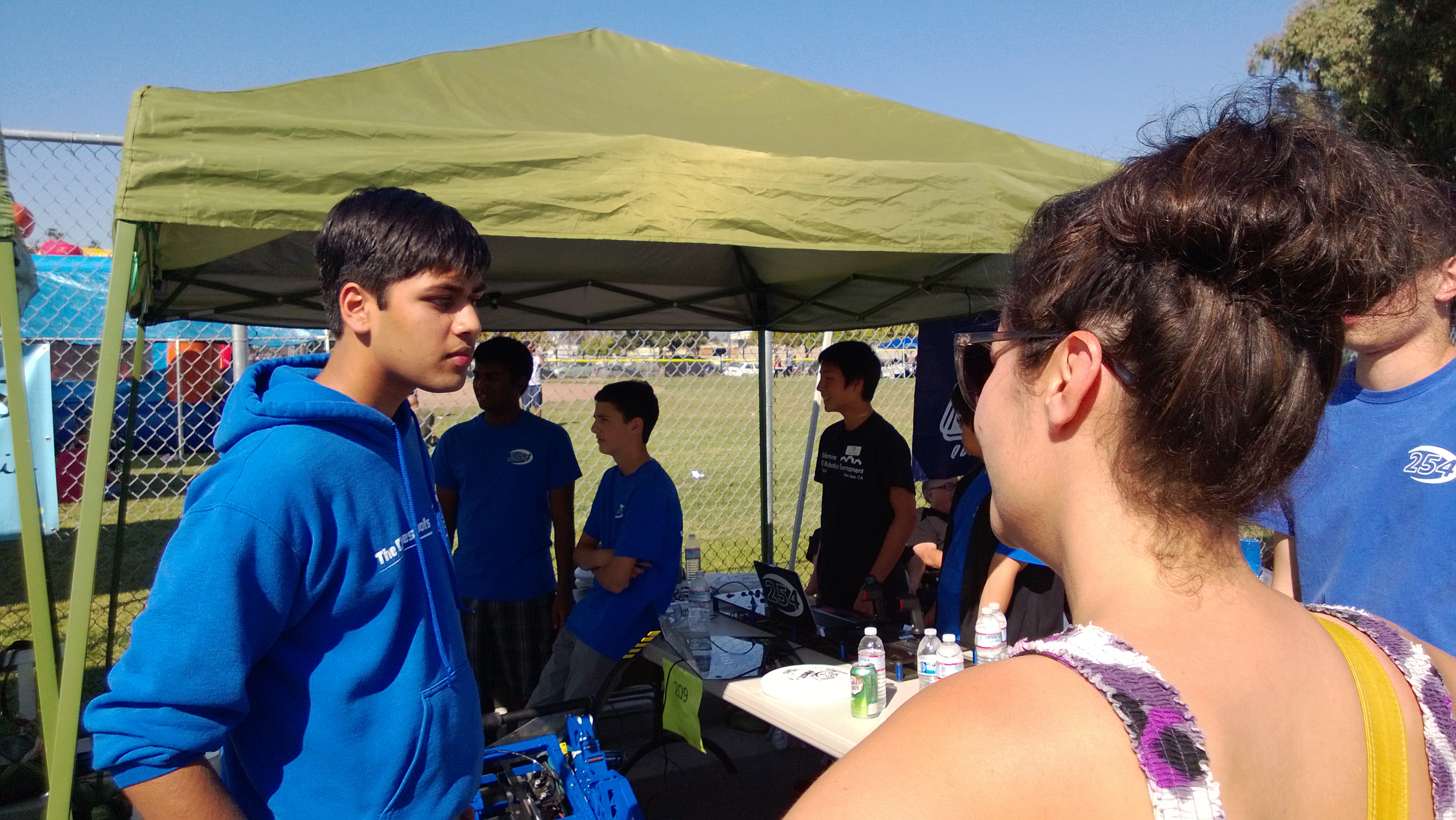
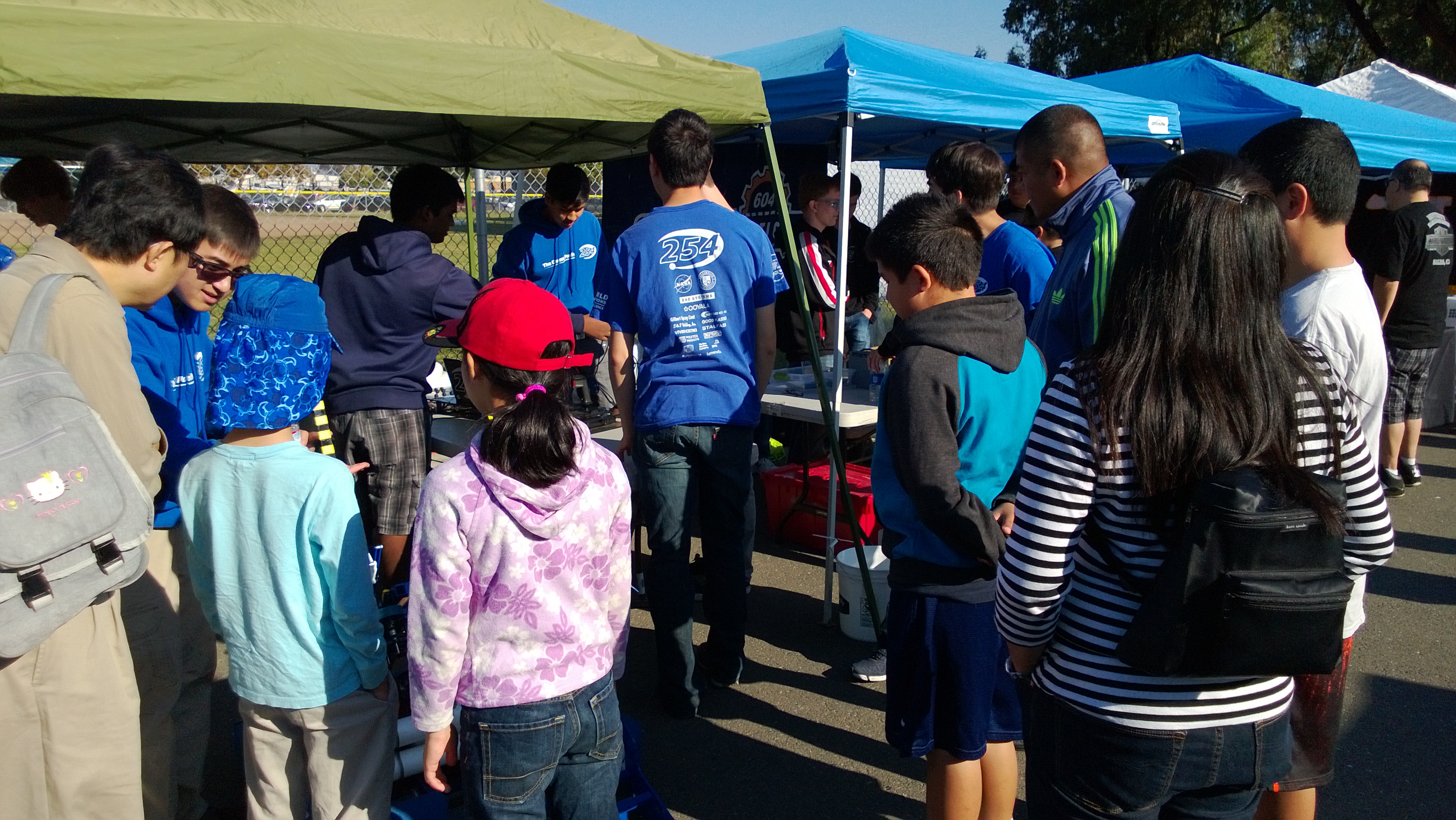
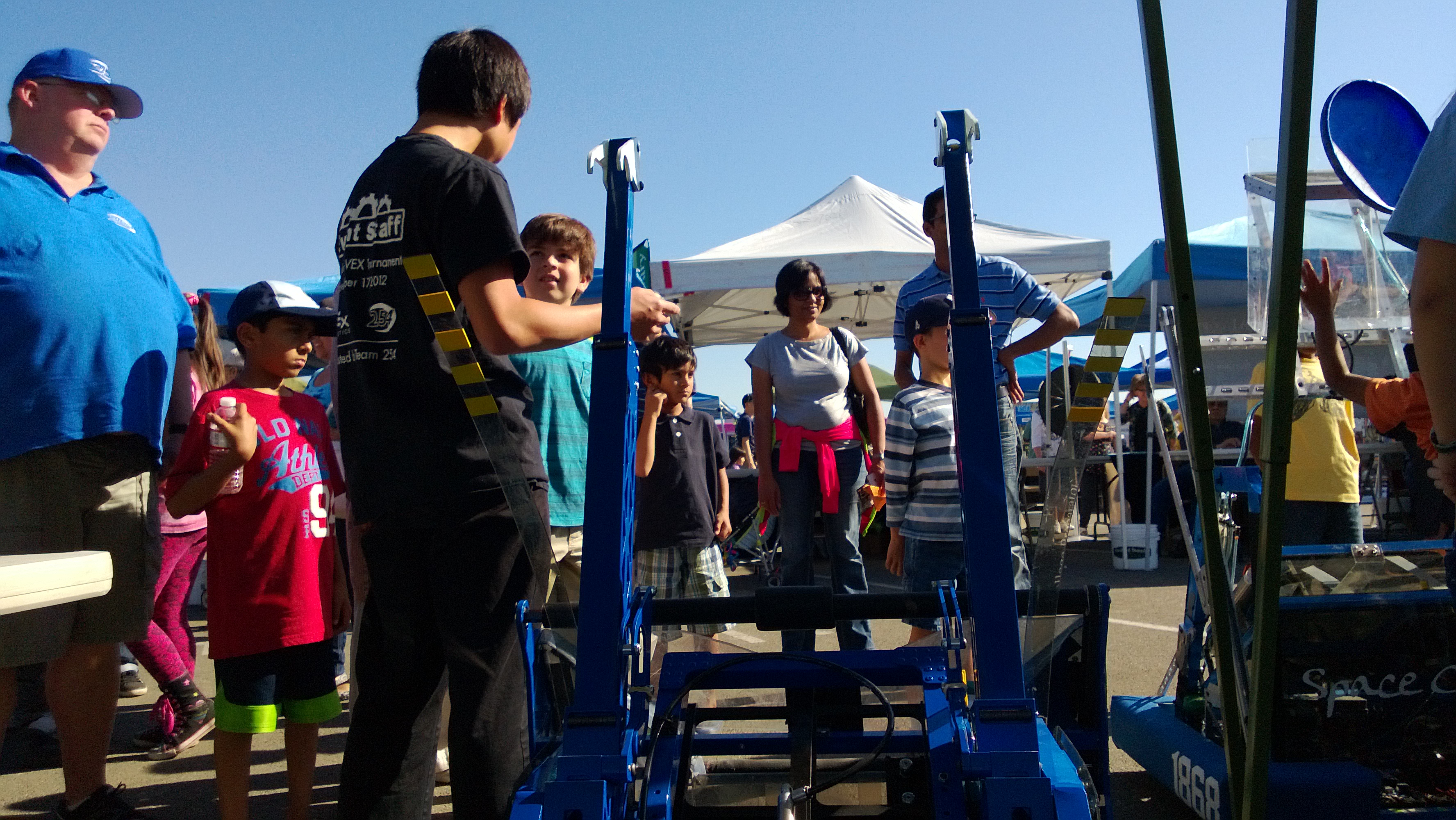
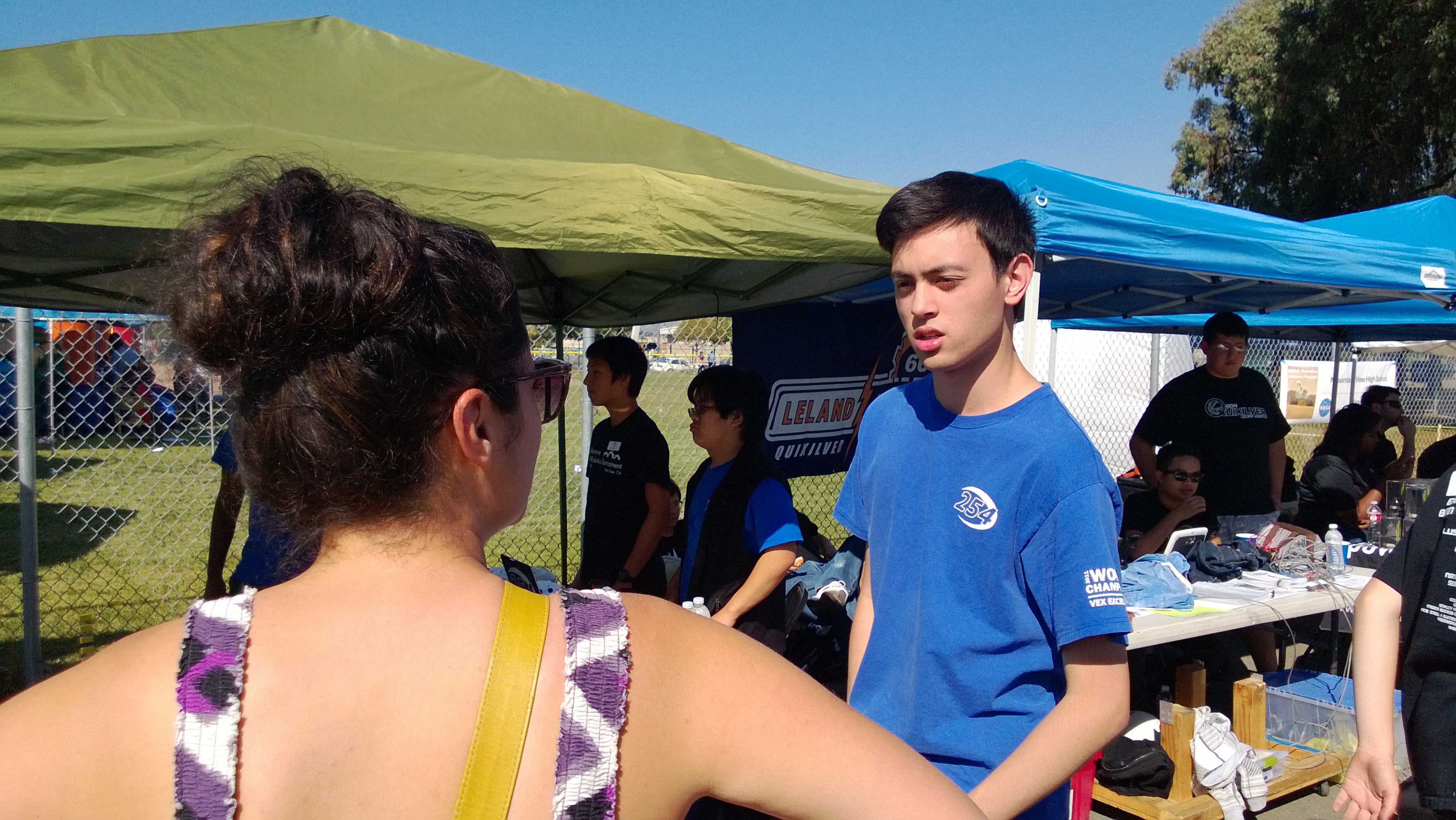
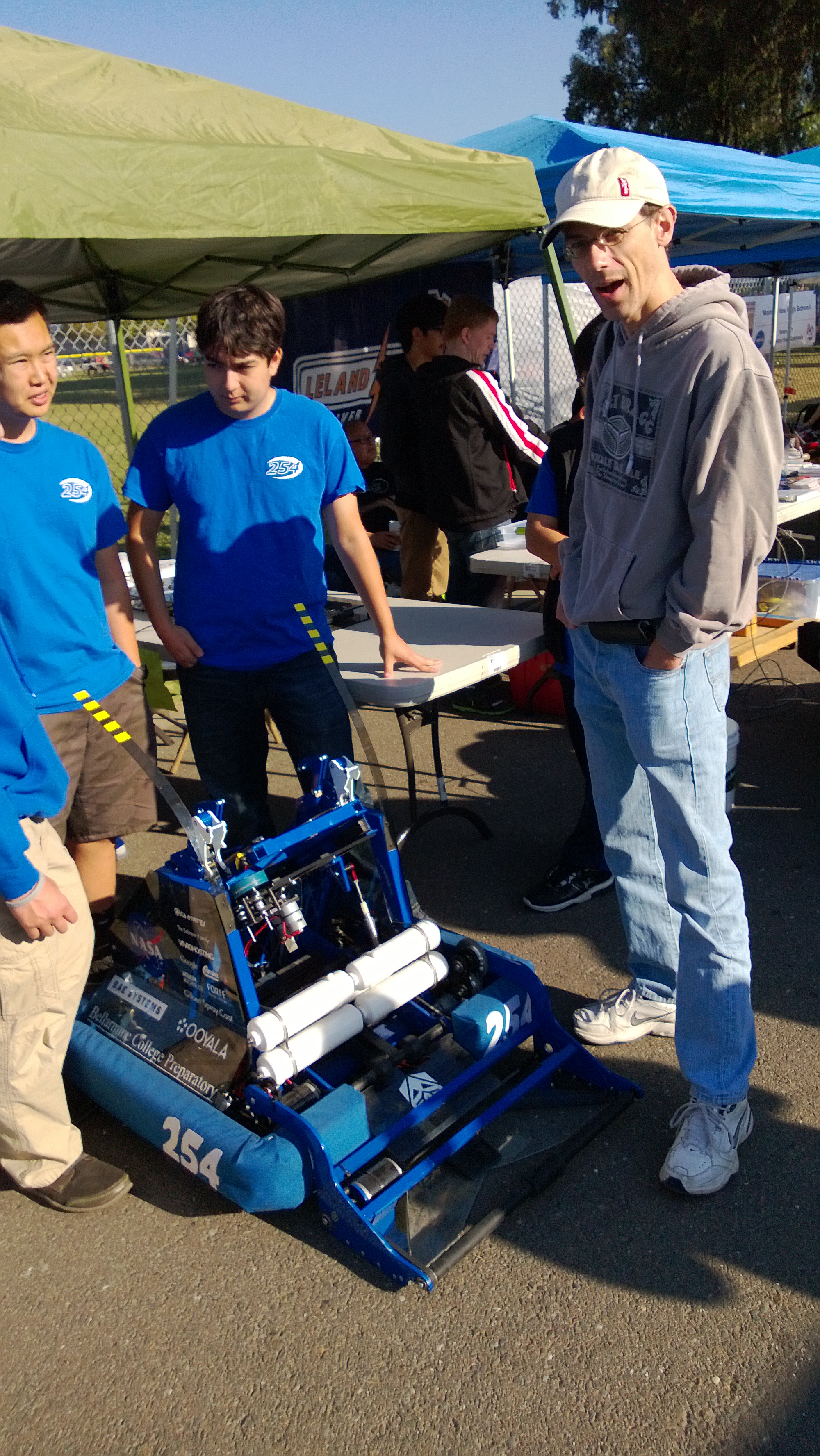
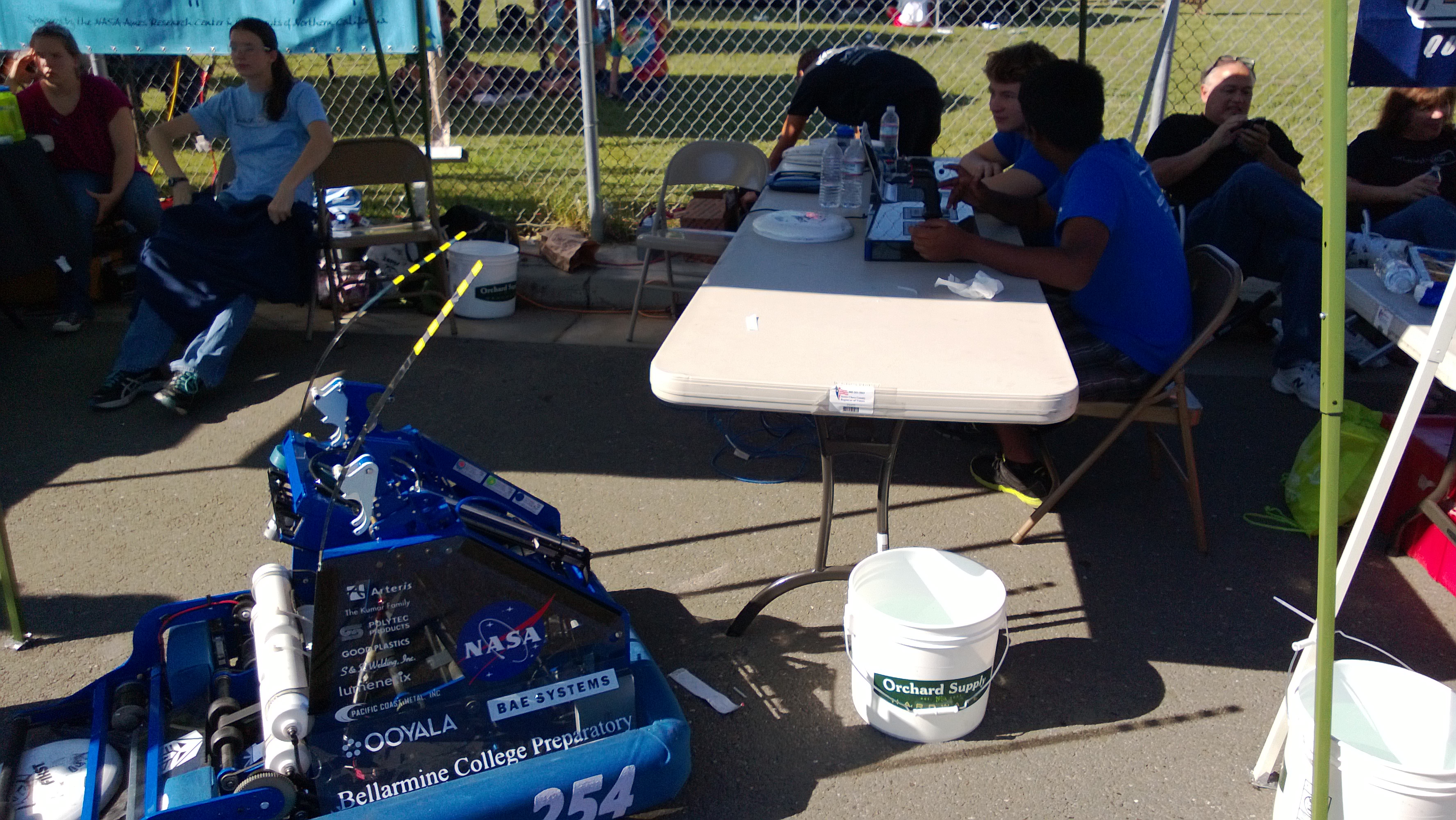
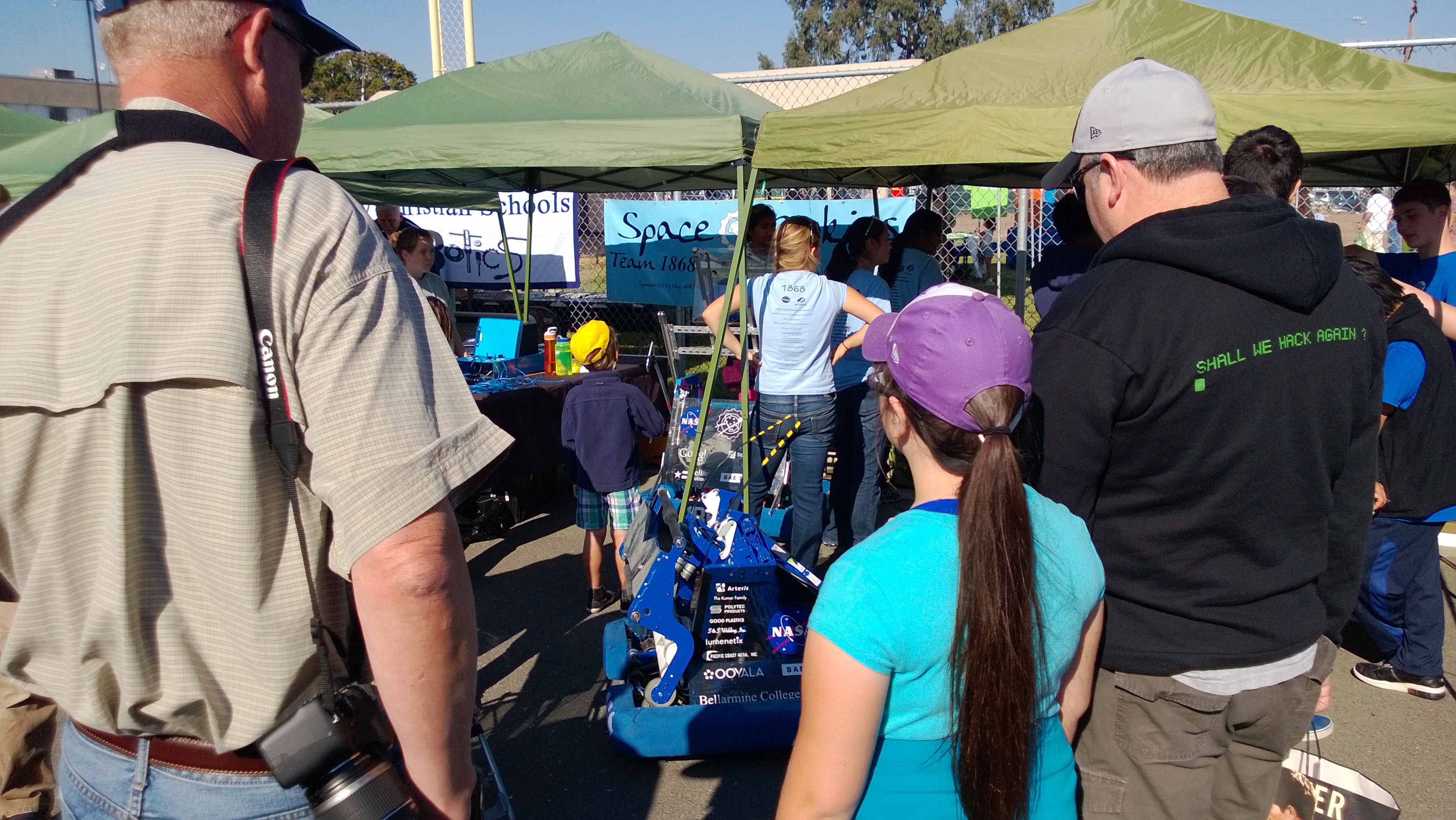
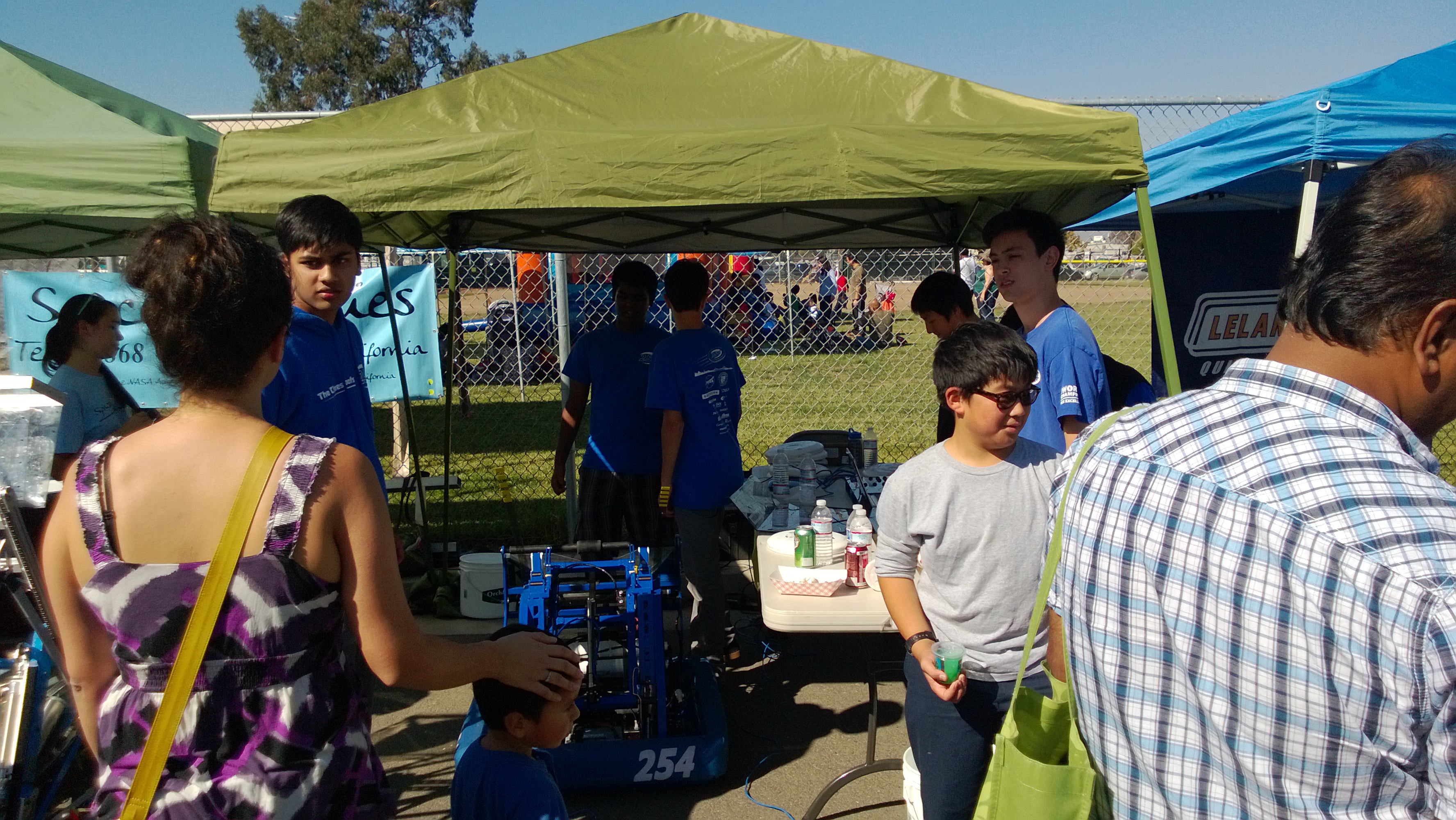
On November 2nd, several members from our team, along with our 2013 robot Overkill, participated in the Bay Area Science Festival. Along with other FRC teams, Team 254 was able to demo our robot to excited youth and adults. We were able to demo our shooter and our unique climbing abilities. We explained the basics of the robot and the game to curious youth and the intricacies of the robot to curious adults. Overall, we had a blast and hope to participate again.Team254@BAYAREA

Team 254F and 254A win VEX Tournament

TournamentsVEX Robotics

On Saturday, October 19th, all 7 of Team 254’s VEX Teams competed at the Dougherty Valley High School Robotics Tournament in San Ramon. Subteams A through G competed well during qualification matches. One of the most memorable highlights was that in the first match of the tournament when four 254 teams ended up in the same match! Teams F and G beat Teams D and B in match that was both extremely unlikely and unfortunate to watch as it put 2 of our teams behind right from the beginning.   Because the tournament was running late, they had to cut number of qualification matches from a scheduled 7 down to only 4.  However, most of our teams still did well. Team F went undefeated and was ranked second. Teams D, A, and B finished in 19th, 20th, and 21st place, respectively.

During alliance selection Team 254F picked the Team 21, the Spur Flies and later Team 254A. Team 254G was picked by fourth ranked 8000A and later allied with Team 6088. Team 254D and 254E were picked by Team 1868X, the Space Cookies. Finally, Team 254B was chosen by Team 21C and allied with 9378A.

In the elimination matches, Team G’s alliance defeated Team B in the quarterfinals, and the alliance of Team D and E was eliminated by the number 1 ranked alliance, 9378R, 8000B, and 8000C.  In the semifinals, Team F eliminated Team G.  Team 254F and 254A went on to the finals to play against the number one ranked alliance. After 2 stressful and intense matches, Team F and Team A managed to capitalize on robot failures of the opposing alliance and secure a victory! By being the champions of the tournament, Teams F and A are now qualified for the California State Championship in March.

Take Flight For Kids

Public Relations

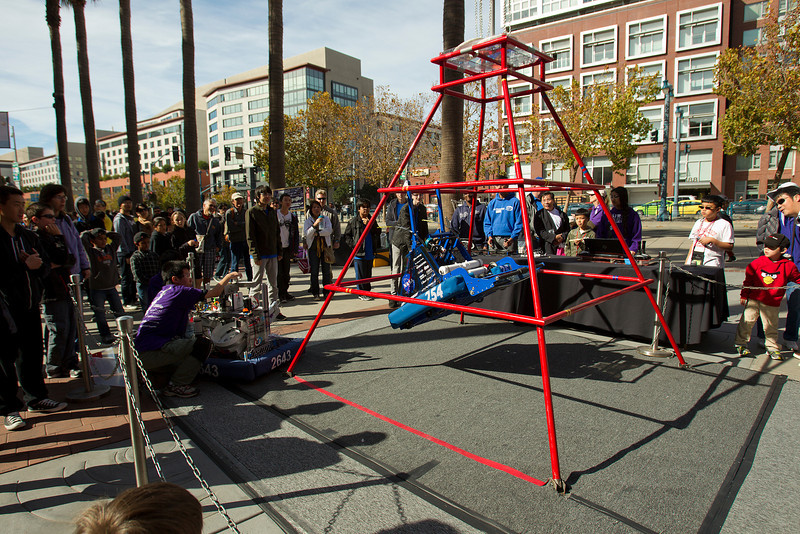
On October 19th, several members from our team had the opportunity to participate in the Take Flight for Kids event hosted by Valley Medical Center Foundation. Along with other FRC teams, Team 254 was able to present the 2013 robot, Overkill to the excited youth and adult that stopped by our booth. We explained the basics of the robot to curious youth and the intricacies of the robot to curious adults. Overall, we had a great time and had a lot of fun.