88 posts

Pre-SVR Day 5: Autonomous Hanging

2013 FRC Build SeasonFIRST Robotics

Hanging

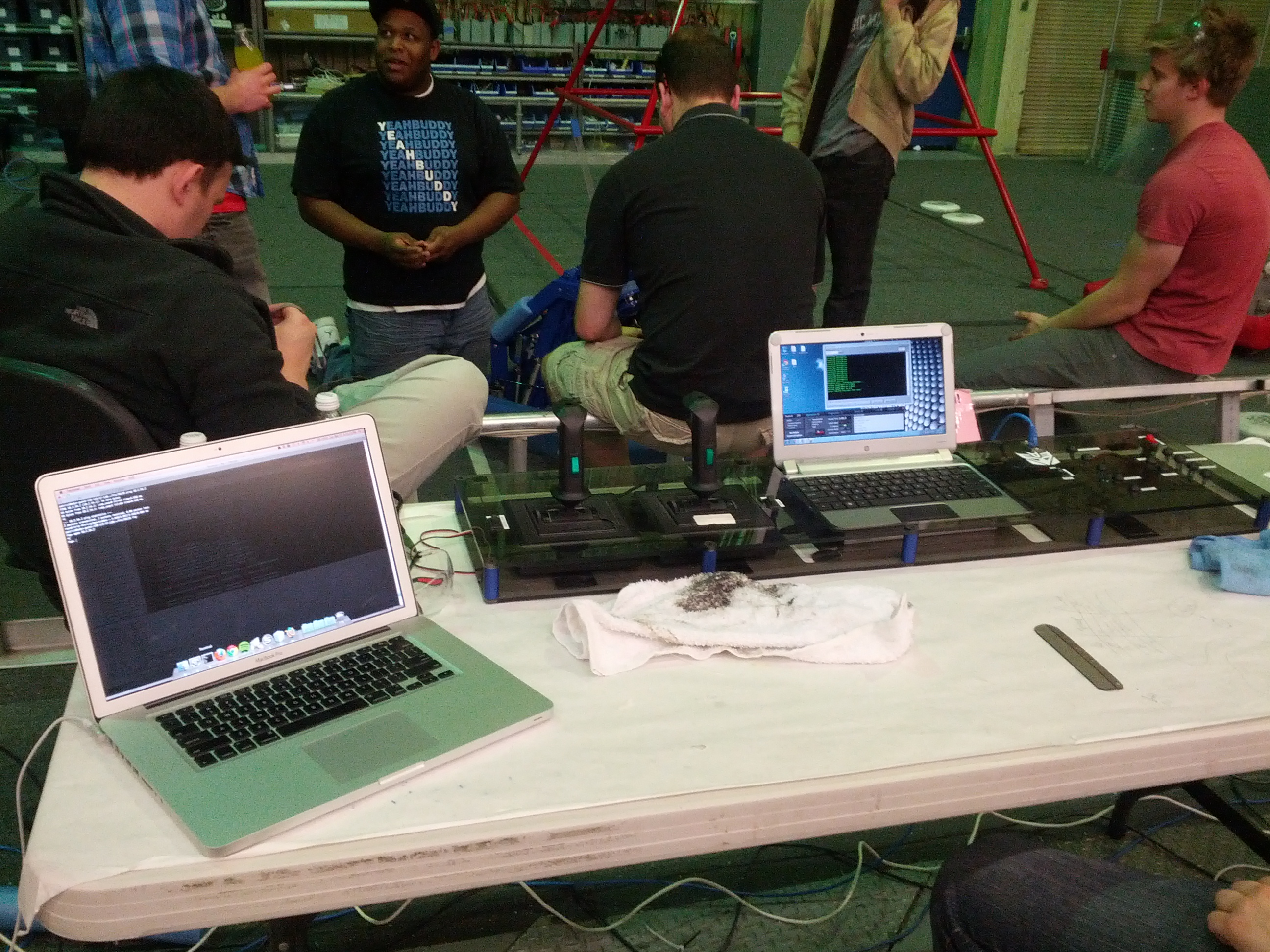
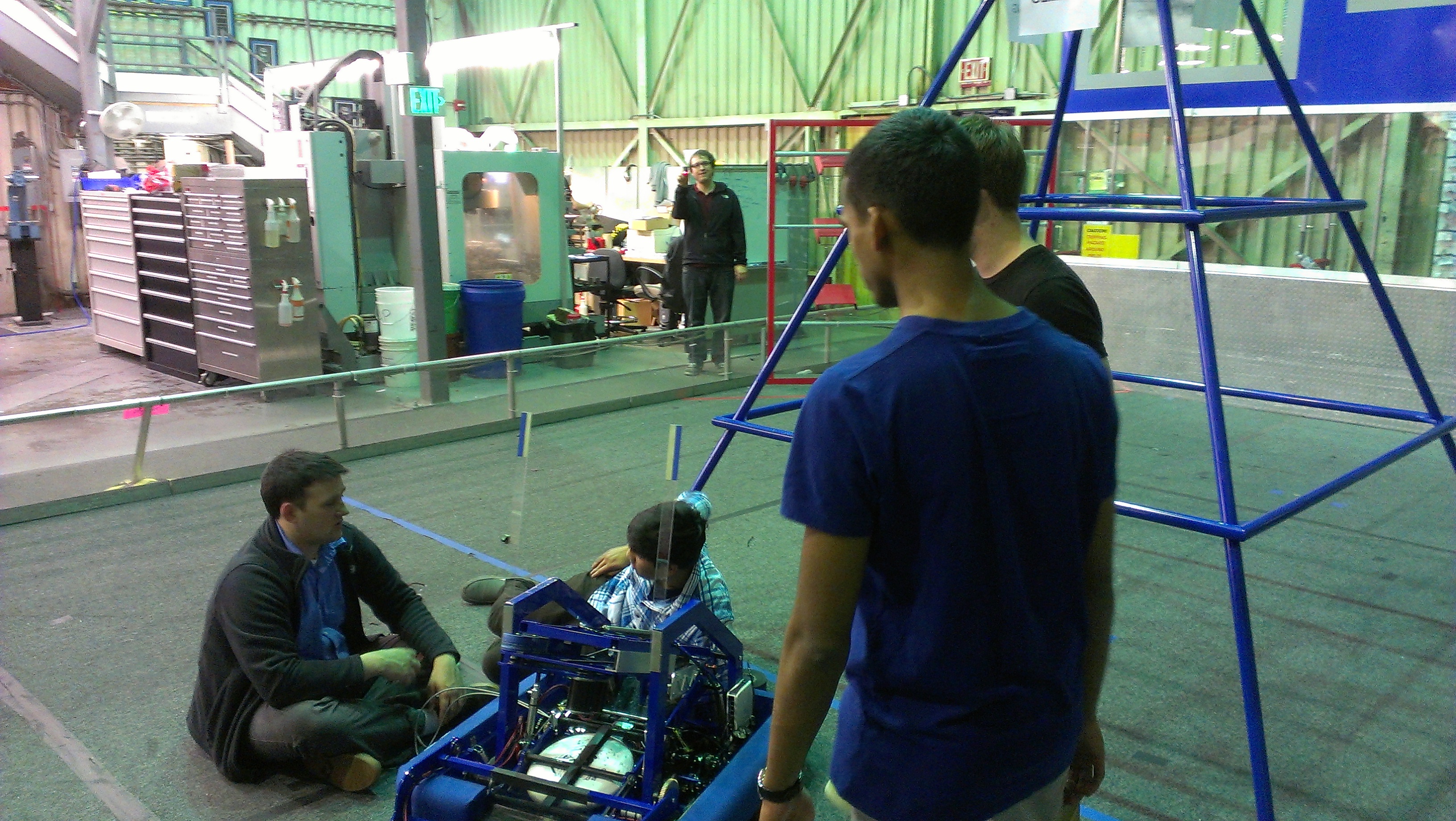
IMG_20130317_205417Today, the programmers focused on making the 30-point hanging fully autonomous.  This makes the climber run with a push of a button (specifically, a switch and a button).  They started the day off by tuning the PID for the upward hanging by using a square wave to visually see the hanger hooks moving upwards, looking for consistency and accuracy in each cycle.  In addition, they used an additional gyro that would measure the pitch and rate of change of pitch to determine when to fully extend the hanger. The programmers also noted the raw encoder ticks for each position of the hanger claws: right underneath the next rung, fully extended above the rung, and fully retracted.  With these numbers, a new command was born: AutoHangCommand.

With the current delay logic, the team was able to get around 8.3 to 8.5 seconds per fully autonomous climb.  Though fast, the duration of the climb can be shortened and optimized by adjusting the logic.  Below is a video of a faster climb:

Tune-Ups

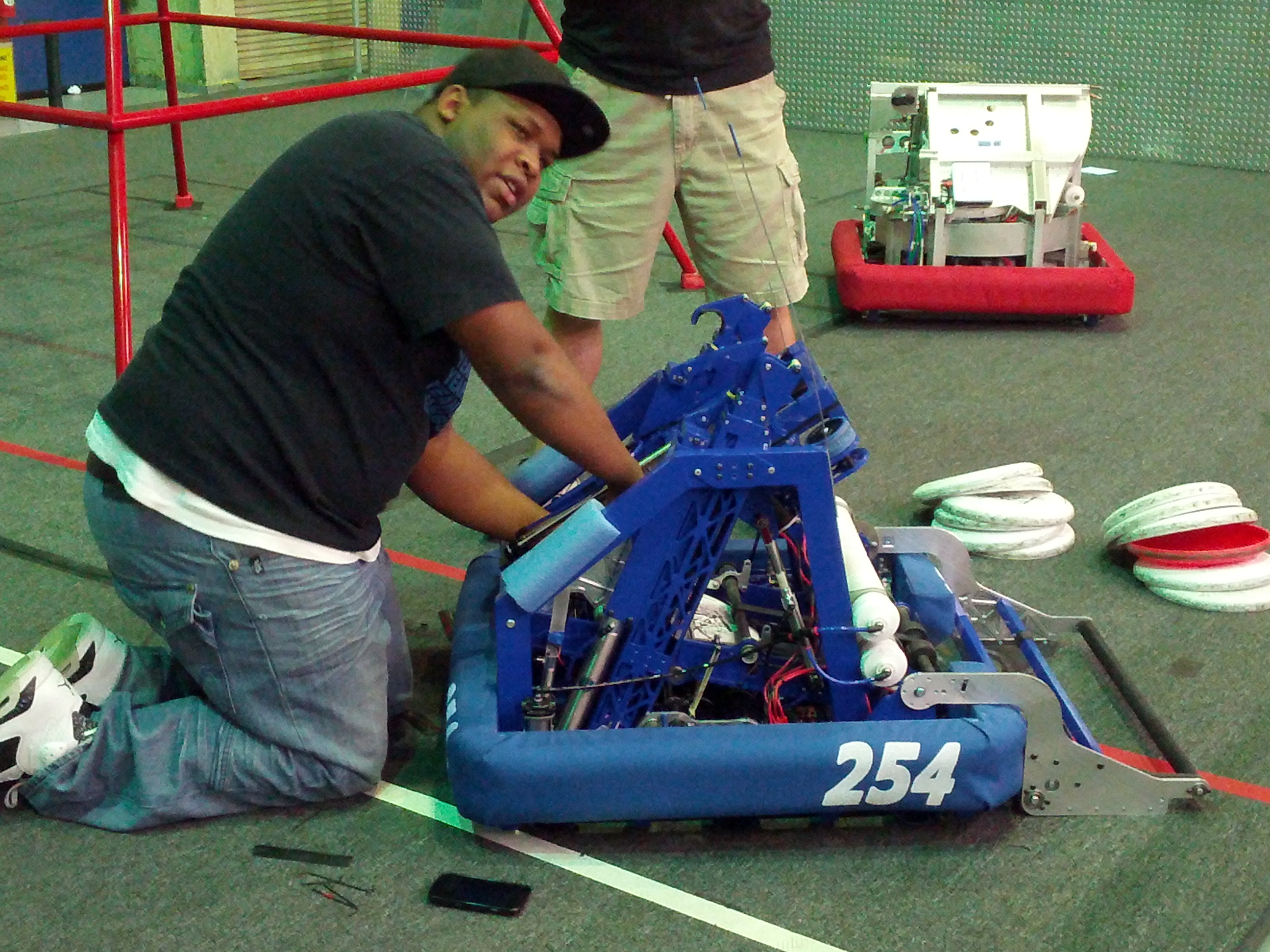
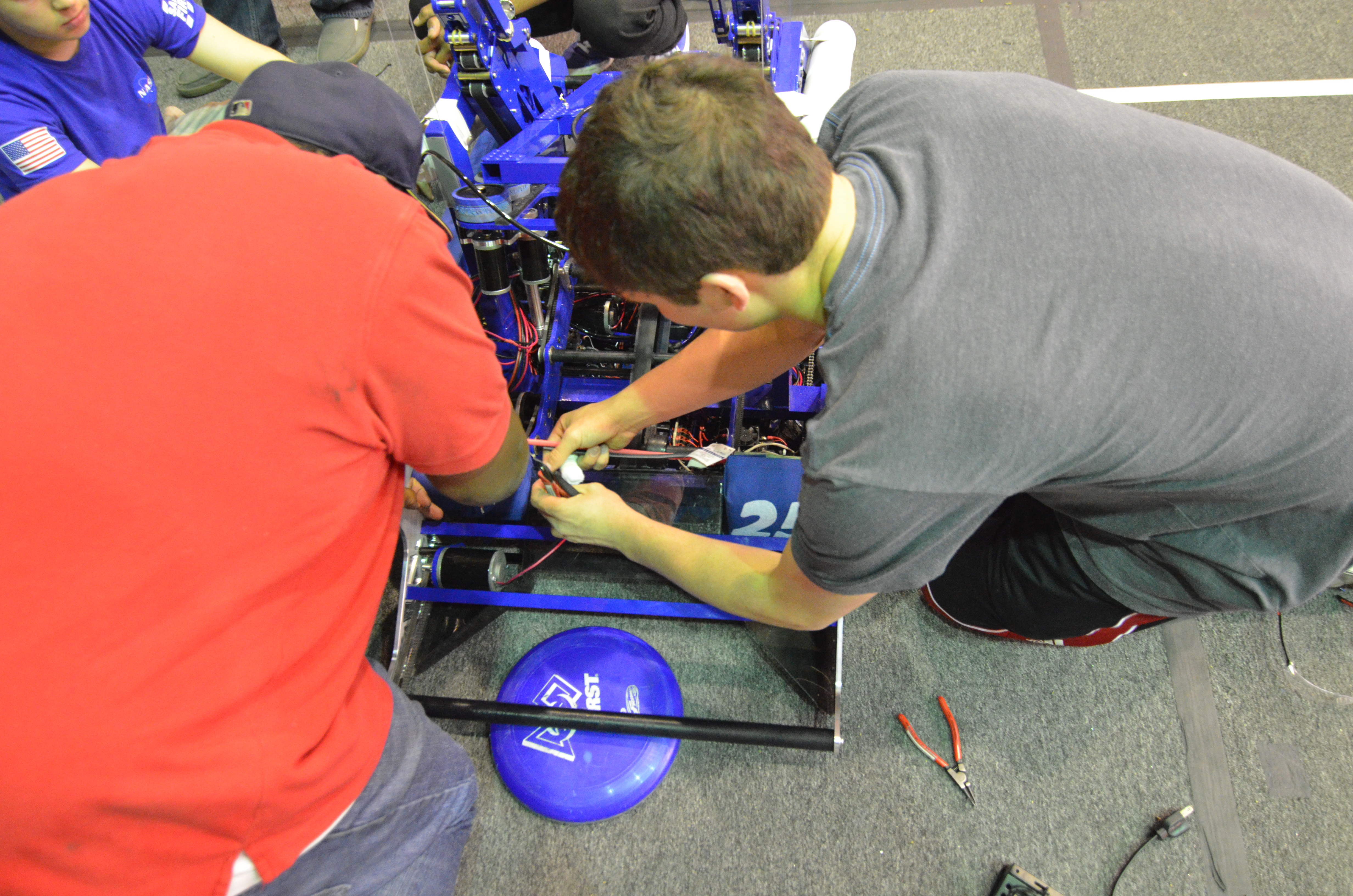
IMG_20130317_205228In order to optimize and fix the seven-disc autonomous sequence, the team worked on testing the intake and indexer so that they are reliable enough to use for autonomous.  However, the team is currently investigating problems with the shooter.  They believe that the bearings need to be replaced.

Pre-SVR Day 4: Level 3 Hang

2013 FRC Build SeasonFIRST Robotics

Programming and Controls

Most of the afternoon was focused on driver practice and controls testing. Pat and Tom worked on reducing the time between shots. They were able to make the indexer go significanly faster, reducing our shooting time by a few seconds. There were a few issues, primarly, the indexing flap made of polycarb broke twice. It is currently unsure why this happened and whether or not it will continue to happen. Overall, the programmers made huge progress.

Third Level Hanger

The evening was focussed on making the hanger work. After two days spent making two new sets of gearbox plates, the hanger was ready to assemble. To do that however, the entire robot needed to be disassembled. The superstructure and the hangers were removed from the drivebase. After finding all the gears and spacers, the new drive gearboxes were ready to be assembled. The gearboxes were taken apart, and the new ones assembled. After that, the superstructure was assembled and the robot was ready to hang.

Here is a video of it in action:

Lab Closing Time was: 2:30 AM

Pre-SVR Day 3: Organization and Autonomous

2013 FRC Build SeasonFIRST Robotics

The first few days after a tournament are usually pretty relaxing, but they are also just as busy (if not more) than other days. Today, there was a large organization effort  to empty the last few bins of tools and parts that were brought to competition. The main focus of this clean up effort is to find a way to organize spare parts and "competition ready parts." There was a huge dissary between what was ready to be assembled and tested, and what still needed to be manufactured. That effort will be completed tomorrow.

Manufacturing

Cory worked on the CAM for the new gearbox side plates. The CAM and hopefully the manufacturing of these plates will be completed tomorrow. Once this new gearbox plate is complete, the hanger can be assembled and tested. However, the assembly for this is very complicated and time consuming. The super structure will have to be removed, the gearboxes replaced, and a few new spacers made.

Autonomous

Tom and Pat worked on tuning the autonomous modes. They autonomous modes are working significantly better. The next step is tuning the indexer to shoot faster

2013 San Diego Regional Winners!

2013 FRC Build SeasonFIRST Robotics

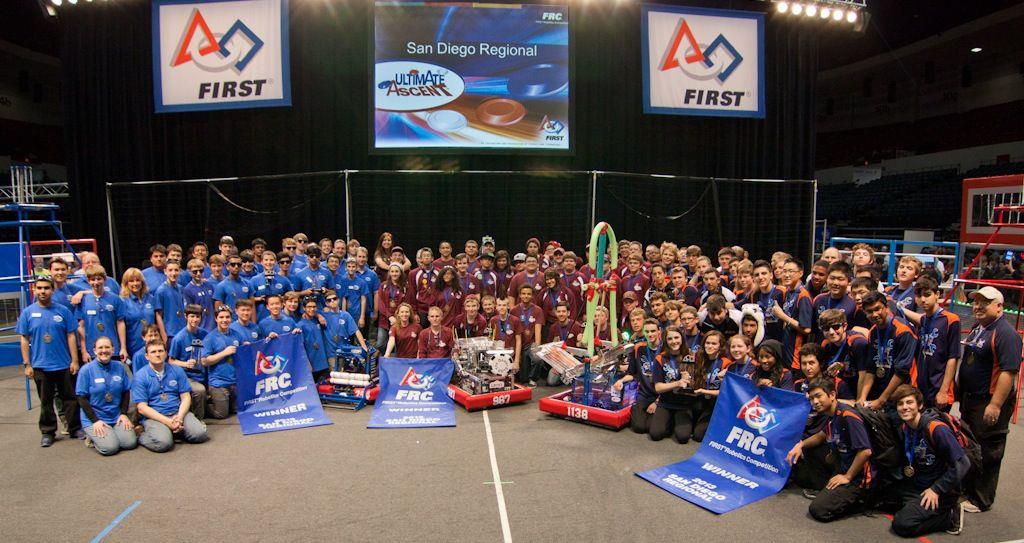
600297_10101483172347554_1924614986_nAfter a difficult six-weeks of design and construction, Team 254 wins the San Diego Regional with Alliance Captain Team 987 and Alliance Partner Team 1138.

This past Wednesday, thirty students rode a bus down to San Diego to compete in the annual San Diego Regional (March 7th – March 9th). The team unloaded the bus on Wednesday night and went to the hotel after dinner. We also set up the pit and implemented many changes to the robot from our work on the practice bot.

Thursday: Day 1

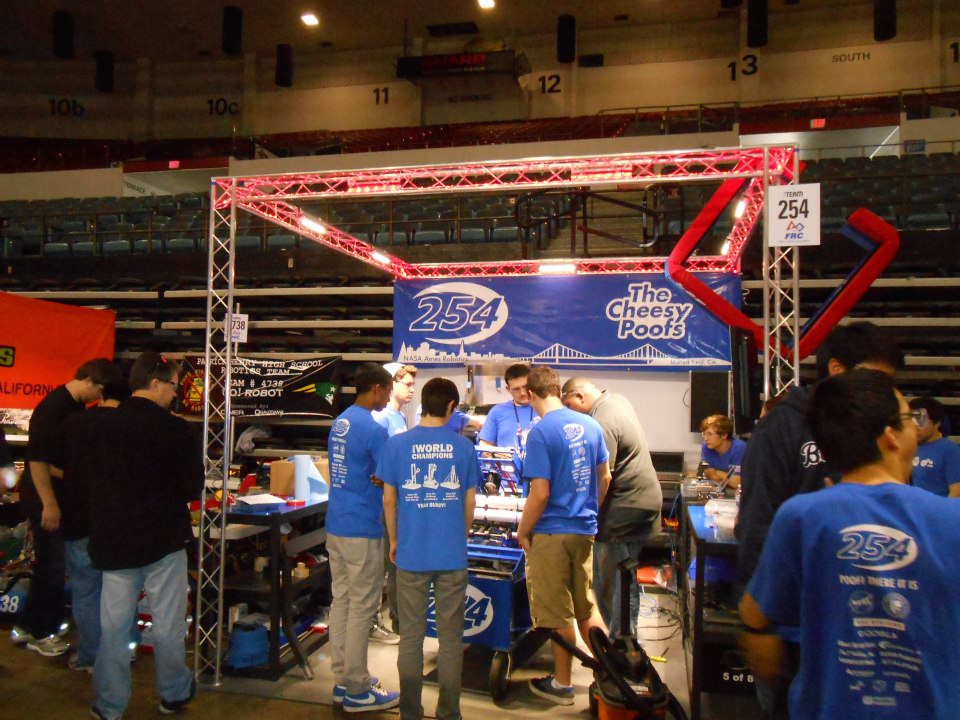
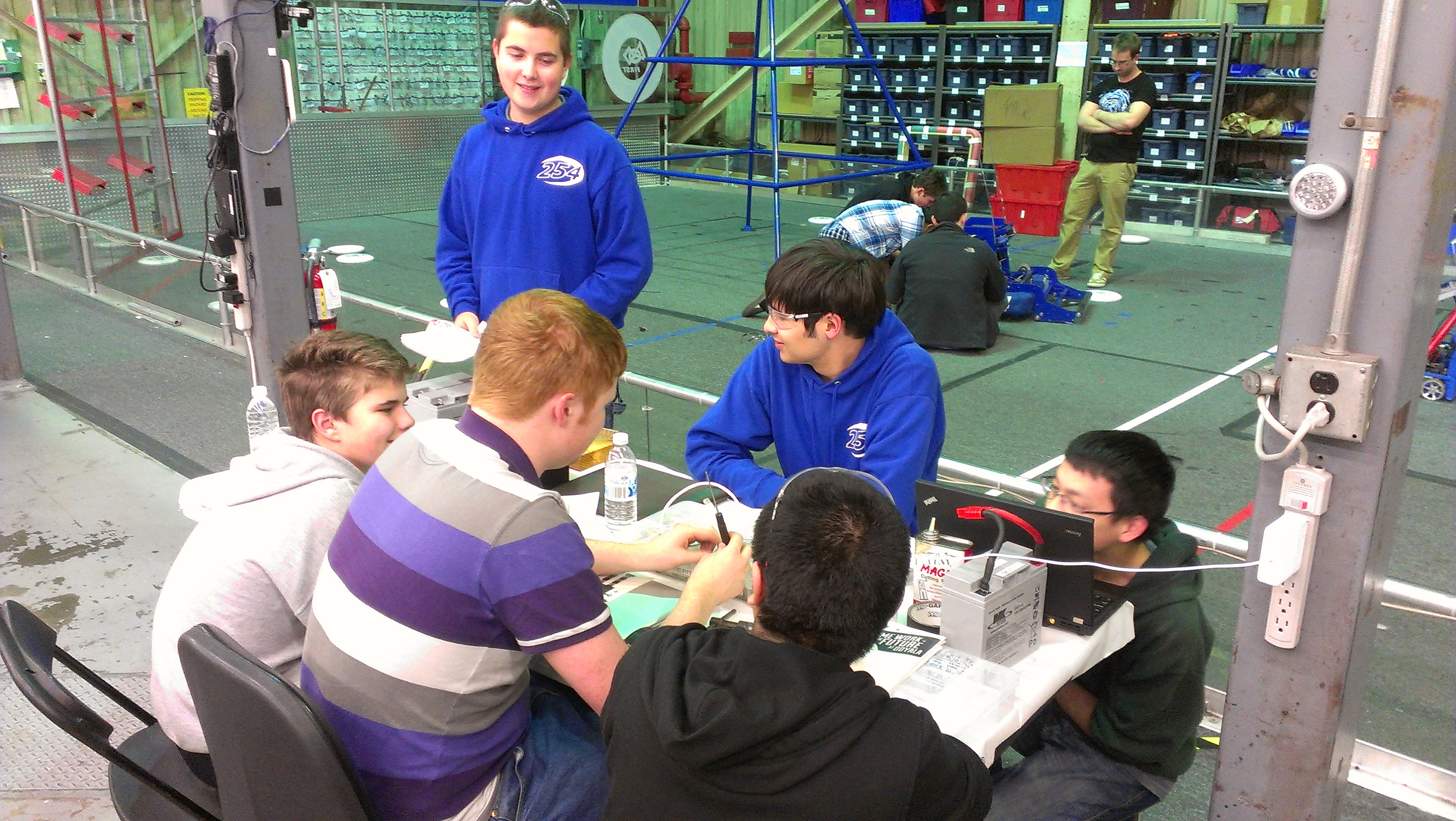
Two years ago when we attended this regional, the venue had poor lighting and many people got frustrated by working in an unlit area. With the help of family members and new sponsors, we were able to acquire trussing and lights to illuminate the pit. It was a very impressive sight for the tournament attendees and a wonderful area to work in. We plan to continue working on the pit design to utilize the beautiful trussing to its maximum potential. Below is a picture of students and mentors working the newly designed pit area:

We further implemented many changes to the robot. For example, we added the new shooter with the new speed reductions and mini-CIM motors, changed the pulleys on the conveyor to increase the speed, added the level one hangers, and changed the intake to reduce jamming.  The robot spent a lot of time on the practice field to ensure that all the bugs were ironed out. Unfortunately, there were still many more issues that needed to be fixed.

Friday: Day 2

On Friday, we had a rough start with qualification matches. After many struggles with shooter inconsistencies, sensor malfunctions, and autonomous bugs, we ended the day with a fantastic match. The last match on Friday demonstrated to the competition what we were capable of. Our alliance scored a tournament high score (at the time) of 153 points. The video will be posted soon.

Saturday: Day 3

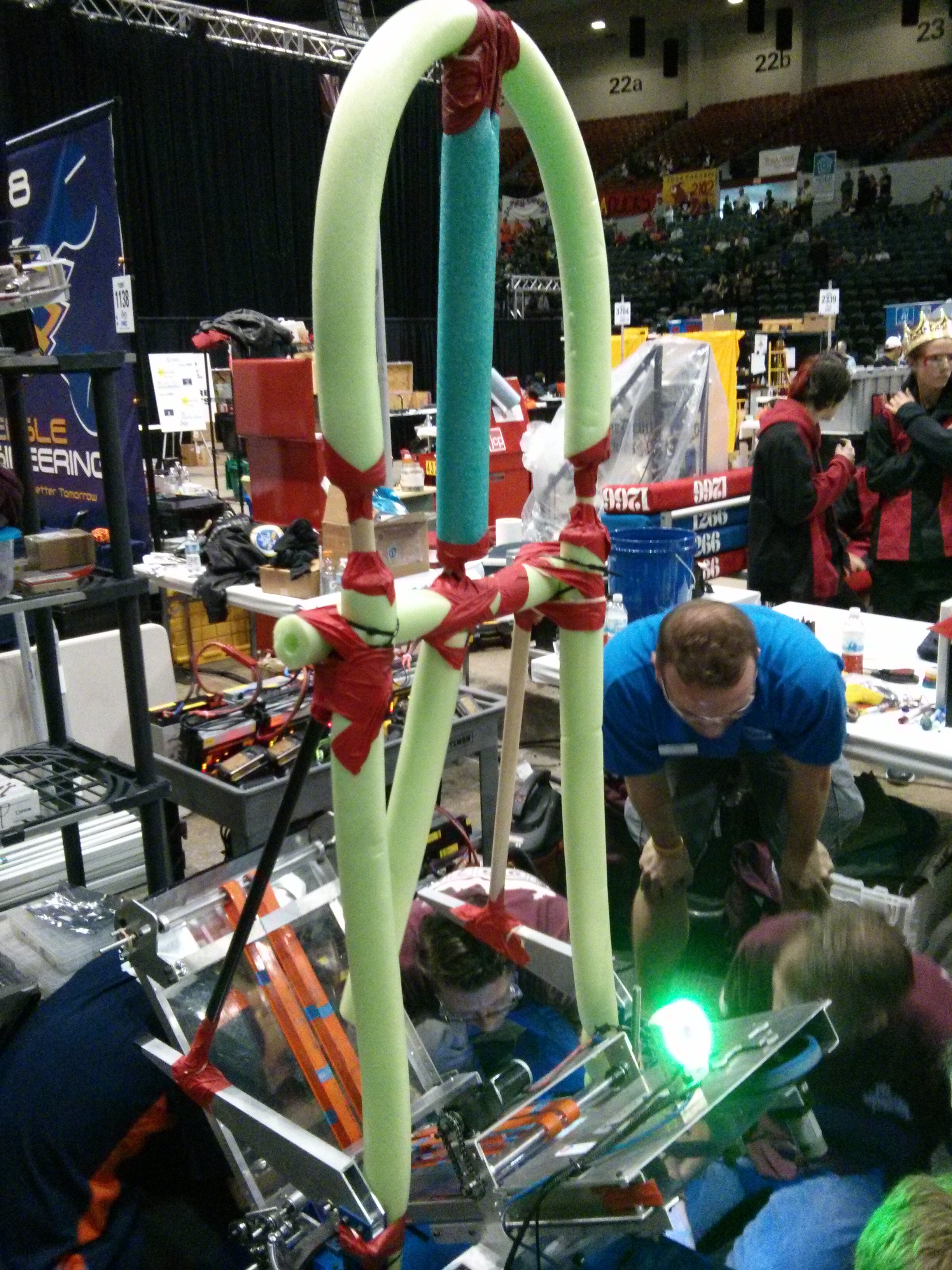
2013-03-09 15.26.47Saturday's matches went well. During lunchtime, we were aproached by Team 987 (The High Rollers) from Las Vegas, as they wanted to ensure maximum compatibility on the field between the two robots to guarantee a tournament win.  Thus, we demonstrated our multiple autonomous modes to them on the practice field. At the alliance selections, Team 987 picked us, Team 254, as a second pick. Our third pick was team 1138, Eagle Engineering from Chaminade College Preparatory. After intense quarterfinal and semifinal matches, the joint pit crew from 987 and 254 added an effective blocker made of pool noodles to 1138's robot (also known as pope-bot), pictured below. This was to defend against a full court shooter which could have been a deadly scorer during the finals if 1138 hadn't defended so well.

In a nail-biting final match, the 987-254-1138 alliance won, earning the title of 2013 San Diego Regional Champions.

Final Awards and Tournament Win

891772_476220862430960_993181036_oAfter the final matches, we were awarded the Quality Award sponsored by Motorola and the Tournament Winners at the award ceremony. We would like to congratulate Team 1538: The Holy Cows on a well-deserved Regional Chairman's win, and Rodger Dohm from Team 1622 on a Regional Woodie Flowers award.

Next Steps

Overall, the 2013 San Diego Regional was a well-run and successful tournament. The next step is preparing for the Silicon Valley Regional in April, which is arguably the most competitive regional of the year. There are a few identified changes that need to happen to the robot which include shooting and indexing faster, adding our 30-point hanger, and tuning autonomous modes.

SVR, here we come!

Build Season Recipes: Strategy Brownies

2013 FRC Build SeasonFIRST Robotics

These delicious and nutritious brownies have powered many Friday night picklist meetings on multiple teams, and more often than not have led to regional and divisional victories. This past weekend in San Diego was no different.

Strategy Brownies

  • 1 cup butter

  • 1-1/3 cup sugar

  • 1 cup brown sugar

  • 4 eggs

  • 1/4 cup milk

  • 1-1/3 cup flour

  • 1 tsp. baking powder

  • 1/2 cup creamy peanut butter

  • 1 cup peanut butter chips

  • 1/2 cup cocoa powder

  • 1 cup chocolate chips

Cream butter and sugars. Add eggs and milk; beat. Mix in flour and baking powder. Divide batter in half. In one half, mix in peanut butter and peanut butter chips. In the other half, mix in chocolate chips and cocoa. Place alternate spoonfuls of batter into a 9-inch square pan, creating a checkerboard pattern. Swirl a knife through batter to create a marble effect. Bake at 350°F for 30-35 minutes, or until an inserted toothpick comes out with fudgey crumbs.

San Diego Regional in Progress

2013 FRC Build SeasonFIRST Robotics

Our team has arrived in San Diego in one piece, and is doing great. The pit is set up, we've passed inspection, and apparently, the waffles at the hotel are amazing. If you're looking for quick updates, our team Facebook page is a great place to look, you will be able to find pictures, statuses, and updates on team. Additionally, if you'd like to watch the games live, head over to

//www.justin.tv/frcsd?utm_campaign=live_embed_click&utm_source=www.thebluealliance.com

Here, you'll be able to watch the livestream of the event, from qualification rounds to finals. It will open up at 8:30 AM PST Friday (March 8th), so be sure not to miss any of the action!

Wish us luck, and go Poofs!


Autonomous Tuning

2013 FRC Build SeasonFIRST Robotics

Manufacturing

Students manufactured the polycarbonate flaps for the indexer using the vertical bandsaw, among other miscellaneous parts.

Programming

Today, the programmers did a lot of fine-tuning and testing with the various autonomous sequences.  The seven, five, and four disc autonomous modes were further refined.  The programmers tweaked the distances, powers, and a couple other factors of the drive and shooter.  In the end, they were able to have a consistent 7, 5, and 4 disc autonomous.  They played around with seven-disc autonomous sequence's speeds and distances to get it under the fifteen second time limit.

Meanwhile, the programmers started work on a new autonomous mode that would start out by one of the pyramid's back corners, shoot three discs, drive backwards and turn at an angle to align with the center line, pick up two center line discs, drive to the back of the pyramid with the first-stage hangers extended, and then shoot those three discs.

Action Items

  • Pack for San Diego
  • Center line autonomous testing
  • Driver practice

Lab closing time for the night was 2:00 AM

Driver Practice and Intake Modification

2013 FRC Build SeasonFIRST Robotics

Driver Practice:

D7K_3759Drivers and operators continued practice today in preparation for the upcoming San Diego Regional. To hone their skills they ran a multitude of drills with a wide variety of obstacles to simulate a field filled with other robots. In these drills the drive team is fed 1 frisbee at the near side of the field, they then move as fast as they can to the opposite side without hitting any obstacles and shoot alternating between near and far pyramid shooting positions. If they fail to do this or hit any obstacles, there is a penalty of 5 pushups per violation, enforced by Mr. EJ.

Robot Intake and Maintance:

D7K_3756The side plates for the new intake design were completed today. Students worked with mentors to install the new plates as well as modify parts of the old intake to work with the new design. While it was not a very smooth action the new intake works much better, showing no obvious signs of jamming when intaking at slow speeds. As well as funneling better, the new intake also weighs 3-4 pounds less than the previous design. Students also removed unused pistons and sensors from the indexing system to shed weight.

Bill of Materials:

Students continued the documentation process by separating the robot into subsystems and accounting for each part on the bill of materials. With the constant iterating of the robot, they will have to keep the list updated every day. Currently, they have almost fully completed documenting 5/6  subsystems, consisting of the intake, conveyor, shooter, hanger, and bumper. The drivebase is still a work in progress.D7K_3751

Programming:

The programmers debugged code for the robot's drive.  Other than this, they added support of the control loops switch on the control board to how the indexer command operates.  Also, the programmers rewrote the logic for the stage 1 hanger solenoids.

Pit Lights

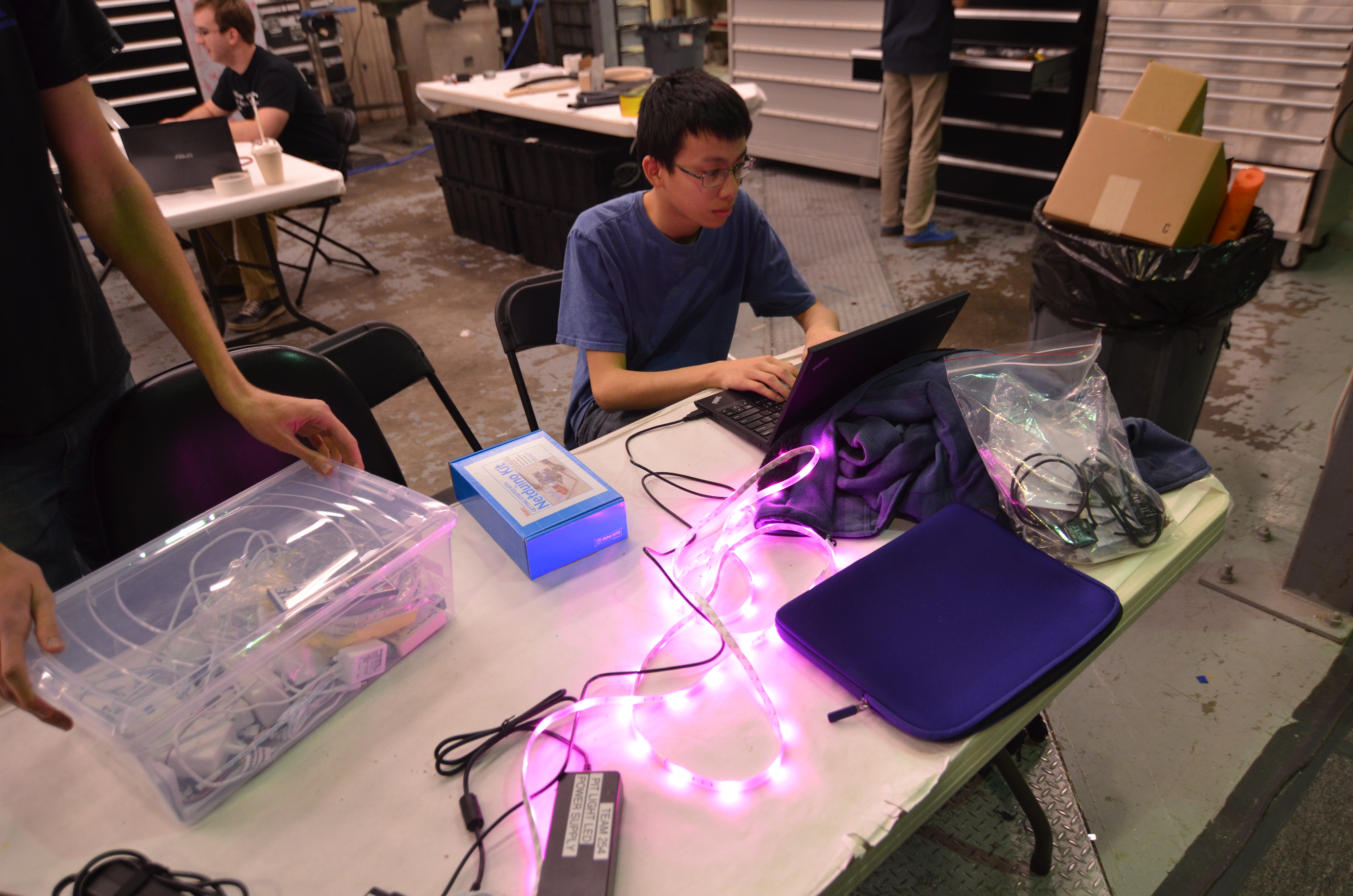
Other programmers worked on the pit display and colorful pit lights. These lights will be installed in the trussing in the pits to add a glow effect to the piping. They took last year's match schedule script and modified it to remove the Coopertition points column, as well as to create a configuration form so that other teams can utilize the system. They also worked on the web application that will send led script files to the C# application that controls the lights. It will be done soon.D7K_3755

General Competition Preparation:

Students finished wiring the new 2013 batteries tonight and are currently in the process of testing them. Using a battery analyzer each battery is tested to see the quality individually before competition.20130302_235542(0)

Driver Practice, Competition Preparation, and Debugging

2013 FRC Build SeasonFIRST Robotics

2013-02-28 20.31.12Robot

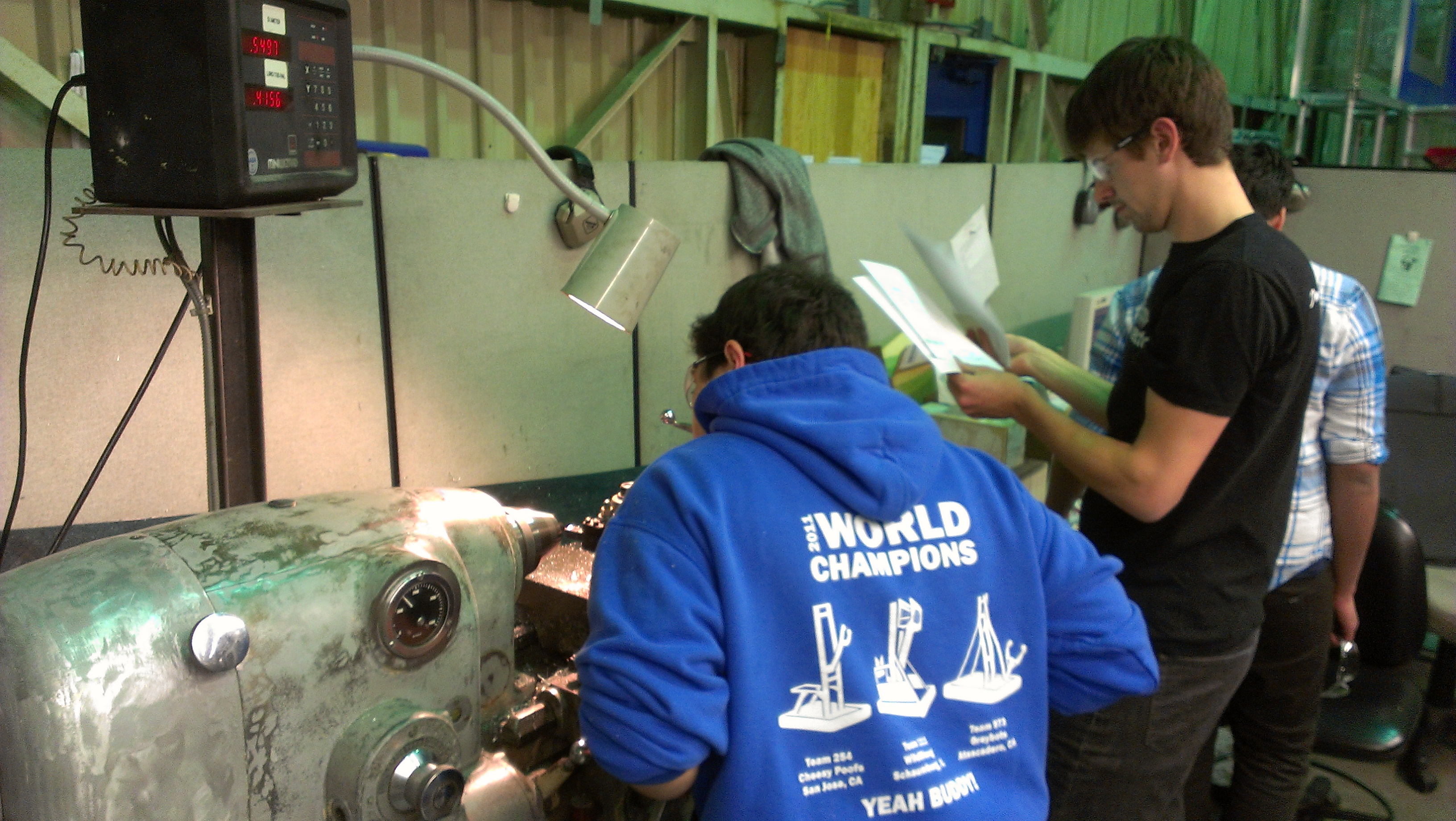
The robot wheels got partially machined today. They are currently still being worked on. Drivers practiced driving around and other students continued debugging the shooter. This was a result of the fact that the shooter kept jamming, because it would intake one frisbee on top of another. Some of the robot parts were turned on the lathe.

2013-02-28 20.29.14-1

2013-02-28 20.21.42

2013-02-28 20.20.32

2013-02-28 20.18.31

2013-02-28 20.16.14

Programming

The programmers rewrote a fair amount of logic for the robot's subsystems, specifically, the intake and the shooter.  The shooter's two S5 encoders were removed due to space constraints on the robot, so the shooter wheel speeds will operate on an open loop controller.  Instead of the old shooter state controller logic, individual commands will call specific functions.  In addition, the intake raising and lowering was given an open loop as well.

The programmers also continued working on autonomous mode functions.  Below is video of a five-frisbee autonomous sequence.

Competition Prep

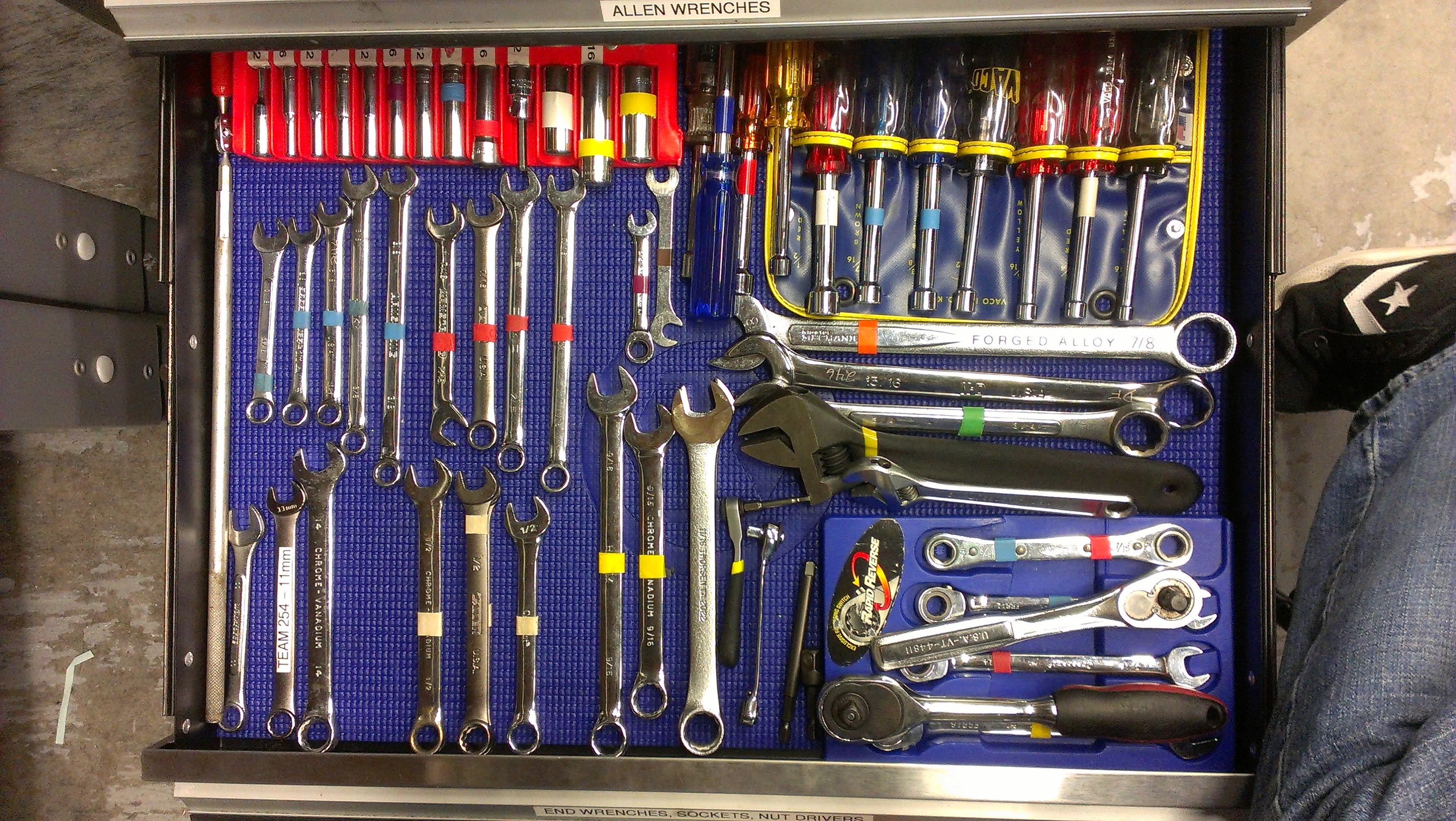
The competition tool chest was inventoried and organized, so that we will be ready to take it to San Diego next week. One of the robot stands was also completed, the other is still in progress, and will likely be finished tonight.

2013-02-28 20.22.35

2013-02-28 20.21.59

Driver Practice and Machining

2013 FRC Build SeasonFIRST Robotics

Machining

Students worked on manufacturing the official robot stands.  They used the metal pieces from the previous robot stand, but cut those pieces to length using the horizontal bandsaw.  They also drilled new holes into the metal with the mill.

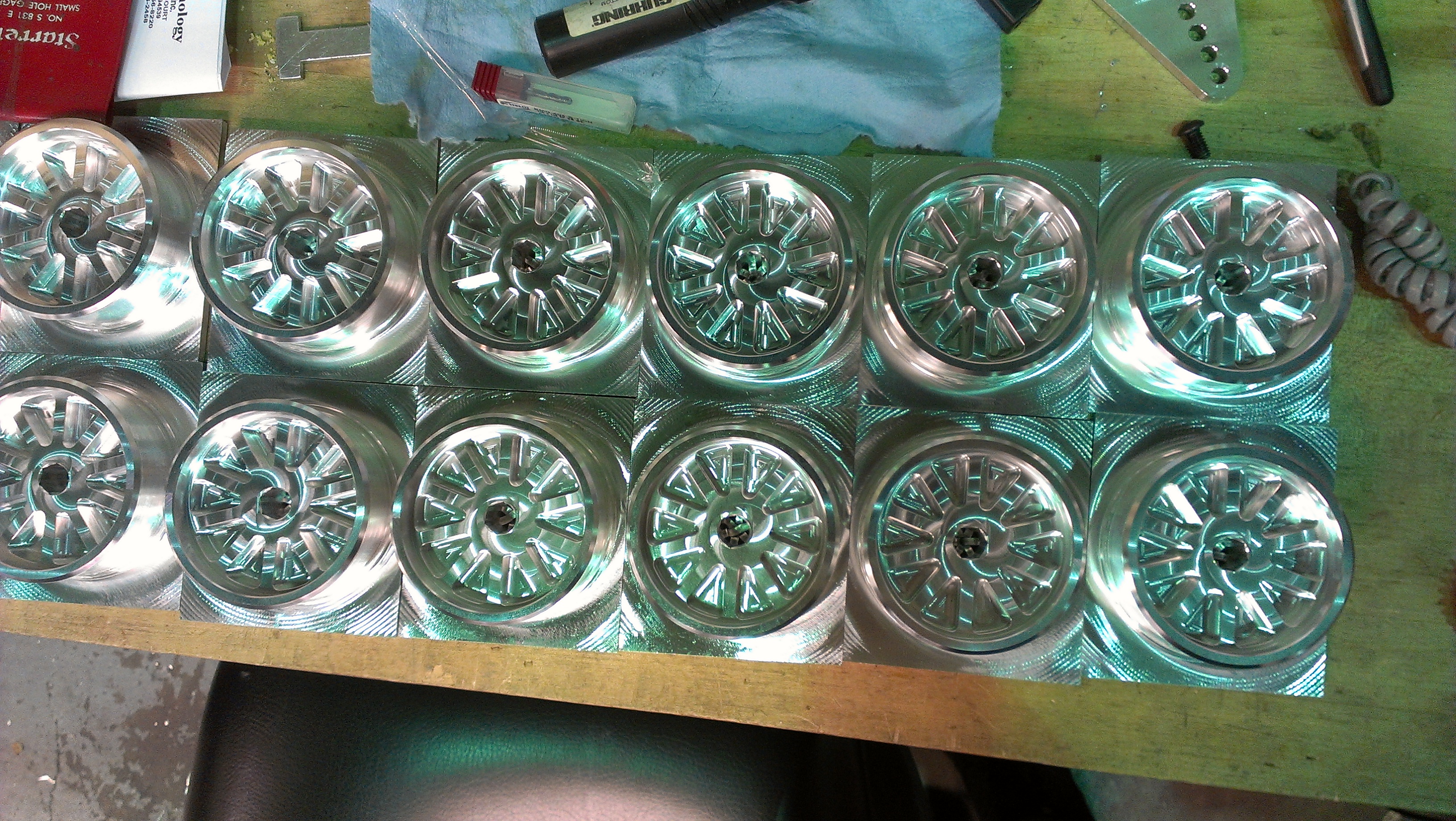
Meanwhile, Cory created wheels on the CNC.

Driver Practice

Abhi and Chris (this year's primary driver and operator) had a bit of practice time today.  They drove around the field, picked up frisbees, indexed them into the shooter, and shot them.  Currently, there is still an issue with multiple frisbees stacking in the back of the conveyor, even with the horizonal cross bar.

Robot Updates

The team attempted to replace the conveyor CIM motor with a VEXpro planetary gearbox (4:1) to reduce the robot's overall weight.  However, during extensive driver practice, the gearbox started emitting smoke.  Students promptly removed the planetary gearbox and replaced it back with the CIM motor.

Elsewhere, the robot was re-weighed on the digital scale with all the changes so far.  However, the robot is still around 7 pounds overweight (counting the hanger, hooks, and polycarbonate side plates).

Programming

The programmers re-assigned and re-mapped certain buttons on the operator's side of the control board.  The right four buttons are now going to be shooter speed & angle presets (back/front of pyramid, full/low speed).  The two buttons to the left of those will be the shoot button and the manual shooter angle button.  In addition, the programmers cleaned up the code and made it comply with the style guide.

Action Items

  • Fix intake

Lab closing time for the night was super late.